
Baking guides
What Is Fathead Dough? How It Works, What Counts, and How to Fix It

Introduction
It sounds like it should come out of the oven tasting like a grilled cheese. It doesn’t, really. Baked, it goes golden and bready, and the mozzarella settles into the background, which is how the same dough ends up under pepperoni in one of our recipes and under cinnamon and sweetener in another.
That range comes with a dough that is fussy to handle. It sticks to everything while it is warm, cracks once it cools, and can turn greasy in the bowl. So before the fixes, here is what goes into it and the order it goes in.
What Goes Into Fathead Dough
The classic version is four ingredients.
- Mozzarella is the base of every fathead recipe on this site, shredded and melted. None of our recipes swaps it for another cheese, so there is no one-for-one substitute to give you here.
- Cream cheese is the smaller partner, anywhere from two tablespoons to three ounces in our recipes. It melts in with the mozzarella so the two come out of the bowl as one smooth mass.
- Almond flour is the main flour in most of our versions, worked into the cheese while it is hot. Several of our recipes also add a quarter teaspoon of xanthan gum.
- Egg goes in with the flour. Most of our recipes use one. The coconut-flour breadsticks and the pizza crust use more.
Beyond those four, the additions are what point the dough toward a particular recipe. Baking powder turns up in the danish, the spinach tree bread, the sliders, the breadsticks and the sausage rolls. Savory versions add garlic powder, Italian seasoning or ranch seasoning to the dough itself, and sweet ones add sweetener and sometimes vanilla.
Some of our recipes also use coconut flour. The garlic breadsticks use it as the only flour, and the cinnamon pretzels and cinnamon bagel bites use a little of it alongside the almond flour. The breadsticks use a very different ratio of flour, egg and cheese from the almond-flour recipes, so coconut flour is not a cup-for-cup swap. More on that in the FAQ below.
What Counts as Fathead Dough (and What Doesn’t)
The name comes from Fat Head, Tom Naughton’s 2009 low-carb documentary. The mozzarella pizza crust became known as Fat Head pizza after the film’s blog popularized it, though the blog itself credits Cooky’s Creations as the original source. “Fathead” has since become keto shorthand for a whole family of melted-cheese doughs.
That family has blurry edges. Mozzarella and almond flour turn up together in a lot of keto baking, and not all of it is fathead dough. What makes it fathead is the method: the cheese is melted first, and the flour and egg are worked into that hot, melted cheese. The melted cheese is the base of the dough, not one ingredient among many.
Our recipes do not all follow the classic four-ingredient formula, and that is fine. They still count, because the method is the same:
- The coconut-flour version. Our Low Carb Keto Italian Garlic Breadsticks use no almond flour at all: two thirds of a cup of coconut flour against three cups of mozzarella, with four eggs and a thirty-minute chill before shaping.
- The version without cream cheese. Our Keto Pizza with Homemade Sauce melts the mozzarella on its own, then works in almond flour, three eggs and three quarters of a cup of parmesan, so the crust tastes of something before the toppings go on.
What does not count is a recipe where the cheese goes in cold. Our Cheesy Keto Garlic Bread and Best Keto Buns both combine cheese, almond flour and egg, but the cheese goes into the mixture unmelted. They are good recipes; they are just a different kind of dough. A chaffle is a different thing again: egg and cheese cooked in a waffle iron, with no dough stage at all.
How to Make It: Melt, Mix, Shape, Bake
Every fathead recipe on this site follows the same four stages. The exact amounts, times and temperatures belong to each recipe card.
1. Melt the cheese
The cheese goes into a microwave-safe bowl first: mozzarella and cream cheese together in the classic version, or mozzarella on its own in our pizza crust. Microwave it in short bursts, stirring in between, until it is smooth with no shreds of mozzarella left.
2. Mix while it is still hot
The flour goes in while the cheese is still molten. Our garlic parmesan pretzel recipe puts it plainly: once the cheese cools and sets, the flour stops going in evenly and you end up kneading lumps.
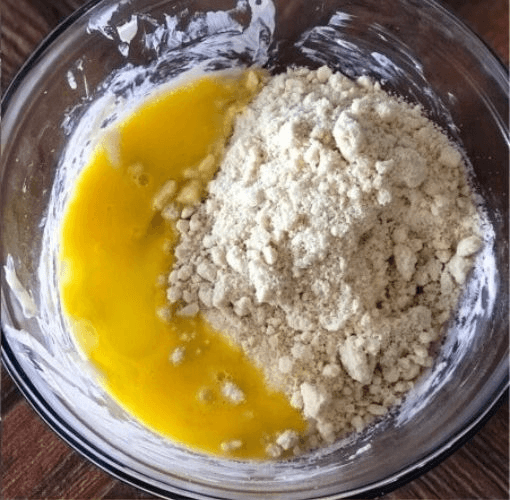
Our pizza recipe adds one caution about the egg: let the melted cheese cool for a moment before the eggs go in, or they scramble in the dough. Some of our recipes also move the melted cheese to a stand mixer and beat everything together.
3. Shape it
This is where our recipes go two different ways.
Some are shaped straight away, while the dough is still warm. The Garlic Parmesan Keto Pretzels work like this: warm fathead dough stretches into a rope, and a cool one cracks at the edges when you try to roll it.
Others chill the dough for thirty minutes first, like the breadsticks, the bagel bites, the Keto Sausage Rolls and the Keto Pepperoni Pizza Pretzels. Our breadsticks recipe chills it so the dough is easier to shape without sticking to your hands.
Follow the recipe you are making; it will tell you which way its dough goes. If a dough fights you either way, the troubleshooting below covers it.
4. Bake it
Almost all of our fathead recipes bake at 350°F until golden, usually somewhere between ten and twenty-five minutes depending on the size and shape. The cinnamon bagel bites and the sausage rolls are the exceptions at 400°F. For pizza, the crust bakes on its own before any toppings go on. As our pizza recipe explains, the toppings only need about ten minutes, and a crust that starts out raw does not get long enough.
Why Is My Fathead Dough Sticky, Greasy or Lumpy?
Each fix below is one our own recipes use. Where we do not have one, we say so.
It is sticky. Our garlic parmesan pretzel recipe calls a sticky dough normal at the shaping stage. Our recipes handle it in a few ways:
- wet your hands, as the fruit pizza and danish do, or oil them, as the breadsticks do;
- roll the dough between two sheets of parchment paper, as the hot pockets do;
- press it out under a sheet of plastic wrap, as the pizza does;
- chill it, if the recipe allows, as the breadsticks do.
The cinnamon pretzel notes also suggest adding a little more almond flour, a bit at a time.
It is lumpy, or there are streaks of flour that will not work in. The cheese has cooled before the flour was fully mixed in. Our breadsticks recipe puts the dough back in the microwave for ten to fifteen seconds to soften it, then keeps kneading.
It is stiff, and it cracks or tears when you roll it. Our garlic parmesan pretzel recipe says a cooled dough cracks at the edges, and that ten seconds back in the microwave brings it round.
It is greasy, with fat pooling in the bowl. None of our recipes gives a way to recover a dough once this happens. Our garlic parmesan pretzel recipe warns that a sharper or oilier cheese than mozzarella tends to split into grease, so first check that your cheese, quantities and melt step match the recipe you are making.
The pizza crust is soggy in the middle. Our pizza recipe bakes the crust on its own before topping it, and cooks wet vegetables like mushrooms or spinach before they go on.
It is browning too fast. Our cinnamon pretzel notes suggest lowering the oven temperature and extending the baking time.
Storing and Reheating Fathead Dough
Treat baked fathead dough as cooked leftovers: refrigerate it in an airtight container and use it within three to four days, the window the USDA gives for cooked leftovers.
Our recipes reheat in the oven, and some of them also give an air fryer or skillet method, so check the reheat notes on the recipe you made. Whichever you use, reheat leftovers to 165°F.
Our garlic parmesan pretzel recipe adds that they are at their best the day they are made, straight from the oven.
Sweet or Savory?
Both. Our recipes take the same base in either direction through what goes into the dough and on top of it.
Savory versions season the dough itself with garlic powder, Italian seasoning or ranch seasoning, and often finish with butter, parmesan or herbs on top. Parmesan can go into the dough too; our keto pizza is the example.
Sweet versions either sweeten the dough itself, as the danish, the bagel bites and the fruit pizza crust do, or keep the dough plain and put all the sweetness in a coating. The cinnamon pretzels work that way: they are brushed with butter and rolled in cinnamon and sweetener once they come out of the oven.
Our Recipes Made With Fathead Dough
Every recipe below melts the cheese first and builds the dough on it.
Savory
- Garlic Parmesan Keto Pretzels: four soft pretzels brushed with garlic butter and baked under parmesan.
- Low Carb Keto Italian Garlic Breadsticks: the coconut-flour version, chilled before shaping.
- Keto Pizza with Homemade Sauce: a parmesan-seasoned crust with no cream cheese.
- Keto Spinach Christmas Tree Bread: two layers of dough around a garlicky spinach filling, cut and twisted into a tree.
- Keto Pepperoni Pizza Pretzels: cheese-filled pretzels topped with pepperoni, with marinara for dipping.
- Tasty Keto BBQ Chicken Pizza: a seasoned crust under barbecue chicken.
- Keto Chicken Pesto Flatbread: the dough pressed into a rectangle and topped with pesto, chicken and spinach.
- Crispy Keto Chicken Bacon Ranch Sliders: ranch-seasoned slider buns.
- Keto Hot Pockets with Chicken and Broccoli Alfredo: the dough rolled thin and sealed around a filling.
- Keto Sausage Rolls: seasoned dough rolled up around a raw pork sausage filling and baked at 400°F.
Sweet
- Keto Cinnamon Pretzels: almond and coconut flour, rolled in cinnamon and sweetener after baking.
- Strawberry Cheese Keto Danish: a sweetened dough curled into spirals around cream cheese and strawberry fillings.
- Keto Cinnamon Bagel Bites: small balls of chilled dough rolled in cinnamon and sweetener.
- Keto Fruit Pizza: a sweet crust under a cream cheese layer and fresh berries.
Carbs in Fathead Dough: Total, Fiber and Net
There is no single carb count for fathead dough, because it depends on the recipe: how much flour, which flour, what else goes into the dough, and how many pieces it is divided into. Each of our recipes has its own Nutrition Facts panel, calculated per serving from that recipe’s ingredients, so that is the number to use.
The panel lists three carbohydrate figures, and they are worth telling apart:
- Total carbohydrate is everything, fiber included.
- Dietary fiber is part of that total.
- Net carbohydrates on our panels are the total minus fiber and minus any sugar alcohols or allulose. In a sweet fathead recipe, that is where the erythritol in the sweeteners we use comes out.
Brands of almond flour, coconut flour and sweetener differ, so if you use a different one, check its label rather than relying on our panel.
Dairy, Eggs and Nuts
Fathead dough is built on dairy and egg. Melted cheese is the base: mozzarella in every recipe here, with cream cheese in most of them, and every fathead recipe on this page contains milk and egg. All of our versions use mozzarella, and none of them is dairy-free or egg-free.
All but one of them also contain almond flour, which is a tree nut. The garlic breadsticks use coconut flour instead, so they have no almond in them. That is not the same as saying they are safe for a nut allergy. If you are cooking for someone with a food allergy, check every label for allergens and cross-contact warnings, and ask their doctor or allergist about coconut.
Frequently Asked Questions
Can I use coconut flour instead of almond flour in fathead dough?
Not cup for cup. Our own recipes use the two flours in very different amounts. The Garlic Parmesan Keto Pretzels use three quarters of a cup of almond flour and one egg for a cup and a half of mozzarella. The garlic breadsticks, made with coconut flour only, use two thirds of a cup of it and four eggs for twice that much cheese.
If you want a coconut-flour fathead dough, start from a recipe written for it rather than converting an almond-flour one.
Can I make fathead dough without a microwave?
Every one of our fathead recipes melts the cheese in the microwave, and that is the only method they are written for. The microwave also comes back into it later: when the dough cools and stiffens partway through mixing or shaping, our recipes soften it again with ten to fifteen seconds in the microwave.
We have not written a stovetop version. If you do not have a microwave, look for a fathead recipe written specifically for the stovetop rather than adapting one of ours.
Can I make fathead dough ahead of time?
A day ahead, yes. Our garlic breadsticks recipe wraps the dough tightly in plastic wrap and keeps it in the refrigerator for up to a day before shaping and baking.
It will be firm when it comes out of the fridge. That suits a recipe that chills the dough anyway, like the breadsticks. For ropes and twists, warm it in the microwave ten seconds at a time until it is pliable enough to roll without cracking.
If the recipe has a filling, follow its own make-ahead notes. Our spinach Christmas tree bread, for example, cooks the filling the day before but shapes and bakes the tree on the day.
Can you freeze fathead dough?
Baked, yes. Our garlic breadsticks recipe freezes the baked breadsticks wrapped individually in foil or plastic wrap for up to two months. The recipe’s notes reheat them in a 350°F oven for about ten minutes.
None of our recipes freeze the raw dough, so we cannot tell you how it handles once thawed. If you want to get ahead, bake first and freeze the finished pieces.
Where to Start
If you have never made it, start with the Garlic Parmesan Keto Pretzels. They use the classic four ingredients, a small batch, and a shape that teaches you exactly how warm fathead dough needs to be. Once that feels easy, the pizza crusts, the danish and the Christmas tree are the same idea with somewhere else to go.
Recipes From This Guide
Every recipe this guide points to, in one place.


