
Low Carb Braised Lamb Stew
Jump to...
Introduction
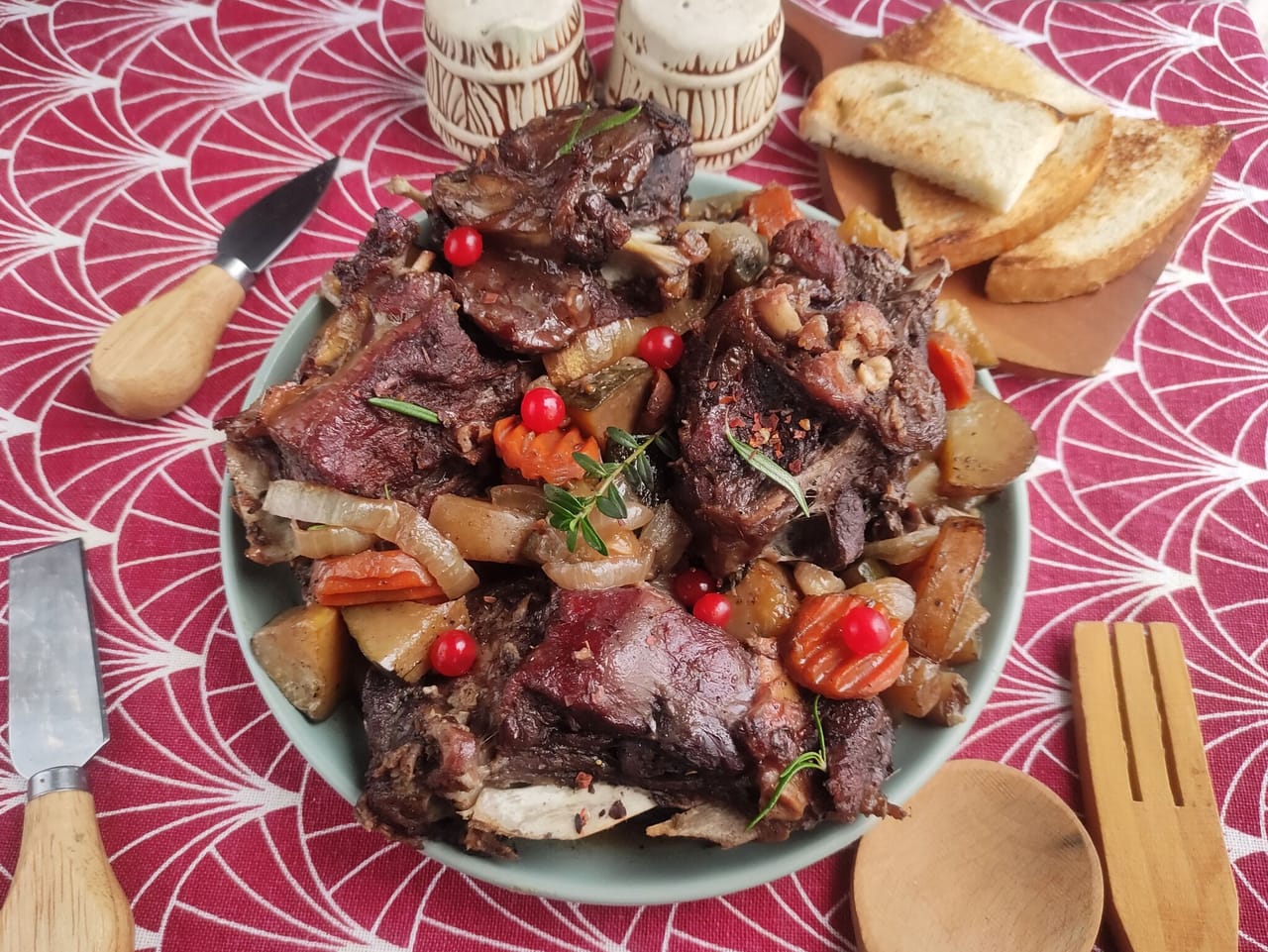
There’s something about a colorful plate of food that makes it feel ready for a holiday table. Here, the lamb stays in big pieces on the bone and braises alongside the vegetables, with a little sauce to spoon over everything. It’s not the kind of stew you serve in a bowl, but it would look right at home on a Thanksgiving spread—especially if you’re in the mood for something other than turkey.
The lamb is the reason to make it, so don’t let the potato put you off. Leave those pieces for someone else at the table, skip the potato altogether, or try turnips or radishes in its place. The choice is yours.
Give the lamb time in the oven to get tender, then serve it with whatever sides you like. We think you’ll want something to mop up what’s left on the plate—our keto cheddar biscuits would do nicely. Let’s get cooking!


Low Carb Braised Lamb Stew
14 net carbsIngredients
- 2 ¼ lbs lamb shoulder, bone-in, cut into 4 large pieces (2 to 2 1/2 lb)
- 1 zucchini, medium, cut into large chunks
- 1 red potato, medium, scrubbed and cut into wedges
- ⅓ cup carrots, sliced into rounds (about 1/2 large carrot)
- 1 cup onion, cut into thick half-moons (1 medium-large onion)
- 4x garlic clove, sliced
- 1 tsp paprika
- 1 tsp coriander, ground
- ½ tsp garlic powder
- 1 tsp salt
- ½ tsp pepper, black
- 3 tbsp olive oil, or vegetable oil
- 1 cup dry red wine, such as Cabernet Sauvignon or Merlot
Nutrition Facts
4 servings per recipe| Per Serving 750 | Per Recipe 2990 | |||
| 2 ¼ lbs of lamb shoulder | 538.87 | 2155.47 | ||
| 1 zucchini, medium | 8.25 | 33 | ||
| 1 red potato | 30.25 | 121 | ||
| ⅓ cup of carrots | 4.33 | 17.33 | ||
| 1 cup of onion | 16 | 64 | ||
| 4x garlic clove | 4 | 16 | ||
| 1 tsp of paprika | 1.5 | 6 | ||
| 1 tsp of coriander, ground | 1.25 | 5 | ||
| ½ tsp of garlic powder | 1.13 | 4.5 | ||
| ½ tsp of pepper, black | 0.75 | 3 | ||
| 3 tbsp of olive oil | 90 | 360 | ||
| 1 cup of dry red wine | 50 | 200 | ||
| 54g | 69% | 215g | 276% | |
| 2 ¼ lbs of lamb shoulder | 42.86 g | 171.46 g | ||
| 1 zucchini, medium | 0.15 g | 0.6 g | ||
| 1 red potato | 0.06 g | 0.24 g | ||
| ⅓ cup of carrots | 0.02 g | 0.1 g | ||
| 1 cup of onion | 0.04 g | 0.16 g | ||
| 1 tsp of paprika | 0.08 g | 0.3 g | ||
| 1 tsp of coriander, ground | 0.08 g | 0.32 g | ||
| 3 tbsp of olive oil | 10.5 g | 42 g | ||
| 20g | 100% | 80g | 398% | |
| 2 ¼ lbs of lamb shoulder | 18.37 g | 73.48 g | ||
| 1 red potato | 0.01 g | 0.04 g | ||
| 1 cup of onion | 0.02 g | 0.06 g | ||
| 1 tsp of coriander, ground | 0.01 g | 0.02 g | ||
| 3 tbsp of olive oil | 1.5 g | 6 g | ||
| Trans Fat | 0g | 0% | 0g | 0% |
| 147mg | 49% | 588mg | 196% | |
| 2 ¼ lbs of lamb shoulder | 146.96 mg | 587.86 mg | ||
| 740mg | 32% | 2960mg | 129% | |
| 2 ¼ lbs of lamb shoulder | 124.51 mg | 498.04 mg | ||
| 1 zucchini, medium | 4 mg | 16 mg | ||
| 1 red potato | 7.75 mg | 31 mg | ||
| ⅓ cup of carrots | 7.33 mg | 29.33 mg | ||
| 1 cup of onion | 1.6 mg | 6.4 mg | ||
| 4x garlic clove | 1 mg | 4 mg | ||
| 1 tsp of paprika | 0.5 mg | 2 mg | ||
| 1 tsp of coriander, ground | 0.15 mg | 0.6 mg | ||
| ½ tsp of garlic powder | 0.13 mg | 0.5 mg | ||
| 1 tsp of salt | 590 mg | 2360 mg | ||
| 1 cup of dry red wine | 2.4 mg | 9.6 mg | ||
| 16g | 6% | 66g | 24% | |
| 1 zucchini, medium | 1.53 g | 6.1 g | ||
| 1 red potato | 6.88 g | 27.5 g | ||
| ⅓ cup of carrots | 1.02 g | 4.1 g | ||
| 1 cup of onion | 3.5 g | 14 g | ||
| 4x garlic clove | 1 g | 4 g | ||
| 1 tsp of paprika | 0.3 g | 1.2 g | ||
| 1 tsp of coriander, ground | 0.25 g | 0.99 g | ||
| ½ tsp of garlic powder | 0.25 g | 1 g | ||
| ½ tsp of pepper, black | 0.19 g | 0.75 g | ||
| 1 cup of dry red wine | 1.54 g | 6.16 g | ||
| 3g | 10% | 11g | 40% | |
| 1 zucchini, medium | 0.5 g | 2 g | ||
| 1 red potato | 0.73 g | 2.9 g | ||
| ⅓ cup of carrots | 0.3 g | 1.2 g | ||
| 1 cup of onion | 0.7 g | 2.8 g | ||
| 4x garlic clove | 0.1 g | 0.4 g | ||
| 1 tsp of paprika | 0.2 g | 0.8 g | ||
| 1 tsp of coriander, ground | 0.19 g | 0.75 g | ||
| ½ tsp of garlic powder | 0.04 g | 0.15 g | ||
| ½ tsp of pepper, black | 0.08 g | 0.3 g | ||
| 4g | 18g | |||
| 1 zucchini, medium | 1.23 g | 4.9 g | ||
| 1 red potato | 0.55 g | 2.2 g | ||
| ⅓ cup of carrots | 0.51 g | 2.03 g | ||
| 1 cup of onion | 1.7 g | 6.78 g | ||
| 1 tsp of paprika | 0.05 g | 0.2 g | ||
| ½ tsp of garlic powder | 0.01 g | 0.05 g | ||
| 1 cup of dry red wine | 0.36 g | 1.44 g | ||
| Sugar Alcohols | 0g | 0% | 0g | 0% |
| Allulose | 0g | 0% | 0g | 0% |
| 14g | 54g | |||
| 1 zucchini, medium | 1.02 g | 4.1 g | ||
| 1 red potato | 6.15 g | 24.6 g | ||
| ⅓ cup of carrots | 0.72 g | 2.9 g | ||
| 1 cup of onion | 2.8 g | 11.2 g | ||
| 4x garlic clove | 0.9 g | 3.6 g | ||
| 1 tsp of paprika | 0.1 g | 0.4 g | ||
| 1 tsp of coriander, ground | 0.06 g | 0.24 g | ||
| ½ tsp of garlic powder | 0.21 g | 0.85 g | ||
| ½ tsp of pepper, black | 0.11 g | 0.45 g | ||
| 1 cup of dry red wine | 1.54 g | 6.16 g | ||
| 37g | 74% | 148g | 297% | |
| 2 ¼ lbs of lamb shoulder | 34.7 g | 138.8 g | ||
| 1 zucchini, medium | 0.6 g | 2.4 g | ||
| 1 red potato | 0.83 g | 3.3 g | ||
| ⅓ cup of carrots | 0.1 g | 0.4 g | ||
| 1 cup of onion | 0.44 g | 1.76 g | ||
| 4x garlic clove | 0.2 g | 0.8 g | ||
| 1 tsp of paprika | 0.08 g | 0.3 g | ||
| 1 tsp of coriander, ground | 0.06 g | 0.22 g | ||
| ½ tsp of garlic powder | 0.06 g | 0.25 g | ||
| ½ tsp of pepper, black | 0.03 g | 0.1 g | ||
| 1 cup of dry red wine | 0.04 g | 0.16 g | ||
About these numbers: We are home cooks, not certified nutritionists. Nutrition is shared as a courtesy. We pick a representative product for each ingredient, and our recipe system works out the totals from the amounts in this recipe, so please treat them as a helpful estimate rather than a guarantee. The brands you buy, any swaps you make, and how generously you portion the recipe will all move these numbers.
Directions
-
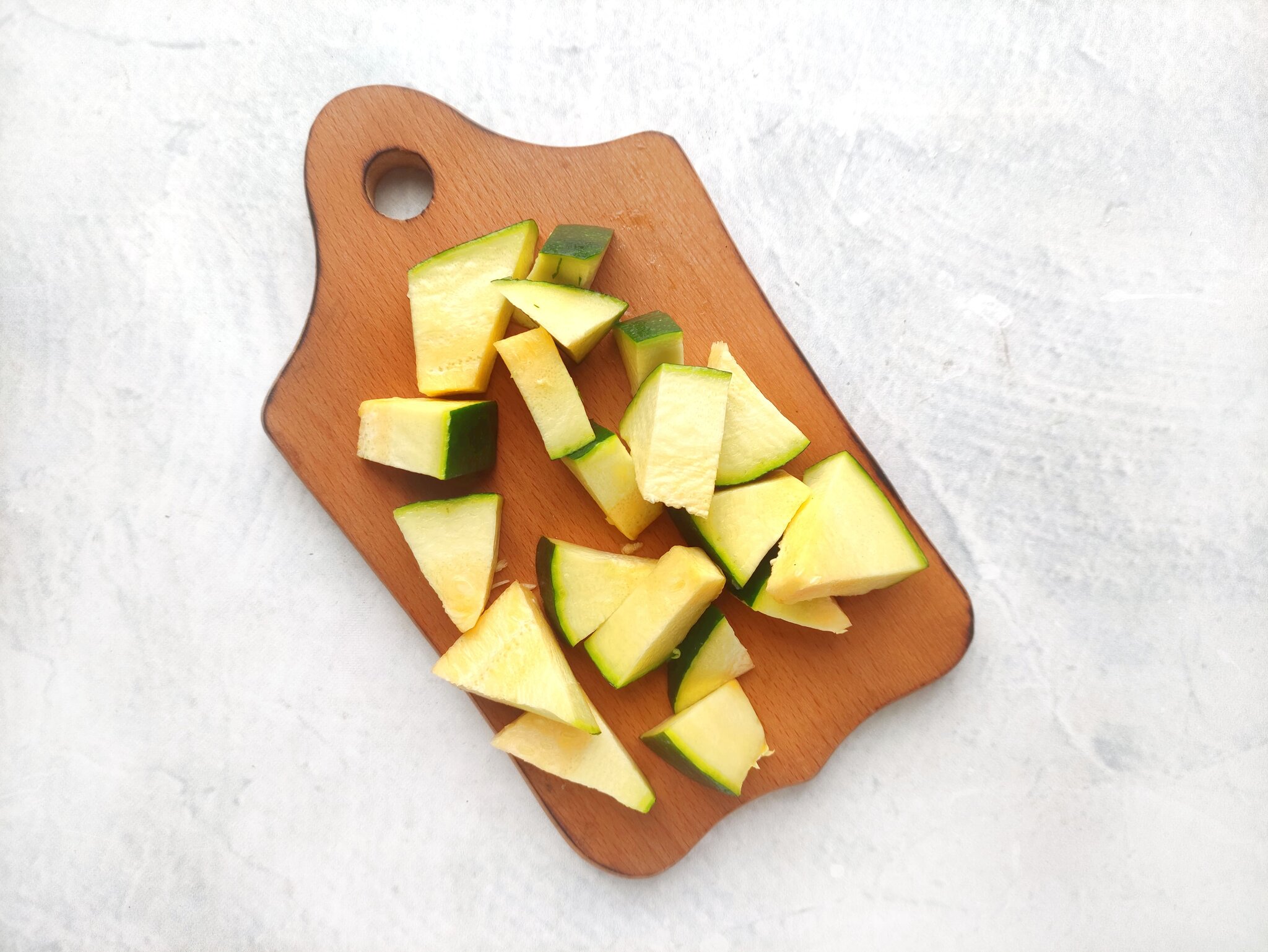
Heat the oven to 400°F (200°C) and cut the zucchini into large chunks.
Keep the pieces big. They have the whole braise ahead of them, and small ones can turn to mush.
-
-
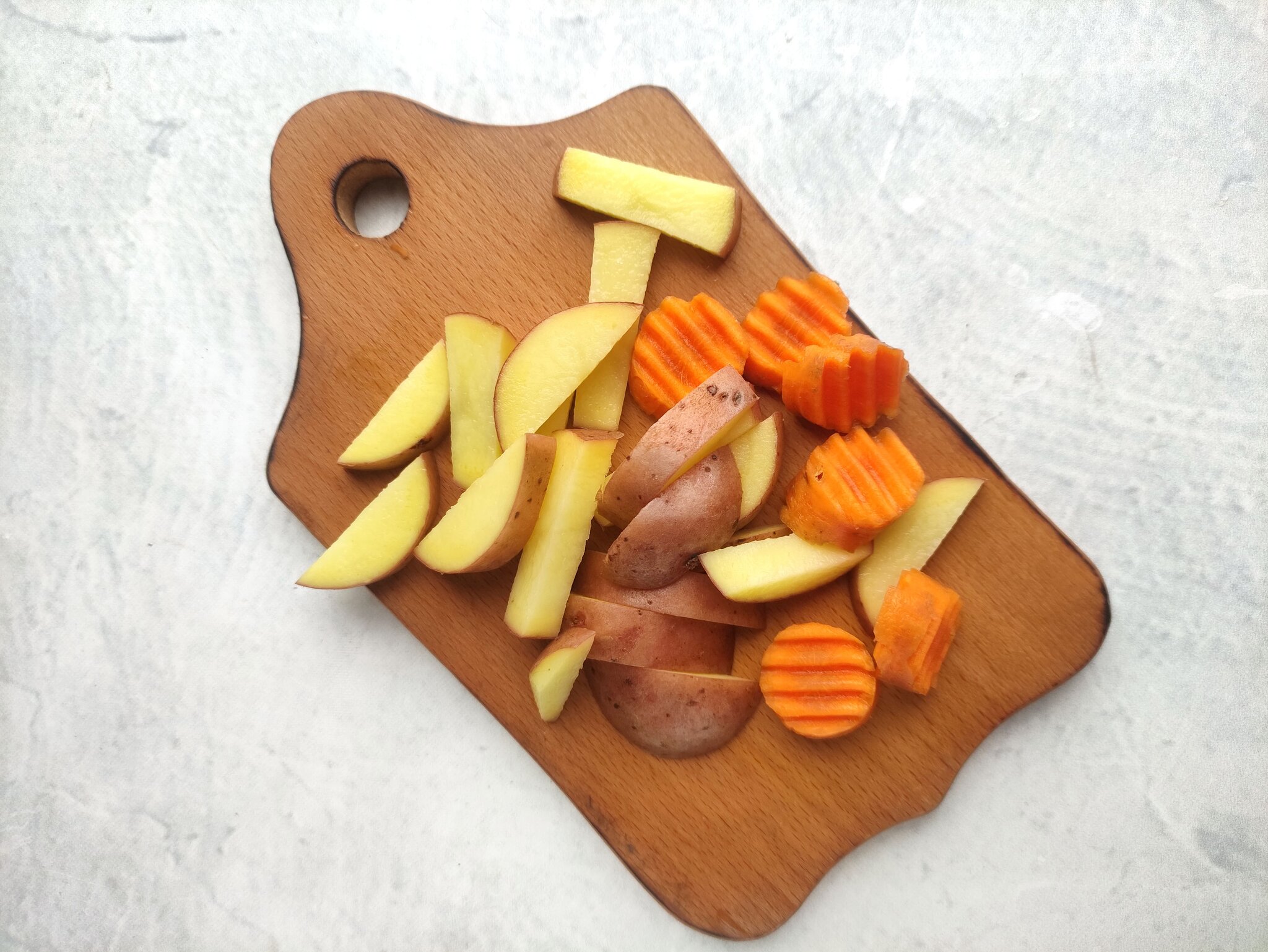
Cut the potato into wedges and slice the carrot into rounds.
Scrub the potato and leave the skin on. Peel the carrot first.
-
-
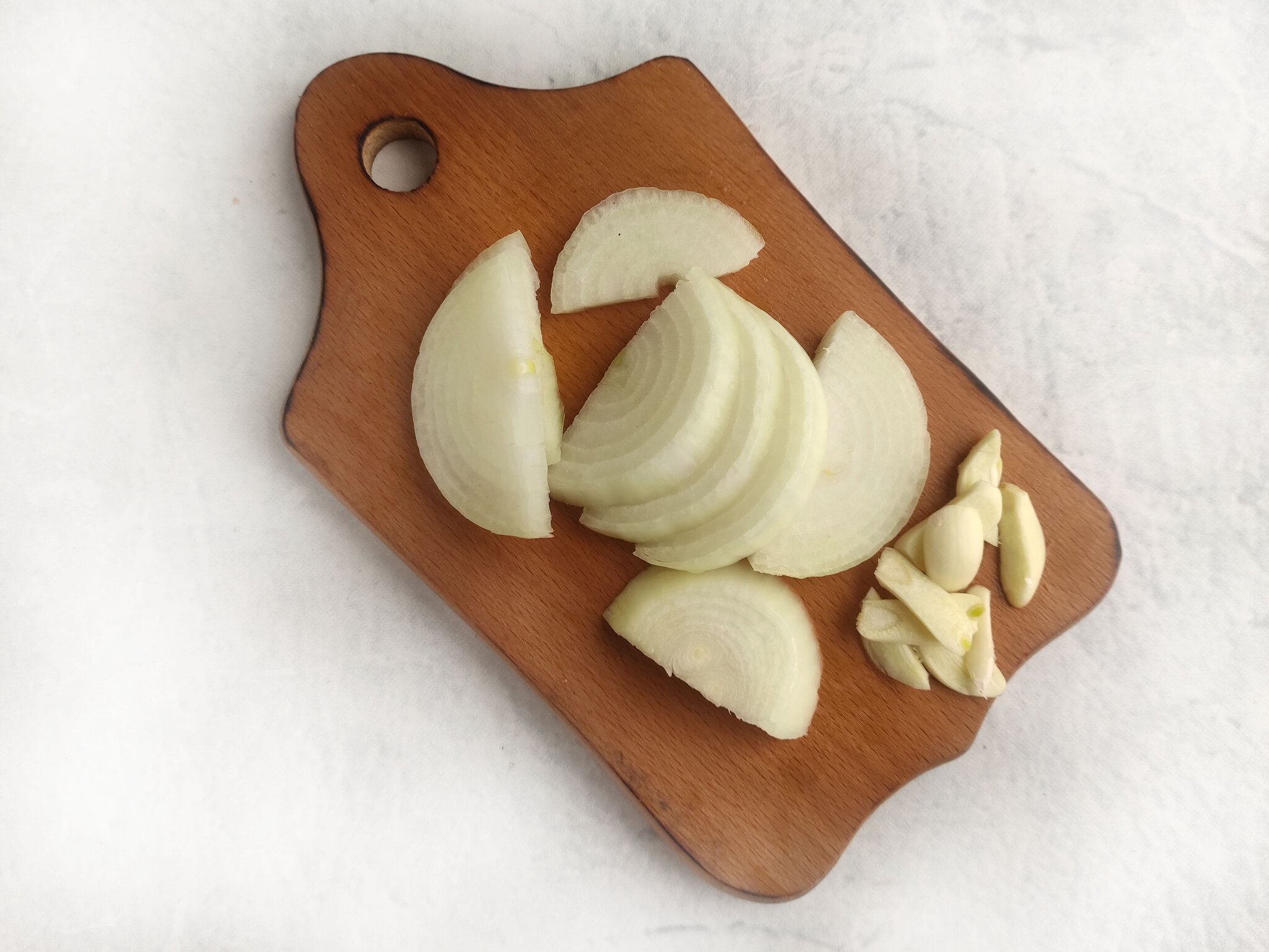
Cut the onion into thick half-moons and slice the garlic.
-
-
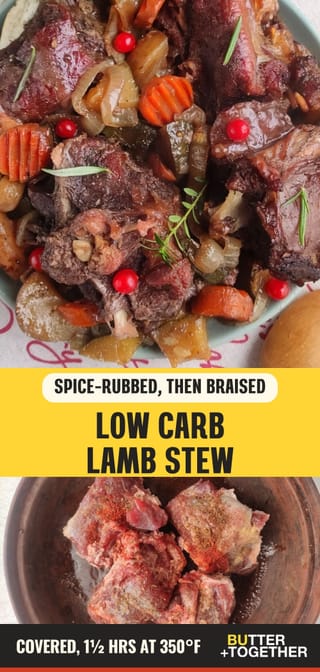
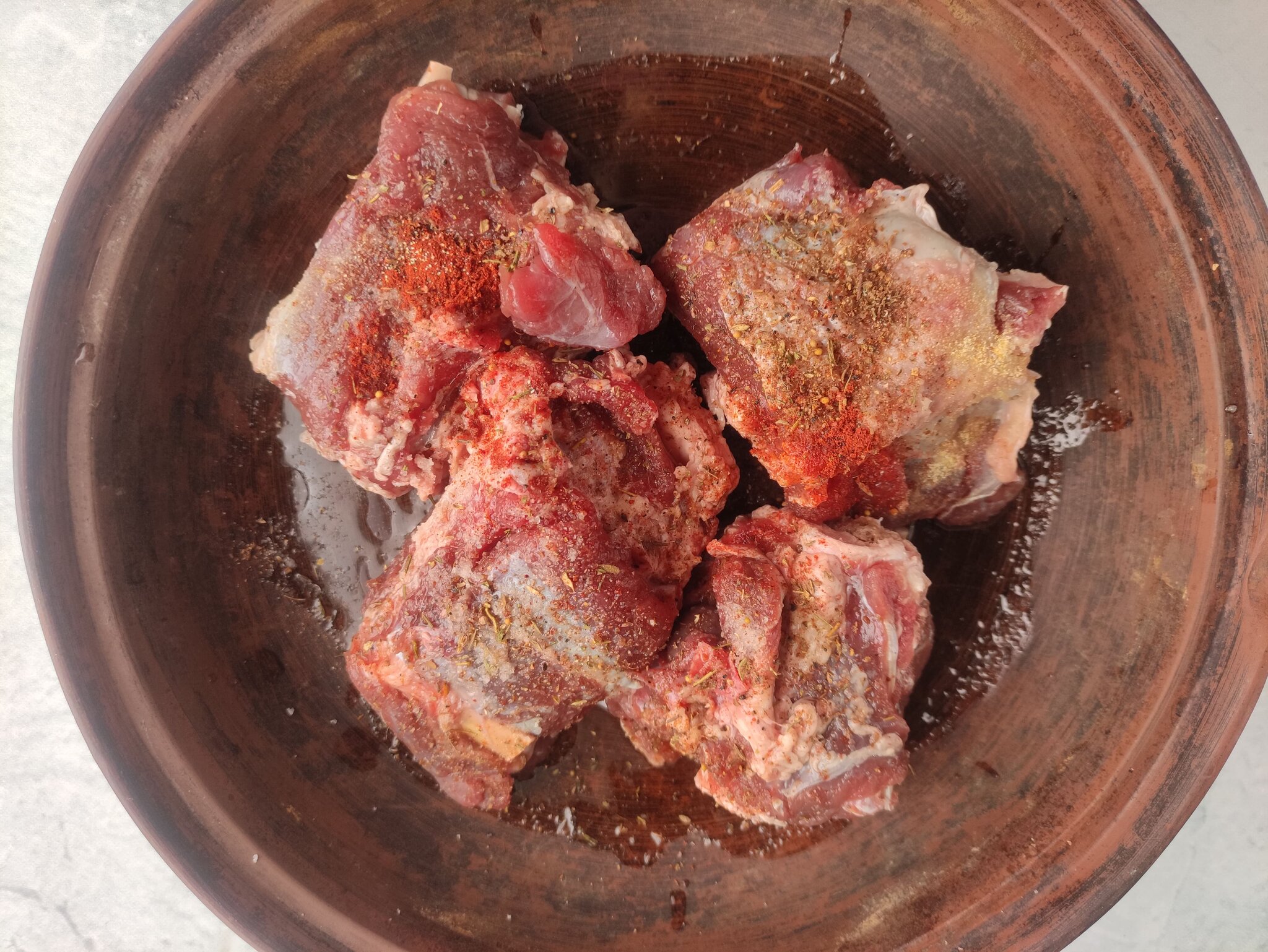
Season the lamb and arrange it in an oiled baking dish.
Mix the paprika, coriander, garlic powder, salt and pepper. Rub about two-thirds of it all over the lamb and keep the rest for the vegetables. Pour 1 tablespoon of the oil into a lidded ceramic or clay baking dish (or a Dutch oven) and set the lamb pieces in it.
-
-
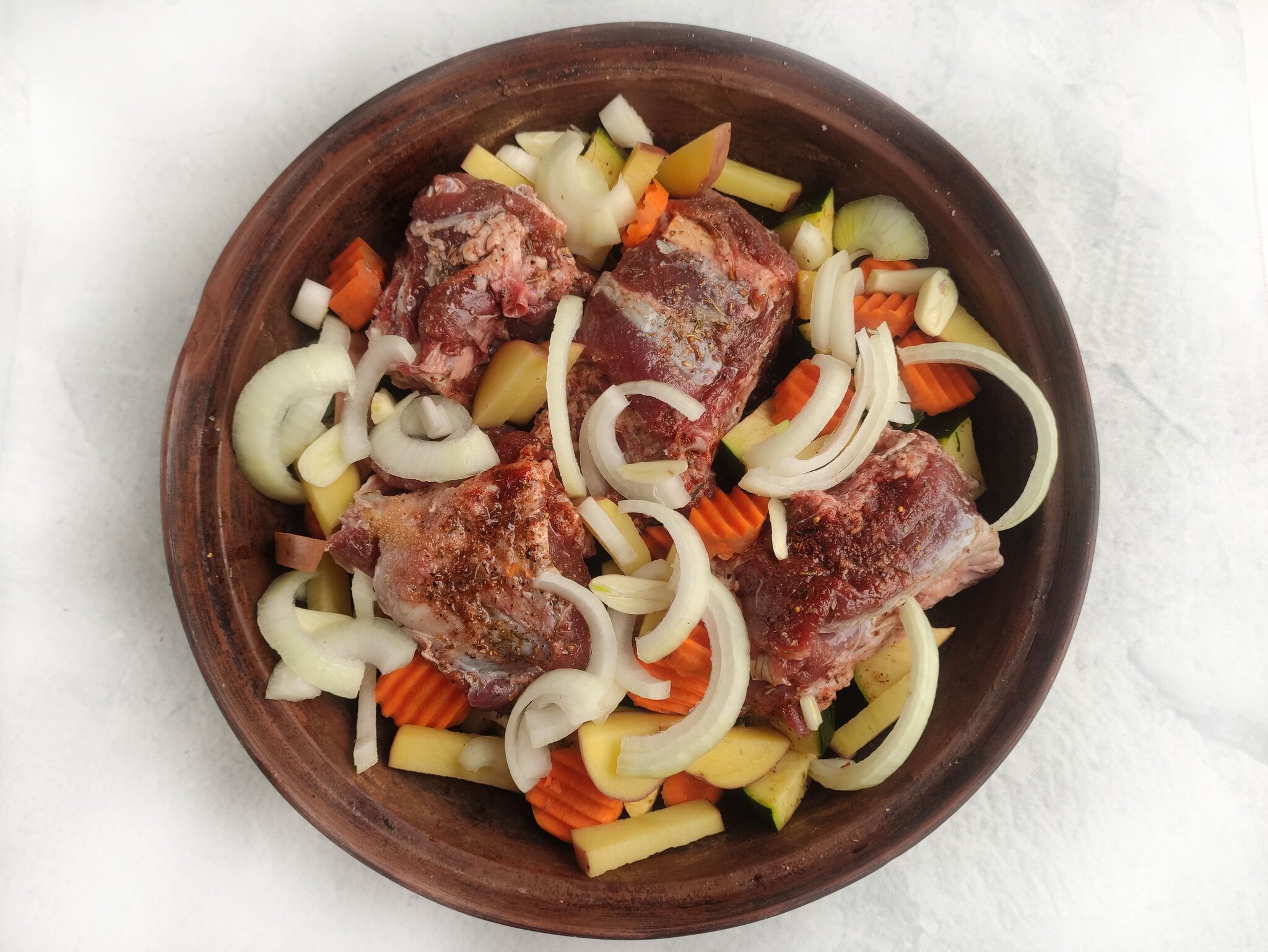
Add the vegetables around the lamb and bake uncovered for 15 minutes.
Tuck the zucchini, potato, carrot, onion and garlic around and between the lamb, sprinkle over the rest of the spice mix, and drizzle with the remaining 2 tablespoons of oil. Bake uncovered until the lamb starts to brown.
-
-
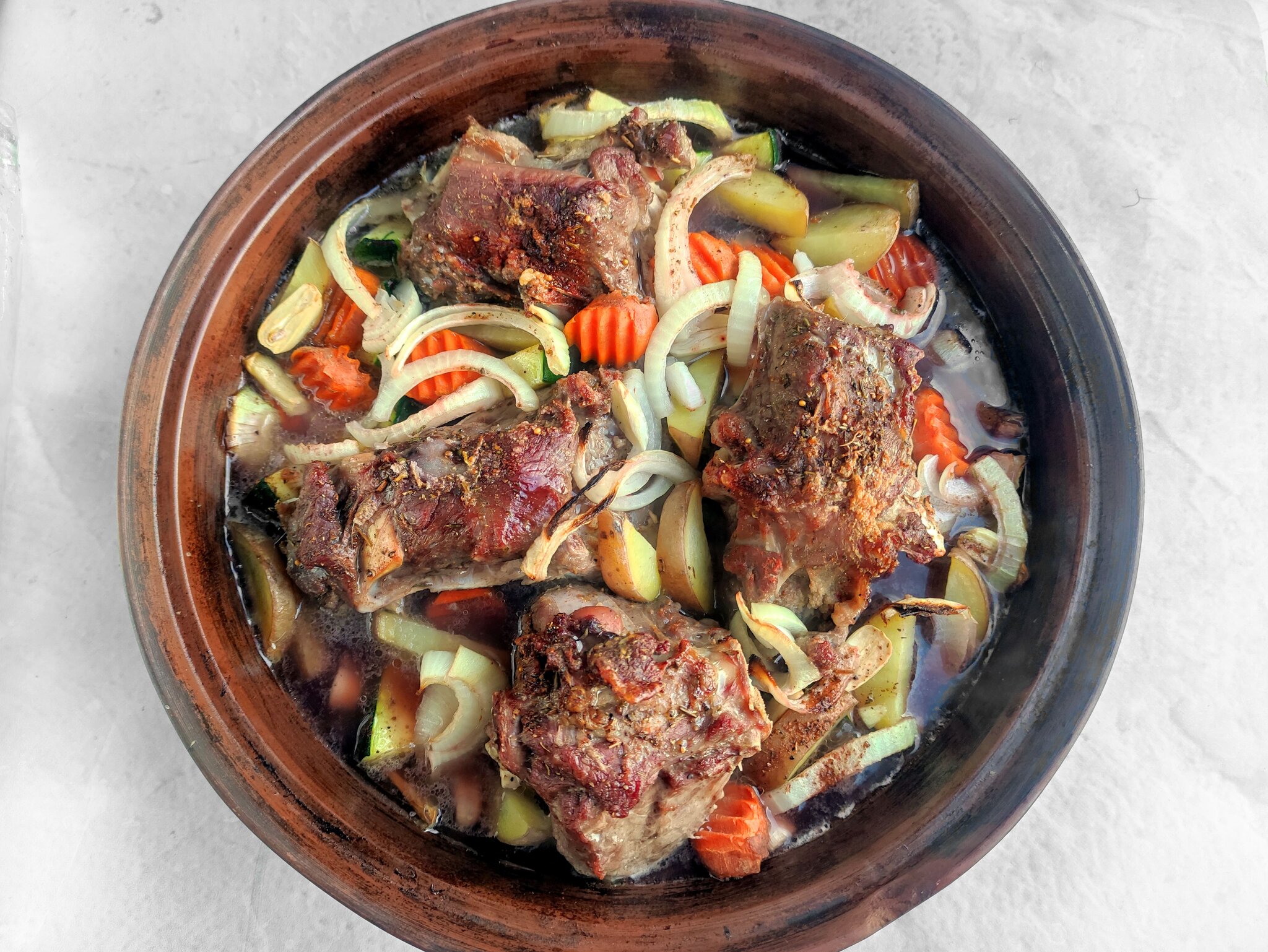
Pour in the wine, cover, and braise at 350°F (180°C) for about 1 1/2 hours.
Pour the wine into the dish, cover with the lid or a tight layer of foil, and turn the oven down.
The lamb is tender when the meat pulls away from the bone easily. If it is still firm, cover the dish again and continue braising, checking its tenderness periodically. Serve the lamb and vegetables with some of the cooking juices spooned over, and scatter over a few fresh herbs if you like.
-
Notes
Ingredient Notes
- Lamb: Bone-in shoulder, cut into four big pieces. That 2 1/4 lb includes the bone.
- The potato: Nutrition is calculated for the recipe as written, including the potato.
- Wine: Use a dry red wine you’d enjoy drinking, or use beef broth if you’d rather leave out the wine.
- Coriander: Ground coriander, not fresh cilantro leaves. It gives the rub a warm, slightly citrusy edge next to the paprika.
Tools
A lidded ceramic or clay baking dish big enough to hold the lamb and vegetables in roughly one layer. A Dutch oven works too. If yours is unglazed clay, check the maker’s instructions before putting it into a hot oven, since some need to start in a cold one.
Doneness
FoodSafety.gov gives the safe minimum internal temperature for lamb steaks, chops and roasts as 145°F (63°C), checked with a food thermometer, followed by a 3-minute rest. Tenderness is a separate cue: it tells you when the lamb is ready to eat, not that it is safe, so check the temperature too.
Storage
- Cool leftovers and refrigerate them in airtight containers within two hours, or one hour above 90°F.
- Eat refrigerated leftovers within 3 to 4 days.
- Reheat until it reaches 165°F, checked with a food thermometer.
- We haven’t frozen this one, so we can’t tell you how the potato and zucchini hold up after thawing.
Getting the lamb tender
Ask your butcher to cut the bone-in shoulder into four large pieces so you can get straight to cooking. Once it’s in the oven, give it time to become tender. Tip: treat the oven times as a guide and go by the lamb. If it’s still firm at the end of the braise, cover the dish again and continue braising, checking its tenderness periodically until the meat comes away from the bone easily. Tenderness and safety are different checks: use a food thermometer for doneness, aiming for at least 145°F (63°C) and then a 3-minute rest.
What to serve with it
There’s already a mix of vegetables in the dish, so you can keep the rest of the meal simple. Bring it to the table with the sides you enjoy, and spoon some of the juices over each helping. If it’s the centerpiece of a Thanksgiving dinner, our keto Thanksgiving recipes page has sides and pies to go around it, and a list of what to start early.
Frequently Asked Questions
Can I make this lamb stew without wine?
Yes—use the same amount of beef broth instead. The flavor will be different, but you can still make it without opening a bottle of wine.
Can I use boneless lamb or lamb stew meat?
Boneless shoulder is the closest option, though we haven’t tried it in this recipe. You won’t need the full bone-in weight, but we don’t have an exact amount to recommend. If you’re using smaller pieces of stew meat, start checking for tenderness earlier.
Can I make this lamb stew ahead of time?
Yes. Let it cool, then refrigerate it in airtight containers within two hours and eat it within 3 to 4 days. Reheat it until it reaches 165°F, checked with a food thermometer.
What did you serve with yours? Tell us in the comments—we’d love to hear.
More Recipes You'll Love
-
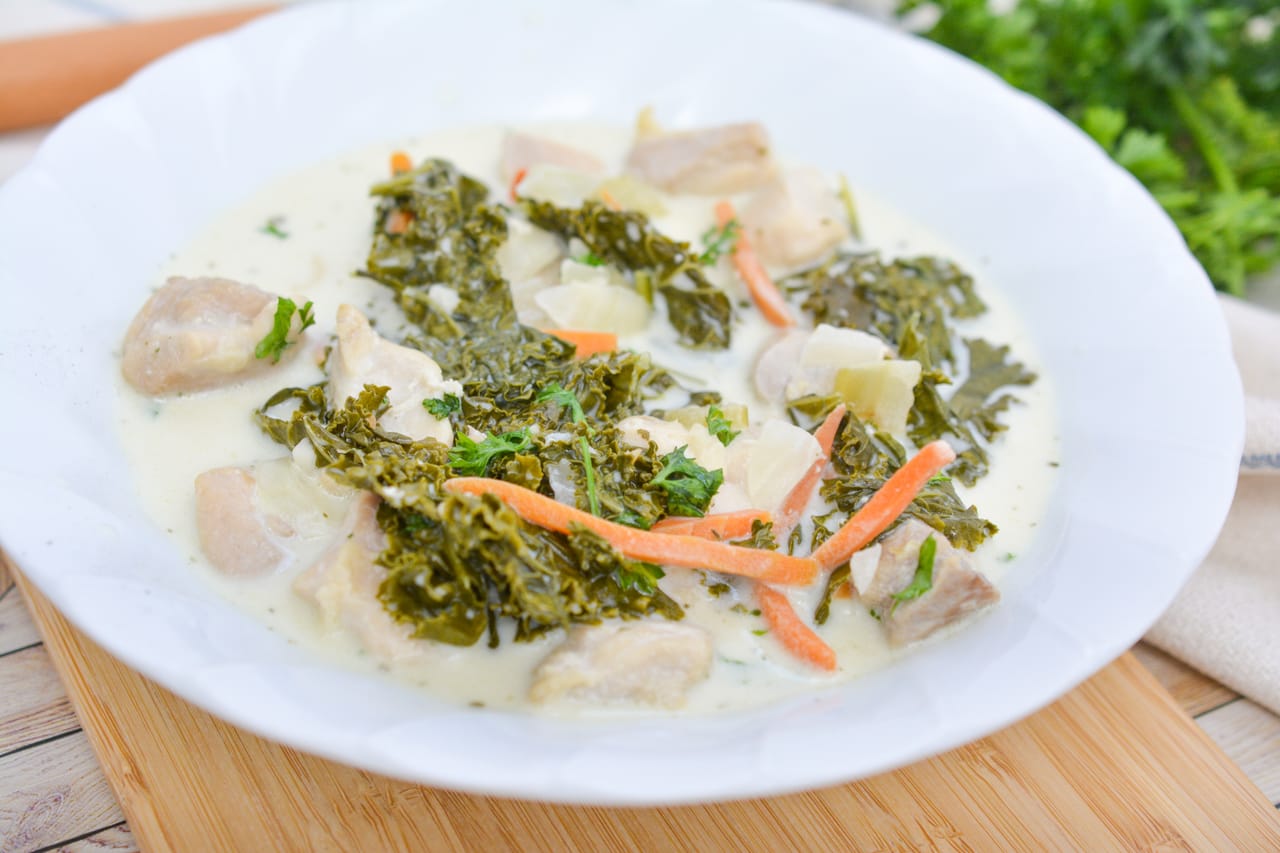
Keto Creamy Chicken Stew
Lunch & Dinner September 3, 2026 -
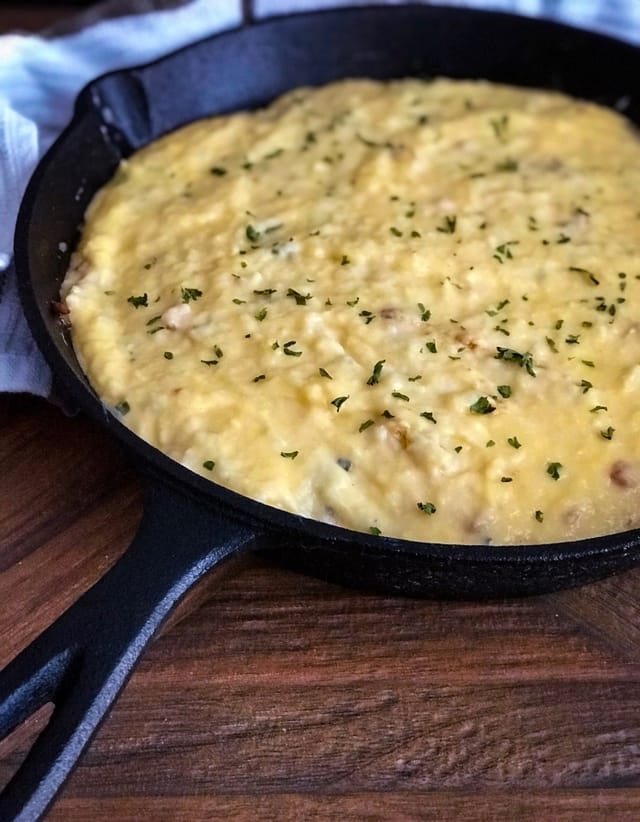
Cheesy Mashed Cauliflower Shepherd’s Pie – Low Carb, Gluten Free
Lunch & Dinner May 15, 2018 -
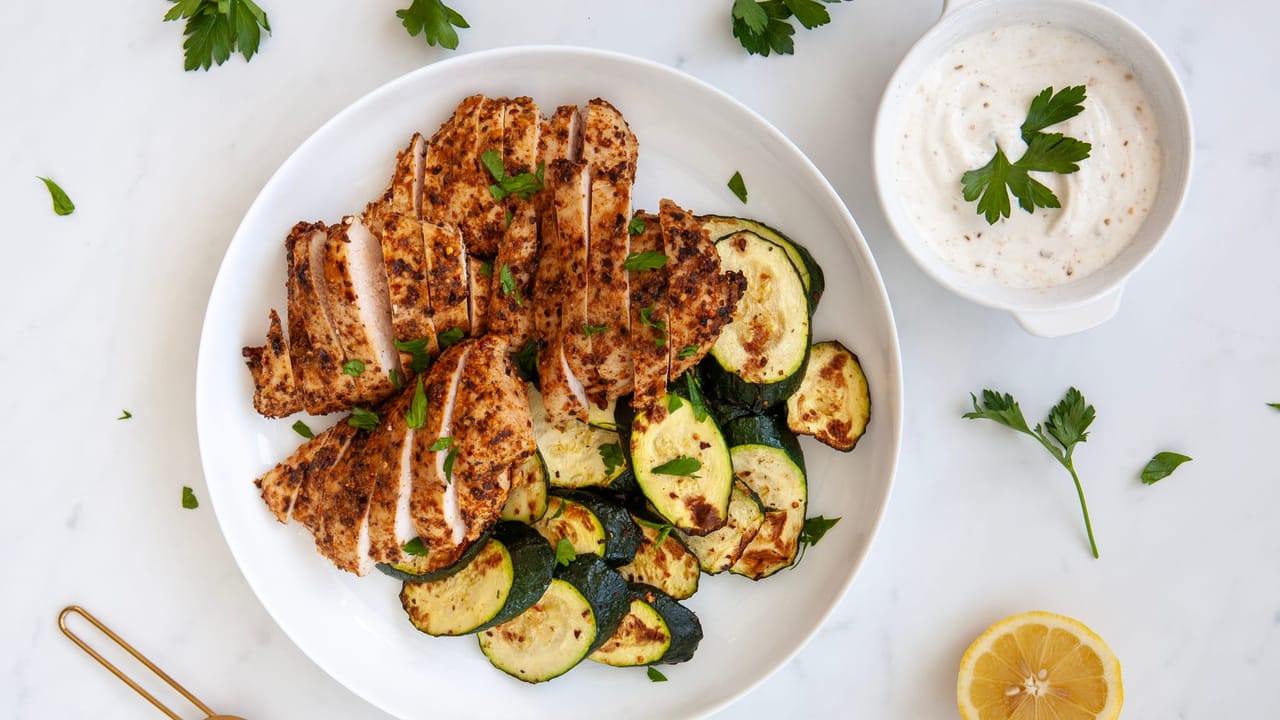
Harissa Chicken in the Air Fryer with Zucchini
Lunch & Dinner November 3, 2026 -
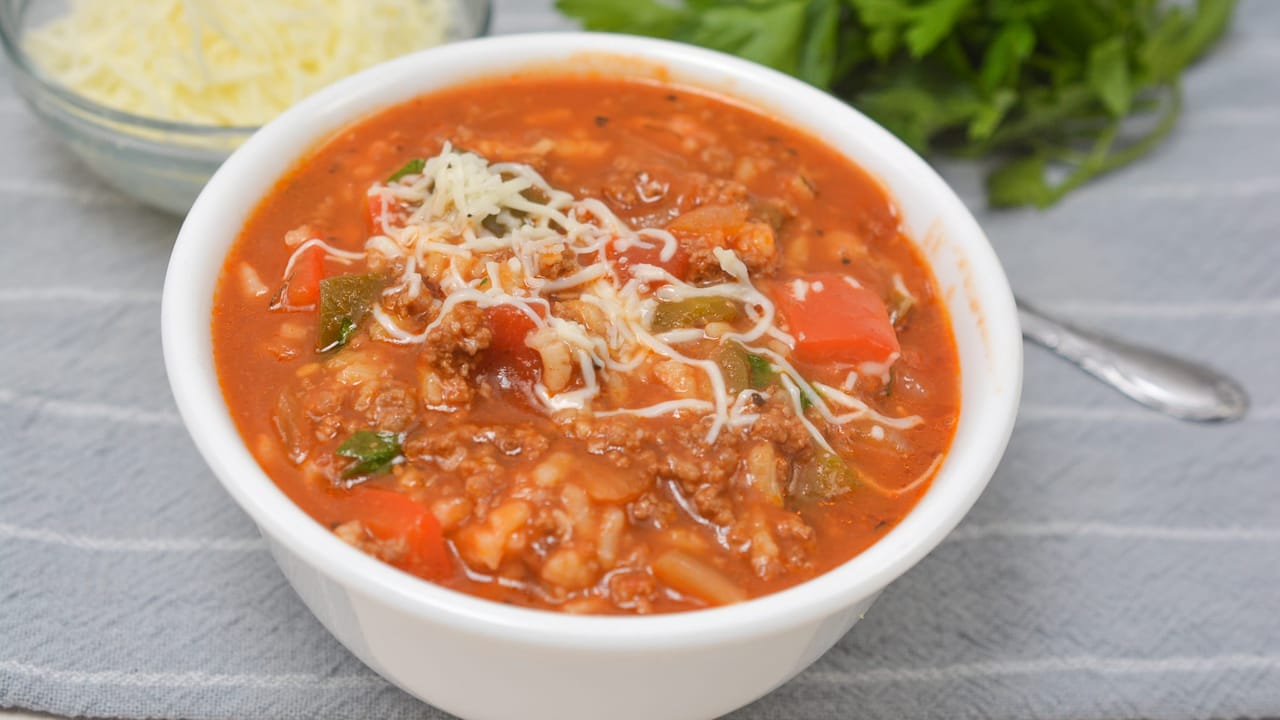
Stuffed Pepper Soup (Easy Keto Recipe)
Lunch & Dinner October 27, 2026