
Sheet Pan Rosemary Chicken and Butternut Squash
Jump to...
Introduction
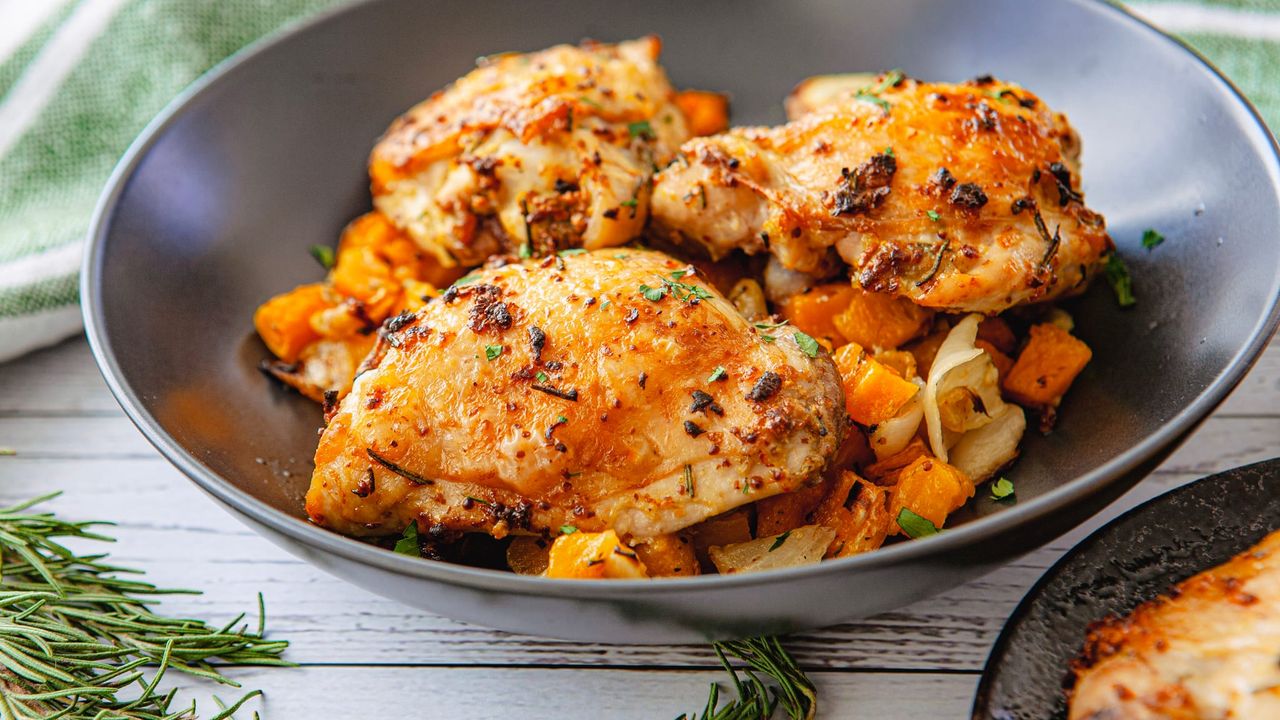
Chicken and butternut squash is pretty much a staple pairing, and it makes the most sense in winter. Butternut is one of my favorite winter squashes, dare I say even more than pumpkin, and there’s something so savory and comforting about golden chicken next to something a little sweet from the oven. This version puts the whole dinner on one sheet pan. Bone-in, skin-on chicken thighs get a coating of whole-grain Dijon mustard, garlic and fresh rosemary, then roast in the middle of a pan of butternut squash and thick-sliced onions.
The squash is the frozen, already-cubed kind, and it goes onto the pan straight from the bag. That means no wrestling a hard, lopsided squash with a big knife, no seeds to scoop, and nothing to remember to thaw that morning. Most of the time after that is hands-off, too. There’s a little chopping, a bowl for the chicken and a bowl for the vegetables, and then the oven takes over.
The Pan Goes Into the Oven Before the Food
Plenty of sheet pan dinners start on a cold pan. This one doesn’t. The empty pan goes into the oven while it preheats to 425°F, so by the time the chicken has had its 15 to 20 minutes on the counter, the pan is as hot as the oven. The vegetables start cooking from underneath the moment they land on it, instead of slowly warming up along with the metal.
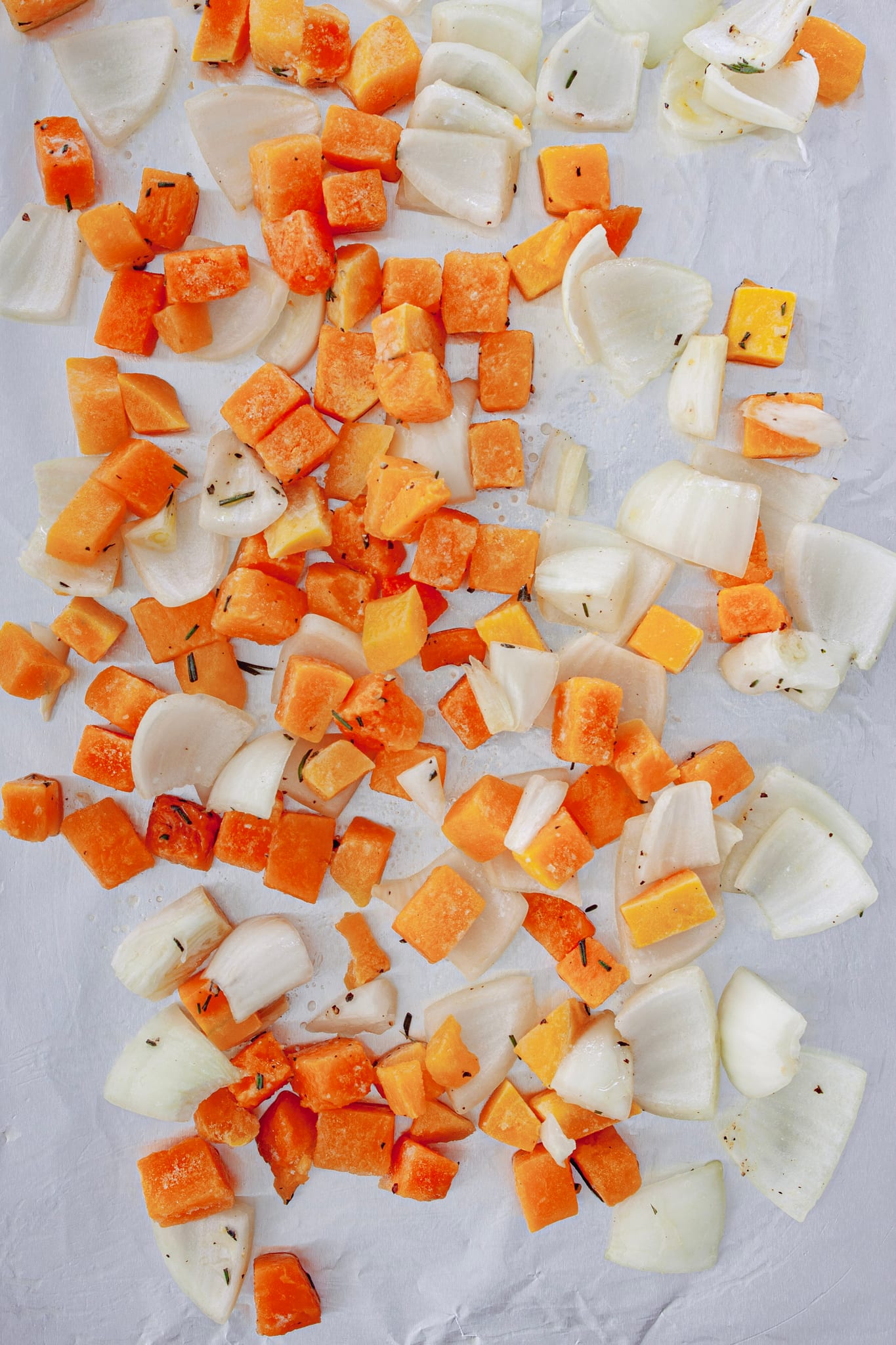
The vegetables also get a five-minute head start on the chicken. That’s the only juggling in the recipe: pull the pan out, spread the squash and onions over it, roast for five minutes, then pull it out again and settle the thighs in the middle, skin side up. Both trips mean handling a very hot pan, so keep your oven mitts on and have a heatproof spot ready on the counter before you open the oven.
Give the vegetables the whole pan and keep them in a single layer. Squash and onions piled on top of each other steam in their own moisture instead of roasting, and frozen squash brings plenty of moisture with it. A standard half sheet pan, about 18 by 13 inches, gives everything room, and its rim keeps the oil and chicken juices from running off the edges.
What Goes In
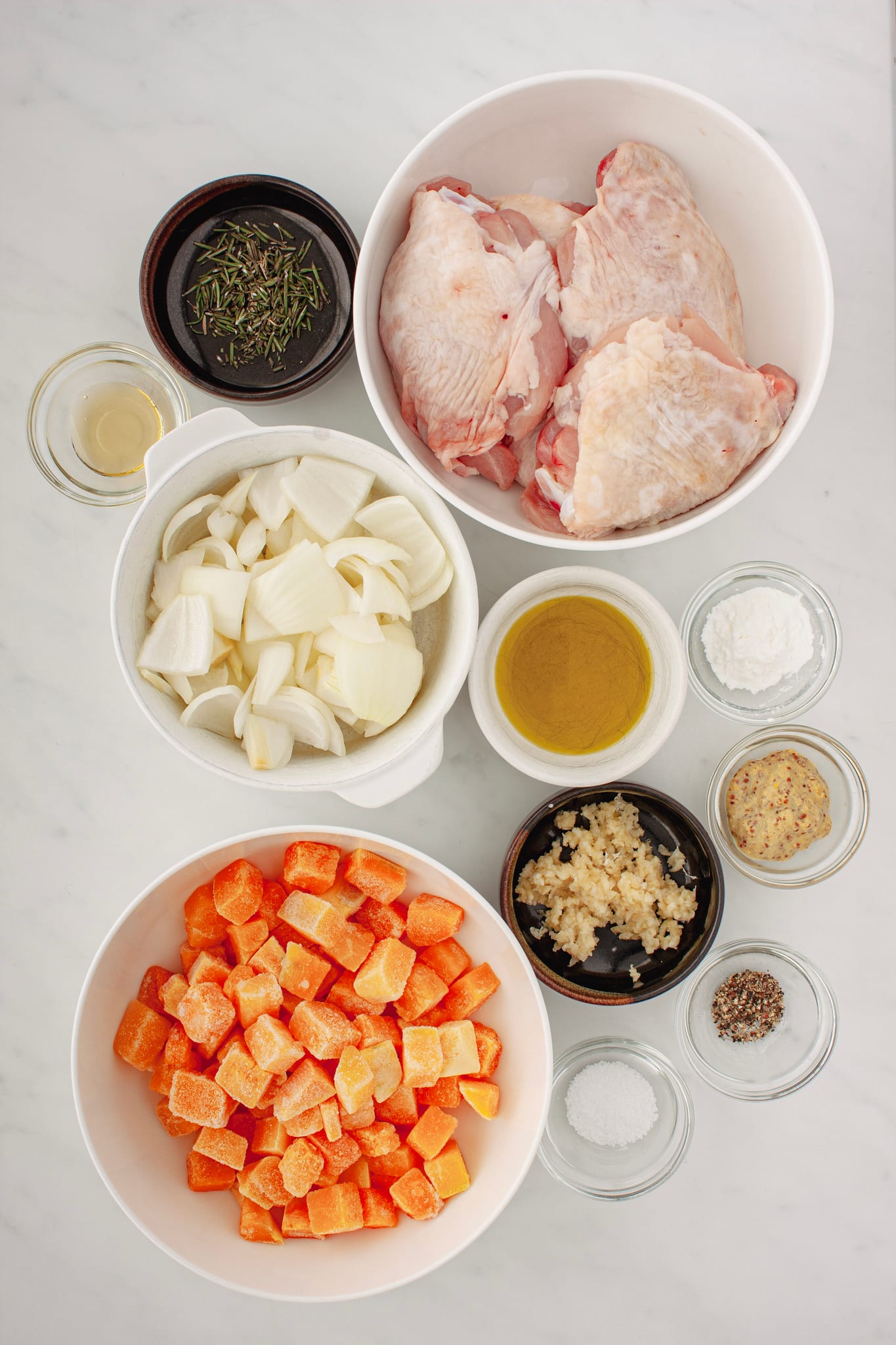
- Chicken thighs: Use bone-in thighs with the skin on. The skin is what browns on top, and the roasting time is for bone-in pieces. Pat them very dry before they go in the bowl, because a wet surface has to steam off before it can brown.
- Whole-grain Dijon, garlic and rosemary: The mustard helps the minced garlic and chopped rosemary cling to the chicken, so toss until every thigh is coated. You’ll need about 2 tablespoons of chopped rosemary in all: two-thirds for the chicken and the rest for the vegetables.
- Frozen butternut squash: One pound of frozen cubes. Leave the bag in the freezer until you’re ready to toss the vegetables.
- Onions: Two large onions, sliced about ½ inch thick, which comes to roughly 4 cups. They roast right alongside the squash for the whole time.
- Honey and cornstarch: Two teaspoons of each, tossed with the vegetables along with the oil and rosemary. The honey adds a little sweetness to the squash and onions.
Crisp Skin and Browned Squash
Once the chicken is on the pan, leave it alone. The vegetables get one stir at the halfway mark, turning the pieces so a different side sits against the hot metal, but the thighs stay put, skin side up, the whole time.
If you’d like the skin crisper still, slide the pan under the broiler for the last 2 minutes. Stay close while you do it. The honey on the vegetables can go from brown to scorched quickly under a broiler, and so can the bits of garlic on the chicken.
How to Tell When the Chicken Is Done
Go by temperature rather than the clock. Push an instant-read thermometer into the thickest part of a thigh, keeping the tip off the bone, and check more than one piece, since big thighs take longer than small ones. Chicken is safe to eat once it reaches 165°F (74°C). Thighs can take more heat than that, and this recipe roasts them to 175 to 180°F for a more tender texture.
When they get there, let everything rest on the pan for 5 minutes before serving.

Roasted Rosemary Chicken with Butternut Squash
31 net carbsIngredients
For the chicken
- 2 ½ lbs chicken thighs, bone-in, skin-on, about 8
- 2 tbsp olive oil, extra virgin
- 2 tbsp whole-grain Dijon mustard
- 6x garlic clove, finely minced
- 4 tsp fresh rosemary, finely chopped (two-thirds of 2 tablespoons)
- 1 tsp kosher salt
- ½ tsp pepper, black, freshly ground
For the vegetables
- 1 lb butternut squash, frozen cubes, do not thaw
- 2x onion, large, sliced 1/2 inch thick (about 4 cups)
- 2 tbsp olive oil, extra virgin
- 2 tsp fresh rosemary, finely chopped (the remaining third)
- 2 tsp cornstarch
- 2 tsp honey
- A pinch of kosher salt, to taste
- A pinch of pepper, black, to taste
Nutrition Facts
4 servings per recipe| Per Serving 760 | Per Recipe 3060 | |||
| 2 ½ lbs of chicken thighs, bone-in, skin-on | 501.22 | 2004.88 | ||
| 2 tbsp of olive oil, extra virgin | 60 | 240 | ||
| 2 tbsp of whole-grain Dijon mustard | 7.5 | 30 | ||
| 6x garlic clove | 6 | 24 | ||
| 4 tsp of fresh rosemary | 0.73 | 2.93 | ||
| ½ tsp of pepper, black | 0.75 | 3 | ||
| 1 lb of butternut squash, frozen cubes | 64.64 | 258.55 | ||
| 2x onion | 48 | 192 | ||
| 2 tbsp of olive oil, extra virgin | 60 | 240 | ||
| 2 tsp of fresh rosemary | 0.37 | 1.47 | ||
| 2 tsp of cornstarch | 5.08 | 20.33 | ||
| 2 tsp of honey | 10.67 | 42.67 | ||
| 52g | 67% | 208g | 266% | |
| 2 ½ lbs of chicken thighs, bone-in, skin-on | 37.65 g | 150.59 g | ||
| 2 tbsp of olive oil, extra virgin | 7 g | 28 g | ||
| 4 tsp of fresh rosemary | 0.03 g | 0.13 g | ||
| 1 lb of butternut squash, frozen cubes | 0.11 g | 0.45 g | ||
| 2x onion | 0.12 g | 0.48 g | ||
| 2 tbsp of olive oil, extra virgin | 7 g | 28 g | ||
| 2 tsp of fresh rosemary | 0.02 g | 0.07 g | ||
| 2 tsp of cornstarch | 0 g | 0 g | ||
| 12g | 61% | 49g | 246% | |
| 2 ½ lbs of chicken thighs, bone-in, skin-on | 10.21 g | 40.82 g | ||
| 2 tbsp of olive oil, extra virgin | 1 g | 4 g | ||
| 4 tsp of fresh rosemary | 0.02 g | 0.07 g | ||
| 2x onion | 0.05 g | 0.18 g | ||
| 2 tbsp of olive oil, extra virgin | 1 g | 4 g | ||
| 2 tsp of fresh rosemary | 0.01 g | 0.03 g | ||
| 0g | 1g | |||
| 2 ½ lbs of chicken thighs, bone-in, skin-on | 0.23 g | 0.91 g | ||
| 222mg | 74% | 889mg | 296% | |
| 2 ½ lbs of chicken thighs, bone-in, skin-on | 222.26 mg | 889.04 mg | ||
| 850mg | 37% | 3410mg | 148% | |
| 2 ½ lbs of chicken thighs, bone-in, skin-on | 183.7 mg | 734.82 mg | ||
| 2 tbsp of whole-grain Dijon mustard | 180 mg | 720 mg | ||
| 6x garlic clove | 1.5 mg | 6 mg | ||
| 4 tsp of fresh rosemary | 0.13 mg | 0.53 mg | ||
| 1 tsp of kosher salt | 480 mg | 1920 mg | ||
| 1 lb of butternut squash, frozen cubes | 2.27 mg | 9.07 mg | ||
| 2x onion | 4.8 mg | 19.2 mg | ||
| 2 tsp of fresh rosemary | 0.07 mg | 0.27 mg | ||
| 2 tsp of cornstarch | 0.12 mg | 0.48 mg | ||
| 2 tsp of honey | 0.13 mg | 0.53 mg | ||
| 35g | 13% | 140g | 51% | |
| 2 ½ lbs of chicken thighs, bone-in, skin-on | 0.68 g | 2.72 g | ||
| 2 tbsp of whole-grain Dijon mustard | 1.5 g | 6 g | ||
| 6x garlic clove | 1.5 g | 6 g | ||
| 4 tsp of fresh rosemary | 0.12 g | 0.47 g | ||
| ½ tsp of pepper, black | 0.19 g | 0.75 g | ||
| 1 lb of butternut squash, frozen cubes | 16.33 g | 65.32 g | ||
| 2x onion | 10.5 g | 42 g | ||
| 2 tsp of fresh rosemary | 0.06 g | 0.23 g | ||
| 2 tsp of cornstarch | 1.22 g | 4.87 g | ||
| 2 tsp of honey | 2.88 g | 11.53 g | ||
| 4g | 14% | 16g | 56% | |
| 6x garlic clove | 0.15 g | 0.6 g | ||
| 4 tsp of fresh rosemary | 0.08 g | 0.32 g | ||
| ½ tsp of pepper, black | 0.08 g | 0.3 g | ||
| 1 lb of butternut squash, frozen cubes | 1.47 g | 5.9 g | ||
| 2x onion | 2.1 g | 8.4 g | ||
| 2 tsp of fresh rosemary | 0.04 g | 0.16 g | ||
| 2 tsp of cornstarch | 0.01 g | 0.05 g | ||
| 11g | 45g | |||
| 4 tsp of fresh rosemary | 0.04 g | 0.15 g | ||
| 1 lb of butternut squash, frozen cubes | 3.18 g | 12.7 g | ||
| 2x onion | 5.09 g | 20.35 g | ||
| 2 tsp of fresh rosemary | 0.02 g | 0.07 g | ||
| 2 tsp of honey | 2.87 g | 11.47 g | ||
| Sugar Alcohols | 0g | 0% | 0g | 0% |
| Allulose | 0g | 0% | 0g | 0% |
| 31g | 124g | |||
| 2 ½ lbs of chicken thighs, bone-in, skin-on | 0.68 g | 2.72 g | ||
| 2 tbsp of whole-grain Dijon mustard | 1.5 g | 6 g | ||
| 6x garlic clove | 1.35 g | 5.4 g | ||
| 4 tsp of fresh rosemary | 0.04 g | 0.15 g | ||
| ½ tsp of pepper, black | 0.11 g | 0.45 g | ||
| 1 lb of butternut squash, frozen cubes | 14.86 g | 59.42 g | ||
| 2x onion | 8.4 g | 33.6 g | ||
| 2 tsp of fresh rosemary | 0.02 g | 0.07 g | ||
| 2 tsp of cornstarch | 1.2 g | 4.82 g | ||
| 2 tsp of honey | 2.88 g | 11.53 g | ||
| 41g | 82% | 165g | 329% | |
| 2 ½ lbs of chicken thighs, bone-in, skin-on | 37.42 g | 149.69 g | ||
| 6x garlic clove | 0.3 g | 1.2 g | ||
| 4 tsp of fresh rosemary | 0.02 g | 0.08 g | ||
| ½ tsp of pepper, black | 0.03 g | 0.1 g | ||
| 1 lb of butternut squash, frozen cubes | 2.04 g | 8.16 g | ||
| 2x onion | 1.32 g | 5.28 g | ||
| 2 tsp of fresh rosemary | 0.01 g | 0.04 g | ||
| 2 tsp of cornstarch | 0 g | 0.01 g | ||
| 2 tsp of honey | 0.02 g | 0.07 g | ||
About these numbers: We are home cooks, not certified nutritionists. Nutrition is shared as a courtesy. We pick a representative product for each ingredient, and our recipe system works out the totals from the amounts in this recipe, so please treat them as a helpful estimate rather than a guarantee. The brands you buy, any swaps you make, and how generously you portion the recipe will all move these numbers.
Directions
-
Heat the pan with the oven.
Slide a half sheet pan (about 18 × 13 inches) into the oven and preheat the oven to 425°F (220°C). If you like, line the pan with foil first for easier cleanup.
-
Season the chicken.
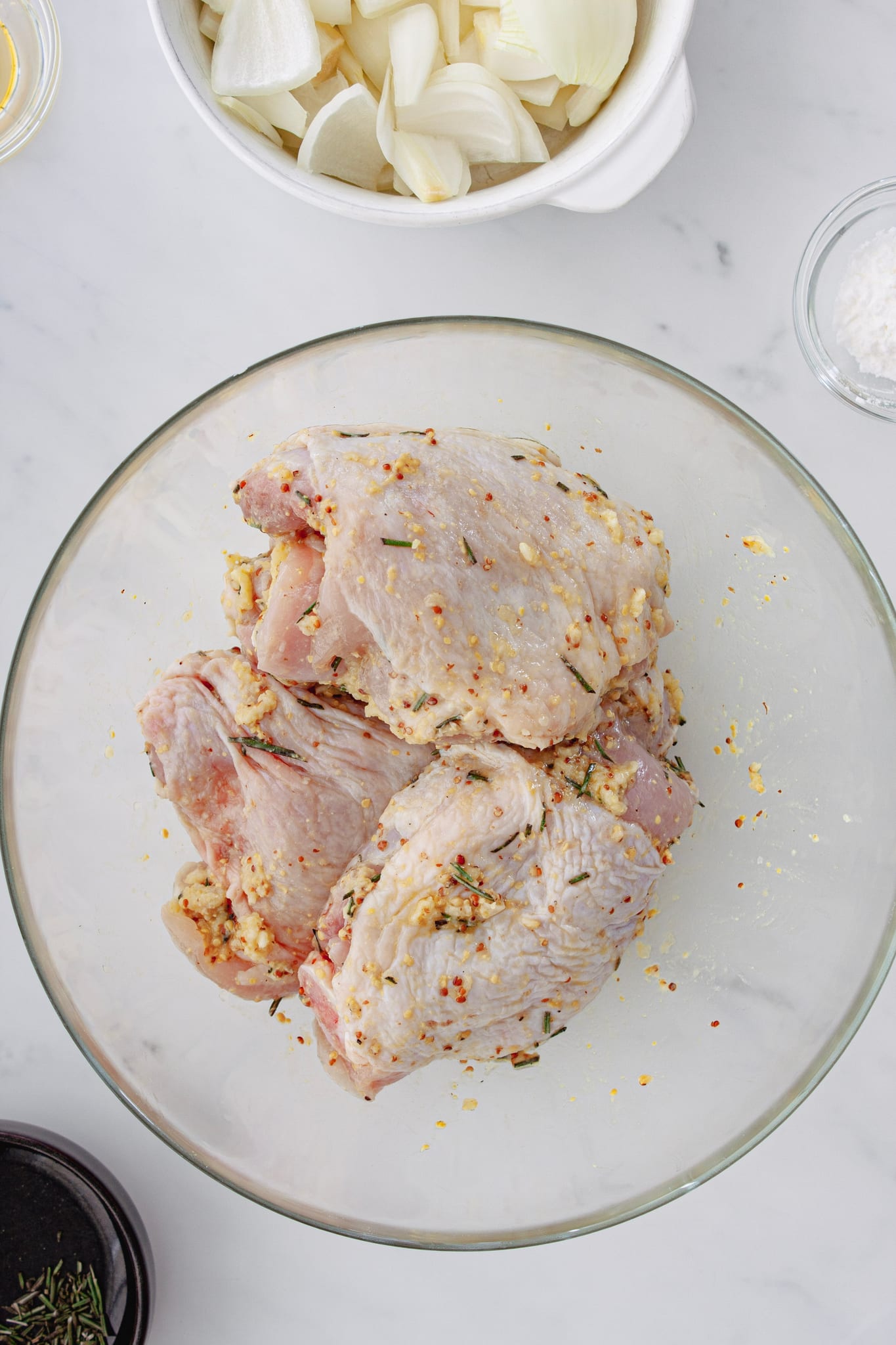
Pat the chicken thighs very dry. In a large bowl, toss them with 2 tablespoons of the olive oil, the mustard, garlic, 4 teaspoons of the rosemary, the salt and the pepper until every piece is well coated. Let them sit at room temperature for 15 to 20 minutes while the oven heats.
-
-
Toss the vegetables.
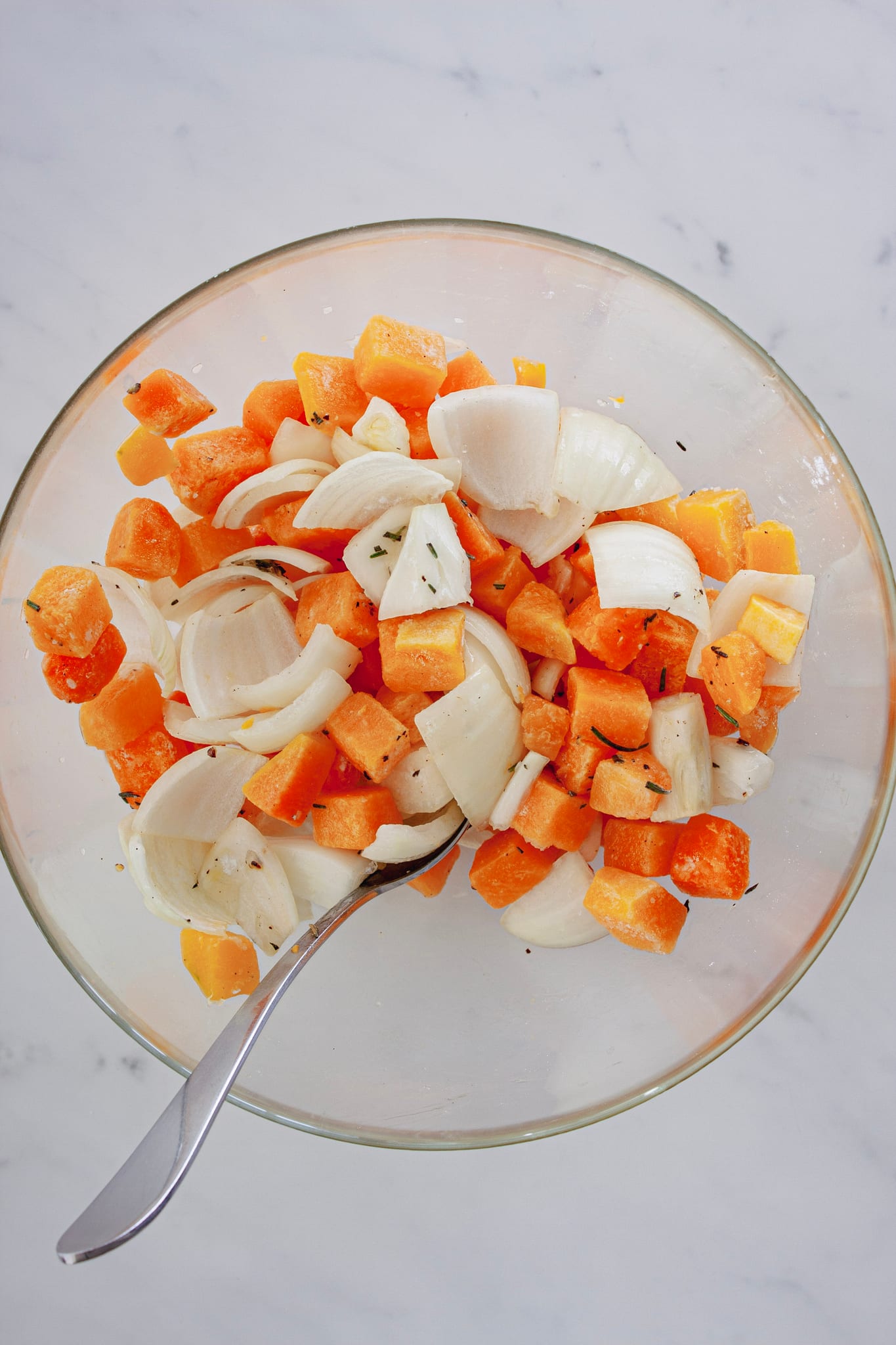
In a second bowl, toss the frozen squash and the onions with the remaining 2 tablespoons of olive oil, the remaining 2 teaspoons of rosemary, the cornstarch and the honey. Season with salt and pepper.
The squash goes in straight from the freezer. Don't thaw it.
-
-
Give the vegetables a head start.
Carefully pull the hot pan out of the oven, spread the vegetables over it in a single layer and roast for 5 minutes.
The pan is as hot as the oven, so use oven mitts and set it on a heatproof surface while you work.
-
-
Add the chicken.
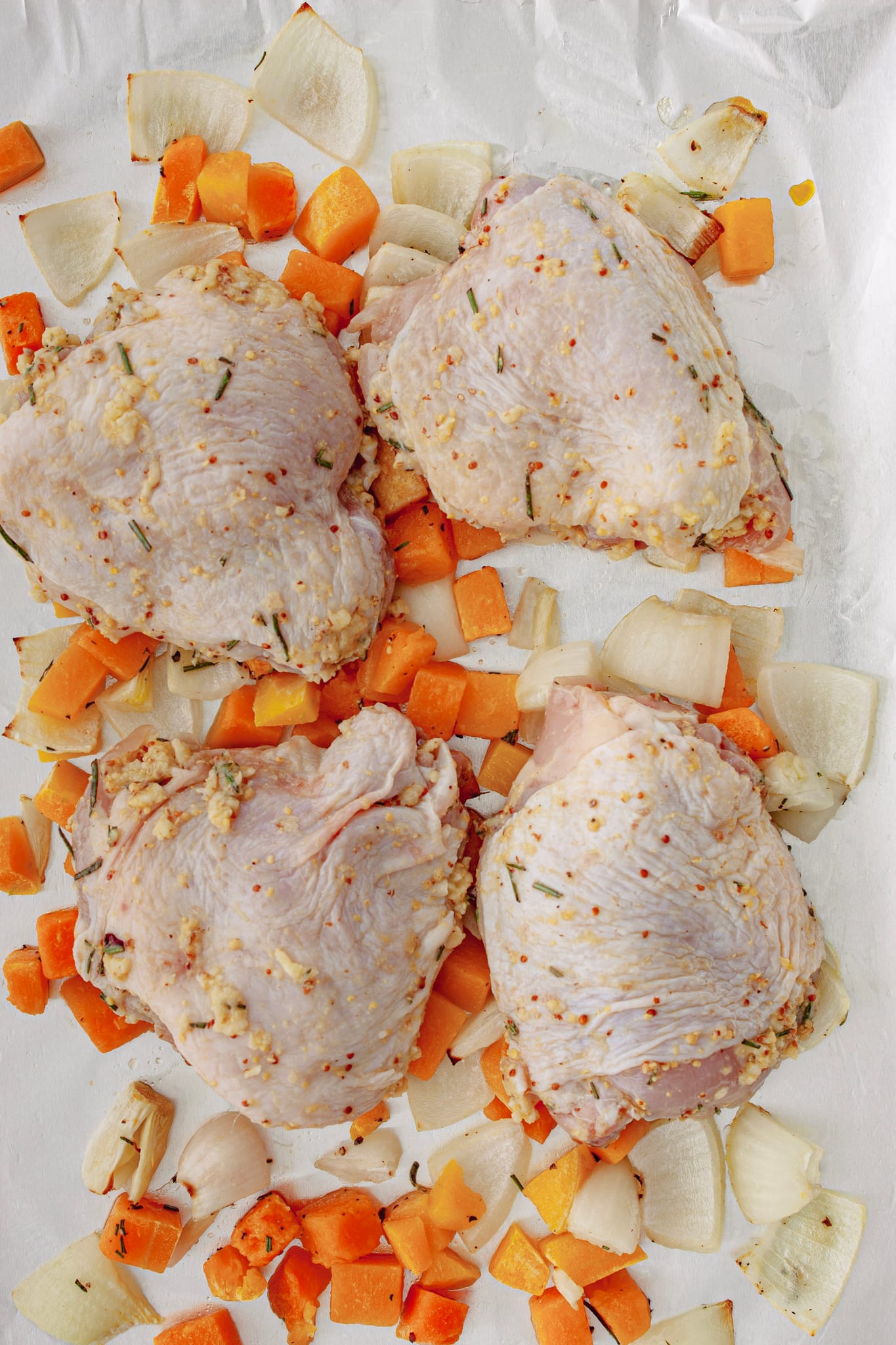
Take the pan out again and nestle the chicken thighs, skin side up, in the center of the pan among the vegetables.
-
-
Roast until the chicken is done.
Roast for 35 to 40 minutes, stirring the vegetables once at the halfway mark, until an instant-read thermometer in the thickest part of a thigh, not touching the bone, reads 175 to 180°F.
Chicken is safe to eat once the thickest part reaches 165°F (74°C). Thighs are taken on to 175 to 180°F here for a more tender texture.
-
Rest and serve.
Let everything rest on the pan for 5 minutes before serving.
Notes
- For crisper skin, run the pan under the broiler for the last 2 minutes of roasting. Watch it closely: the honey on the vegetables can scorch quickly under a broiler.
- Use bone-in, skin-on thighs. The roasting time is for bone-in pieces, and the skin is what browns on top.
- Leftover squash and onions can be mashed with a splash of the pan drippings for a side dish the next night.
- The Nutrition Facts panel counts the meat and skin of the thighs, not the bones.
Serving It
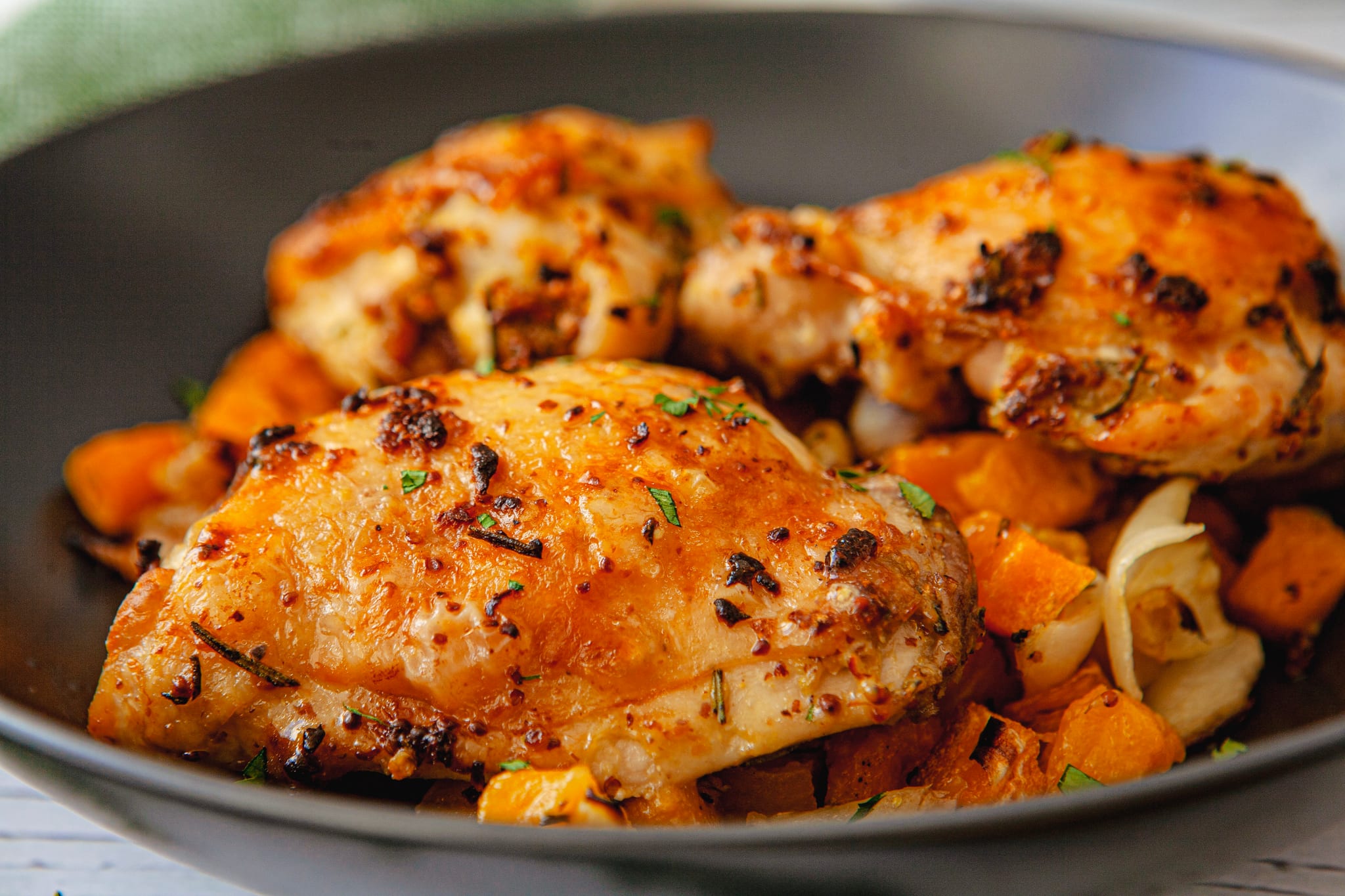
Everything is already together on the pan, so serve it straight from there: a spoonful of squash and onions on each plate, the chicken on top, and some of the pan juices spooned over.
If you’re counting carbs, check the Nutrition Facts panel on the recipe card before you plan the rest of your day around this one. The squash, the onions and that little bit of honey make it higher in carbs than many of our keto dinners.
Storing Leftovers
Get leftovers into a covered container in the refrigerator within two hours of cooking, or within one hour if the room is above 90°F. Eat them within three to four days, and reheat the chicken until it reaches 165°F, following the USDA’s leftovers guidance.
Leftover squash and onions don’t have to go back on the plate the same way, either. Mash them with a splash of the pan drippings and you have a side dish for the next night.
Frequently Asked Questions
Do I need to thaw the frozen butternut squash?
No. Toss the squash with the onions while it’s still frozen and spread it straight onto the hot pan. The roasting time is written for squash that goes in frozen.
What temperature should the chicken thighs reach?
Chicken is safe to eat at 165°F (74°C), measured in the thickest part of the thigh with the thermometer off the bone. This recipe roasts the thighs on to 175 to 180°F for a more tender texture.
Wrap Up
It’s a whole dinner on one sheet pan, with the squash going on straight from the freezer and the oven doing most of the work.
If you make it, rate it on the recipe card and tell us in the comments how the frozen squash roasted up for you. We love hearing from you! You can also share a photo on Instagram with #buttertogetherkitchen.
More Recipes You'll Love
-
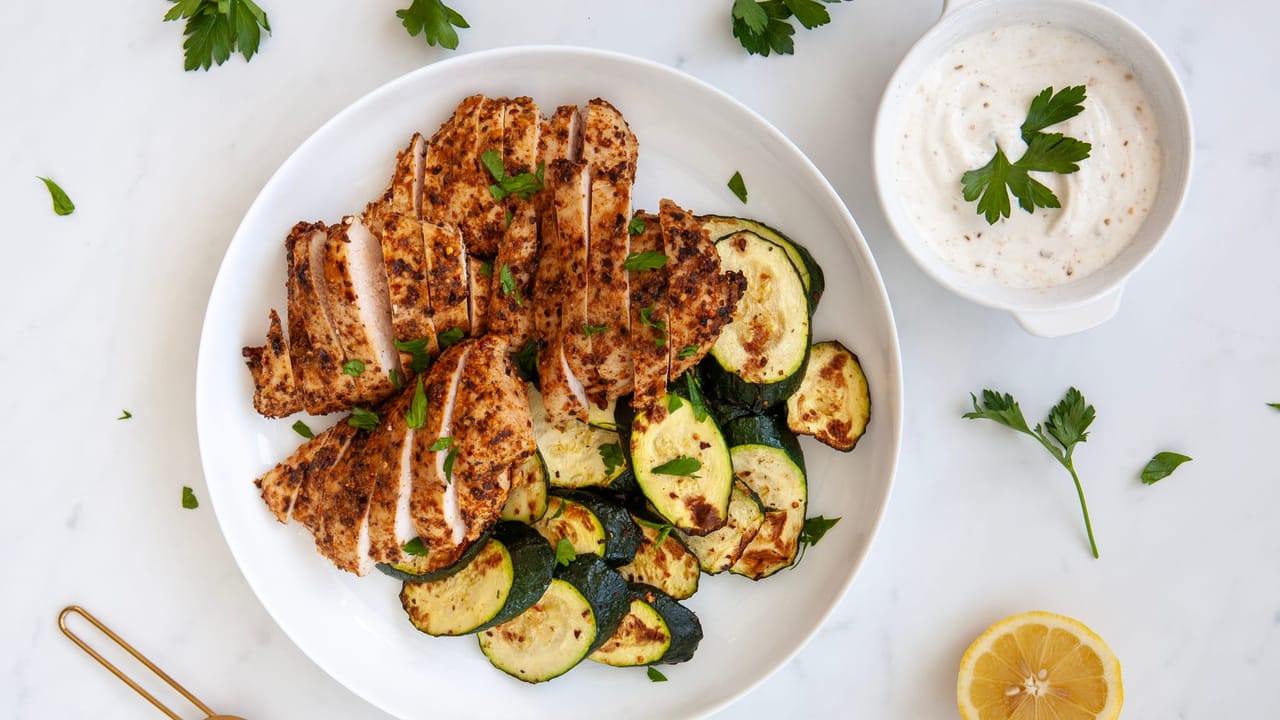
Harissa Chicken in the Air Fryer with Zucchini
Lunch & Dinner November 3, 2026 -
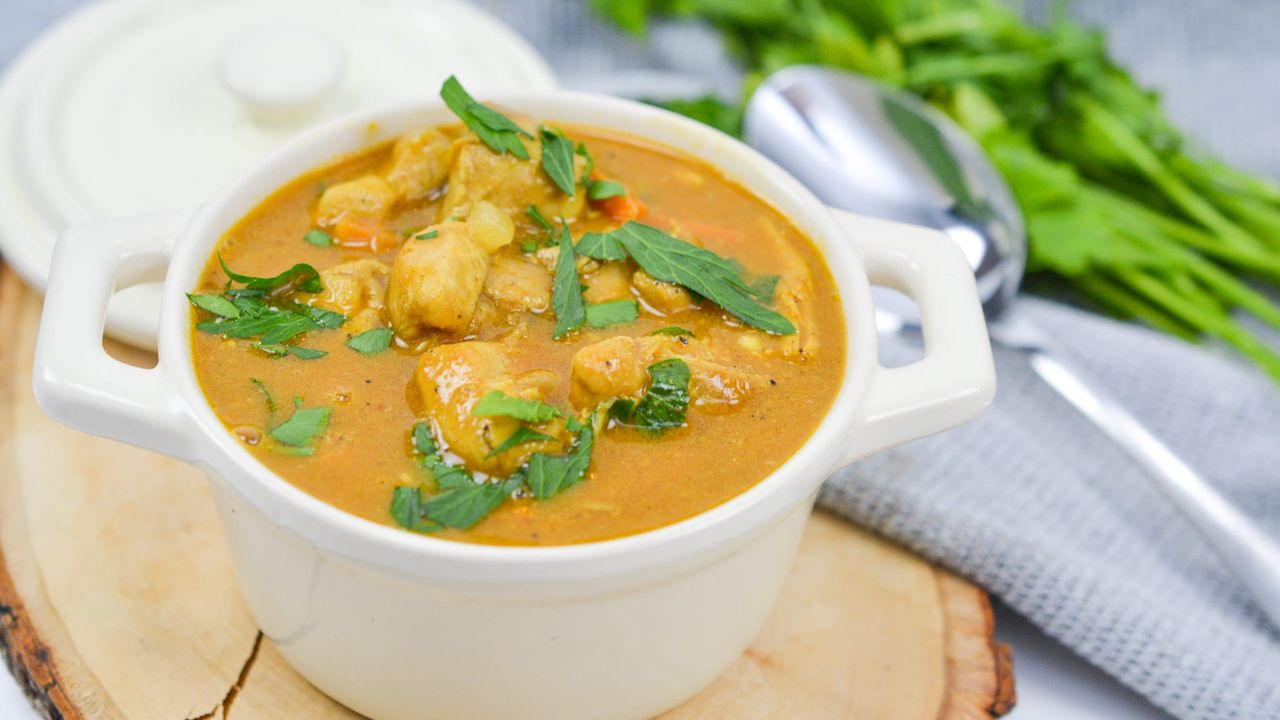
Slow Cooker Coconut Chicken Curry (Low Carb)
Lunch & Dinner November 9, 2026 -
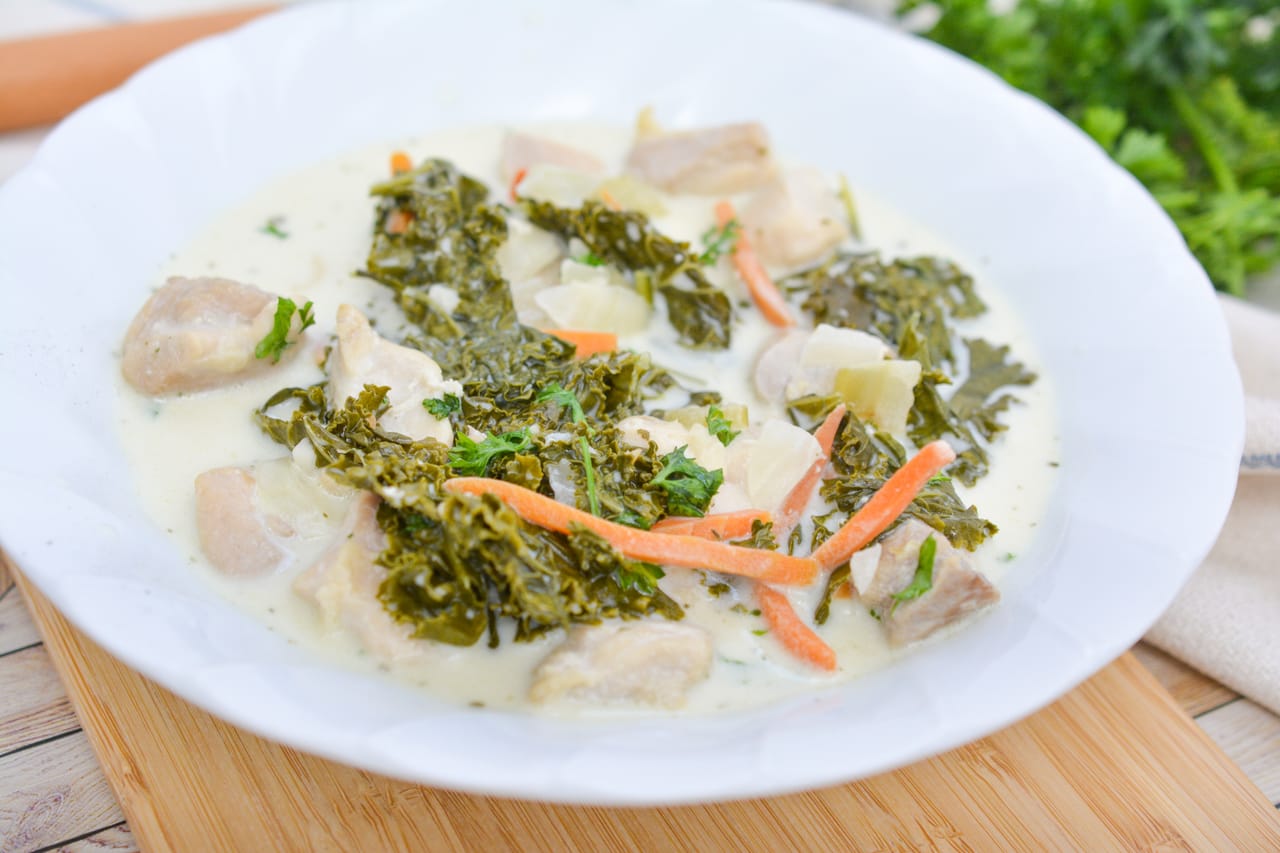
Keto Creamy Chicken Stew
Lunch & Dinner September 3, 2026 -
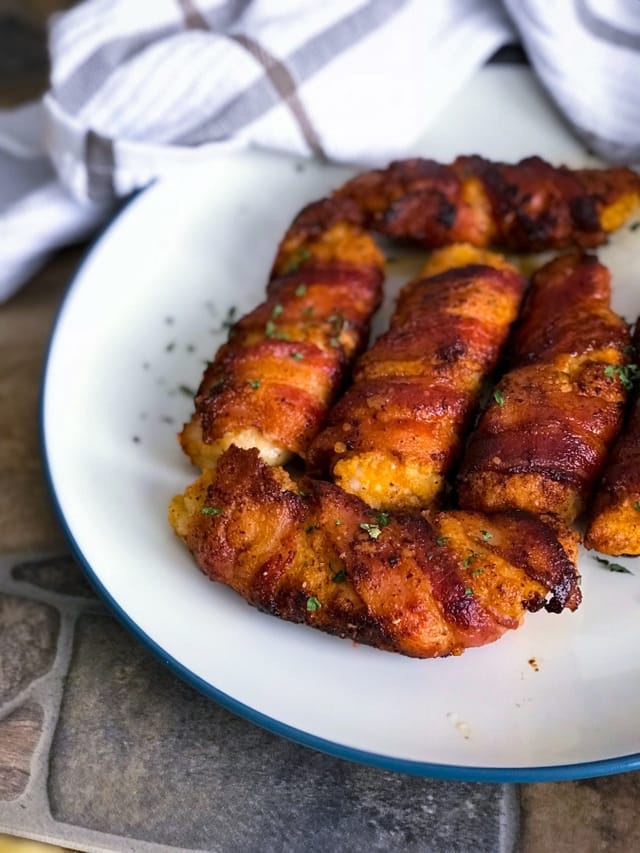
Bacon Wrapped Parmesan Crusted Chicken – Low Carb & Gluten Free
Lunch & Dinner April 25, 2018