Easy-To-Make Keto Pumpkin Pie Recipe
Jump to...
Introduction
Pumpkin pie has always been my favorite pie, and since it is usually only available in the fall months, it makes me appreciate the Fall that much more.
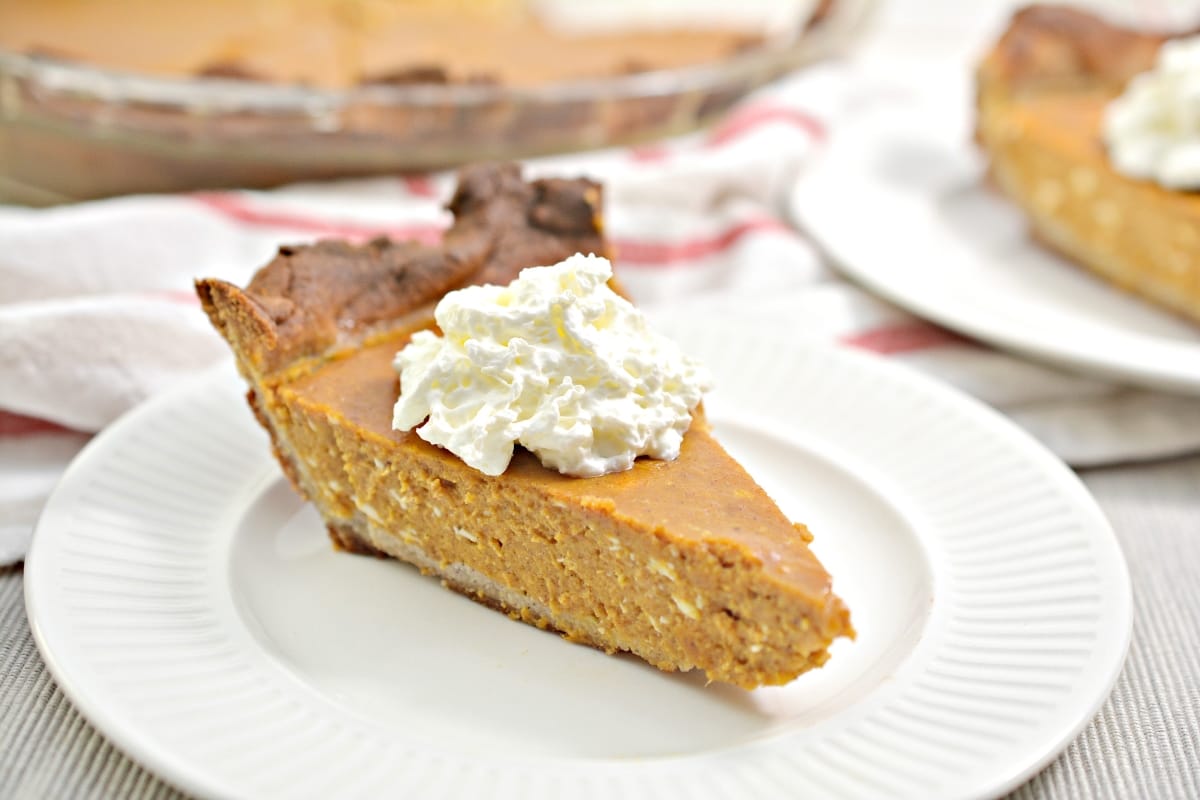
This easy keto pumpkin pie tastes silky smooth and sweet just like the pumpkin pie you know and love, just without all of the sugar you may be trying to avoid. The crust is almond flour with cold cream cheese and butter worked into it; the filling is a whole 15-ounce can of pumpkin puree with heavy cream and eggs.
If you’ve ever made a pumpkin pie before, you probably already know how to make this pie as the process is pretty much the same. The one part worth planning around is the dough, which goes into the freezer for at least half an hour. After that you roll it out between two sheets of parchment and then press it into the plate.
The other part is knowing when to take it out. The filling is a custard, so the pie is done when the edges have set and the center is still slightly jiggly. Wait for the middle to stop moving and it has gone too far, which is what cracks it. If it’s for Thanksgiving, bake it the day before: a custard pie cuts more cleanly cold.


Easy Keto Pumpkin Pie
7 net carbsIngredients
For Crust
- 1 ¾ cups almond flour
- ½ tsp xanthan gum
- 3 tbsp lakanto powdered monkfruit sweetener
- 1 large egg
- 3 oz cream cheese
- 3 tbsp butter, unsalted, cold
Pie Filling
- 15 oz pumpkin puree
- 2 oz cream cheese
- ½ cup heavy whipping cream
- ½ cup lakanto powdered monkfruit sweetener
- 2 tsp vanilla extract
- 3 tsp pumpkin spice
- 2x large egg, at room temperature
Nutrition Facts
10 servings per recipe| Per Serving 280 | Per Recipe 2830 | |||
| 1 ¾ cups of almond flour | 126 | 1260 | ||
| ½ tsp of xanthan gum | 0.08 | 0.83 | ||
| 1 large egg | 6 | 60 | ||
| 3 oz of cream cheese | 30.37 | 303.74 | ||
| 3 tbsp of butter, unsalted | 30 | 300 | ||
| 15 oz of pumpkin puree | 16.36 | 163.55 | ||
| 2 oz of cream cheese | 20.25 | 202.5 | ||
| ½ cup of heavy whipping cream | 40 | 400 | ||
| 2 tsp of vanilla extract | 2.4 | 24 | ||
| 2x large egg | 12 | 120 | ||
| 25g | 32% | 248g | 317% | |
| 1 ¾ cups of almond flour | 11.2 g | 112 g | ||
| 1 large egg | 0.4 g | 4 g | ||
| 3 oz of cream cheese | 3.04 g | 30.37 g | ||
| 3 tbsp of butter, unsalted | 3.3 g | 33 g | ||
| 2 oz of cream cheese | 2.02 g | 20.25 g | ||
| ½ cup of heavy whipping cream | 4 g | 40 g | ||
| 2x large egg | 0.8 g | 8 g | ||
| 9g | 45% | 91g | 454% | |
| 1 ¾ cups of almond flour | 0.7 g | 7 g | ||
| 1 large egg | 0.15 g | 1.5 g | ||
| 3 oz of cream cheese | 1.82 g | 18.22 g | ||
| 3 tbsp of butter, unsalted | 2.1 g | 21 g | ||
| 2 oz of cream cheese | 1.21 g | 12.15 g | ||
| ½ cup of heavy whipping cream | 2.8 g | 28 g | ||
| 2x large egg | 0.3 g | 3 g | ||
| Trans Fat | 0g | 0% | 0g | 0% |
| 103mg | 34% | 1032mg | 344% | |
| 1 large egg | 21 mg | 210 mg | ||
| 3 oz of cream cheese | 9.11 mg | 91.12 mg | ||
| 3 tbsp of butter, unsalted | 9 mg | 90 mg | ||
| 2 oz of cream cheese | 6.07 mg | 60.75 mg | ||
| ½ cup of heavy whipping cream | 16 mg | 160 mg | ||
| 2x large egg | 42 mg | 420 mg | ||
| 80mg | 4% | 810mg | 35% | |
| ½ tsp of xanthan gum | 0.17 mg | 1.67 mg | ||
| 1 large egg | 7 mg | 70 mg | ||
| 3 oz of cream cheese | 33.41 mg | 334.12 mg | ||
| 2 oz of cream cheese | 22.27 mg | 222.75 mg | ||
| ½ cup of heavy whipping cream | 4 mg | 40 mg | ||
| 2 tsp of vanilla extract | 0.08 mg | 0.8 mg | ||
| 2x large egg | 14 mg | 140 mg | ||
| 18g | 6% | 177g | 64% | |
| 1 ¾ cups of almond flour | 4.2 g | 42 g | ||
| ½ tsp of xanthan gum | 0.12 g | 1.17 g | ||
| 3 tbsp of lakanto powdered monkfruit sweetener | 2.25 g | 22.5 g | ||
| 1 large egg | 0.1 g | 0.99 g | ||
| 3 oz of cream cheese | 0.3 g | 3.04 g | ||
| 15 oz of pumpkin puree | 3.93 g | 39.25 g | ||
| 2 oz of cream cheese | 0.2 g | 2.02 g | ||
| ½ cup of heavy whipping cream | 0.32 g | 3.2 g | ||
| ½ cup of lakanto powdered monkfruit sweetener | 6 g | 60 g | ||
| 2 tsp of vanilla extract | 0.1 g | 1 g | ||
| 2x large egg | 0.2 g | 1.98 g | ||
| 3g | 10% | 28g | 101% | |
| 1 ¾ cups of almond flour | 1.4 g | 14 g | ||
| ½ tsp of xanthan gum | 0.12 g | 1.17 g | ||
| 15 oz of pumpkin puree | 1.31 g | 13.08 g | ||
| 4g | 36g | |||
| 1 ¾ cups of almond flour | 1.4 g | 14 g | ||
| 3 oz of cream cheese | 0.3 g | 3.04 g | ||
| 15 oz of pumpkin puree | 1.31 g | 13.08 g | ||
| 2 oz of cream cheese | 0.2 g | 2.02 g | ||
| ½ cup of heavy whipping cream | 0.32 g | 3.2 g | ||
| 2 tsp of vanilla extract | 0.1 g | 1 g | ||
| 8g | 83g | |||
| 3 tbsp of lakanto powdered monkfruit sweetener | 2.25 g | 22.5 g | ||
| ½ cup of lakanto powdered monkfruit sweetener | 6 g | 60 g | ||
| Allulose | 0g | 0% | 0g | 0% |
| 7g | 66g | |||
| 1 ¾ cups of almond flour | 2.8 g | 28 g | ||
| 1 large egg | 0.1 g | 0.99 g | ||
| 3 oz of cream cheese | 0.3 g | 3.04 g | ||
| 15 oz of pumpkin puree | 2.62 g | 26.17 g | ||
| 2 oz of cream cheese | 0.2 g | 2.02 g | ||
| ½ cup of heavy whipping cream | 0.32 g | 3.2 g | ||
| 2 tsp of vanilla extract | 0.1 g | 1 g | ||
| 2x large egg | 0.2 g | 1.98 g | ||
| 8g | 15% | 77g | 153% | |
| 1 ¾ cups of almond flour | 4.2 g | 42 g | ||
| 1 large egg | 0.6 g | 6 g | ||
| 3 oz of cream cheese | 0.61 g | 6.07 g | ||
| 15 oz of pumpkin puree | 0.33 g | 3.27 g | ||
| 2 oz of cream cheese | 0.4 g | 4.05 g | ||
| ½ cup of heavy whipping cream | 0.32 g | 3.2 g | ||
| 2x large egg | 1.2 g | 12 g | ||
About these numbers: We are home cooks, not certified nutritionists. Nutrition is shared as a courtesy. We pick a representative product for each ingredient, and our recipe system works out the totals from the amounts in this recipe, so please treat them as a helpful estimate rather than a guarantee. The brands you buy, any swaps you make, and how generously you portion the recipe will all move these numbers.
Directions
-
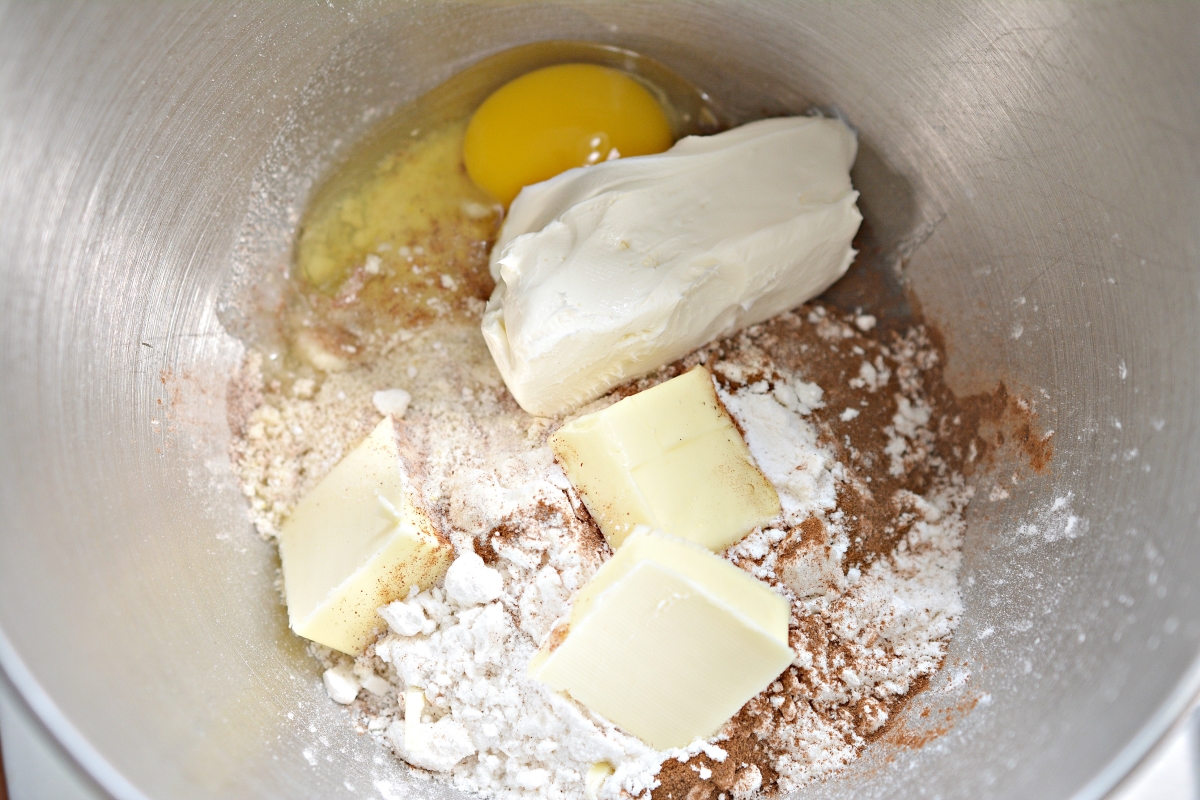
In a mixing bowl, pour all the pie crust ingredients (almond flour, xanthan gum, Lakanto Monk Fruit Sweetener, egg, cold cream cheese, and cold butter).
Blend the ingredients together with a whisk or electric mixer until a dough forms. Be careful not to overmix the ingredients. The dough should resemble coarse breadcrumbs rather than cookie dough.
-
-
Wrap your dough in plastic or saran wrap and place it in the freezer for at least 30 minutes.
Doing this will ensure that your dough is easy to spread and manage when forming the pie crust.
-
Preheat your oven to 350 degrees Fahrenheit.
-
Remove the dough from the freezer and its wrapping.
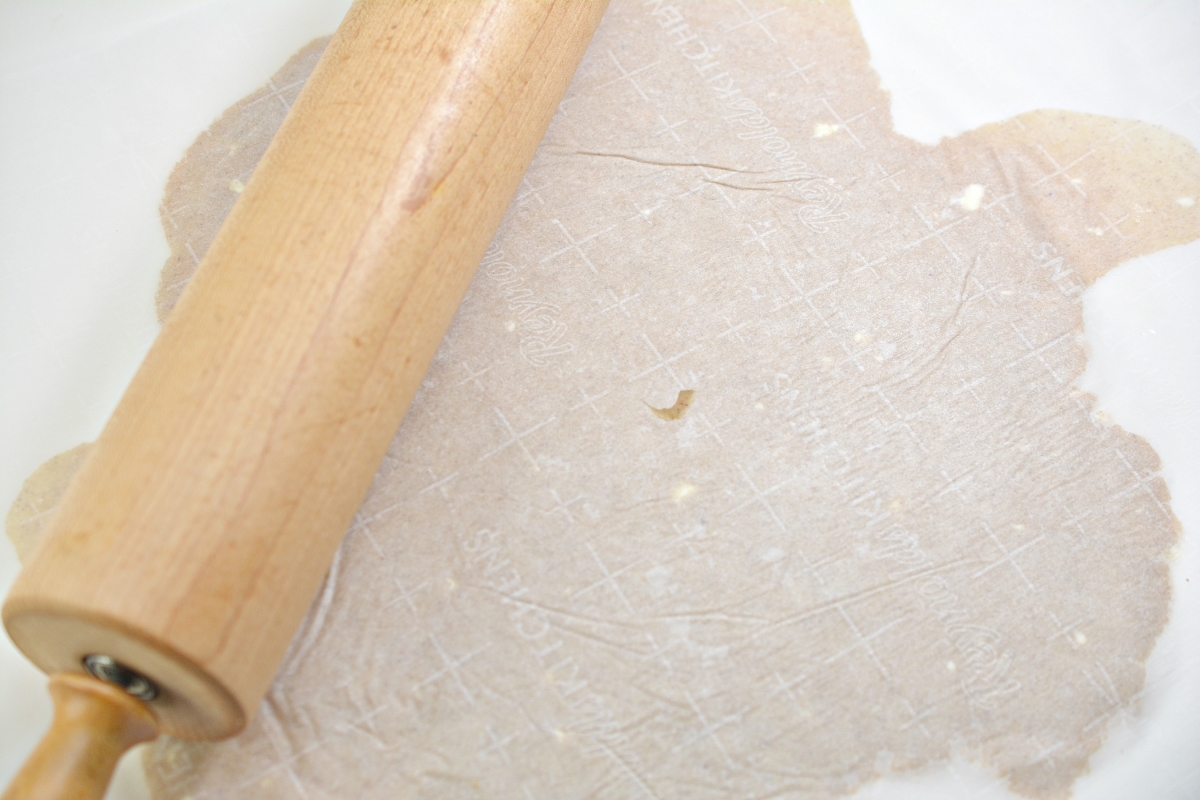
Place it between two sheets of parchment paper. Using a rolling pin, roll out your dough until you reach your desired thickness for the crust. A thinner crust will produce a crispier texture, while a thicker crust will produce a chewier one.
-
-
Grease a pie plate or pan with butter or cooking spray.
Remove parchment paper from the dough. Place the dough on the greased pie plate.
-
Press the dough into the pie plate, making sure that its spread evenly along the bottom and sides.
Crimp the crust along the top as you go. Then, use a fork to prick some holes in the crust. This will prevent bubbling during baking.
-
Place the pie plate in the preheated oven and let the crust bake for 8-12 minutes or until the crust edges have browned a bit.
-
While the crust is baking, make your pie filling.
Pour all the ingredients for the filling into a large bowl (pumpkin puree, cream cheese, heavy cream, Lakanto Powdered Monk Fruit Sweetener, vanilla extract, pumpkin pie spice, and room-temperature eggs). Blend the ingredients until they become a smooth, homogenous mixture.
-
Pour the pie filling into your pre-baked crust.
Use a spatula or the back of a spoon to smooth the top.
-
Cover the pie crust with a pie shield or aluminum foil along the edges.
This will keep the crust from becoming too brown during the baking process.
-
Place the pie in the oven.
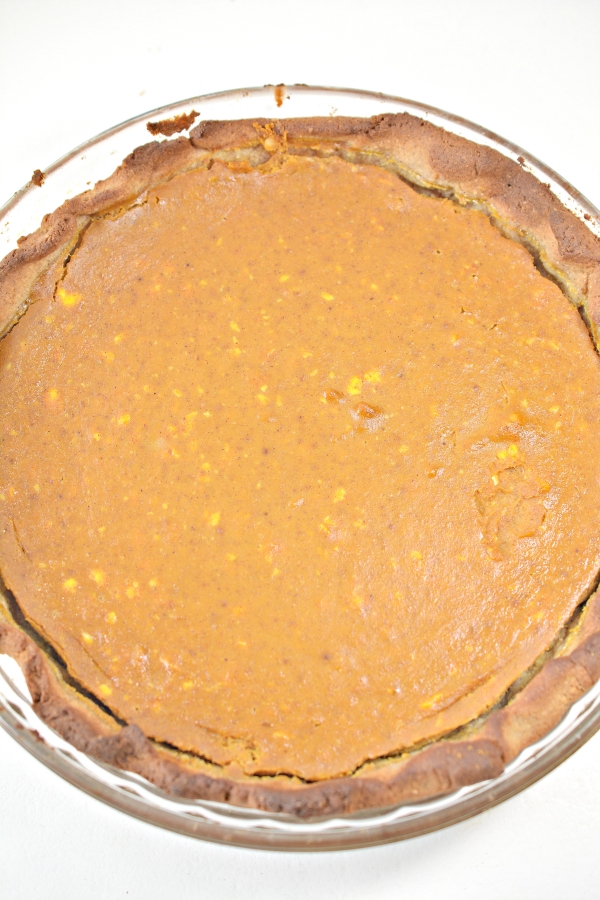
Let it bake at 350 degrees Fahrenheit for about 40-45 minutes or until the edges have set and the center is still slightly jiggly when you gently shake the pie. A filling baked until it no longer moves at all has gone too far, and that is what cracks it.
-
Once the pie has fully cooked, remove it from the oven.
Let the pie cool completely to room temperature. You can serve it immediately once it has cooled down or refrigerate it for at least 2 hours before serving.
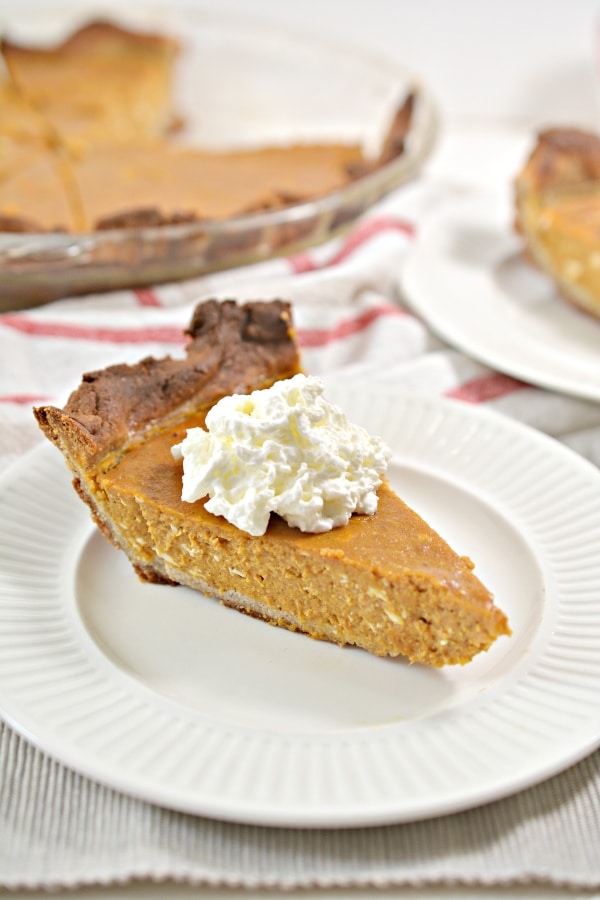
Get yourself a slice and put it on a small plate. Top it with whipped heavy cream, and enjoy!
-
Notes
Key Ingredients
Almond Flour
A cup and three quarters goes into the crust, and the one decision worth getting right is blanched almond flour rather than almond meal. Blanched is more finely ground, which is what makes a crust you can press evenly into the plate rather than one that stays coarse.
Lakanto Powdered Monk Fruit Sweetener
One way to cut carbs from a meal or dessert is to take away sugar from the recipe. But to compensate for the loss of sugar, we’d need something else that can sweeten our pie crust. And for that, we have Lakanto’s monk fruit sweetener. It is a blend built to measure 1:1 with sugar, so a traditional pumpkin pie recipe’s amounts carry straight over without conversion math, and we don’t get an aftertaste from it. A different brand may convert differently — check the chart on its bag.
The recipe is written around the powdered version, for both the crust and the filling. If you can’t get the powdered version, you could run a granulated sweetener through a food processor until it has a powdered consistency.
Butter
Three tablespoons of butter go into the crust, and the recipe calls for it cold. That is the part worth getting right — the note below says to put the dough back in the freezer if it starts to soften while you work.
The recipe is written for butter specifically, and no substitute amount is given for another fat.
Pumpkin Puree
One 15 oz can of pumpkin puree goes into the filling — puree, not pie filling, which is already sweetened and spiced. Canned is what the recipe is written around, and it needs no preparation. Fresh puree is in the notes below as a variation.
Heavy Cream
Half a cup of heavy cream goes into the filling. It is the liquid in a custard that would otherwise be milk, and it keeps the carb count where the rest of the recipe needs it.
Eggs
Eggs go into both the crust and the filling — one in the crust, two at room temperature in the filling. The filling is a custard, so the eggs are what sets it in the oven; that is why the doneness cue in the directions is about how much the center still moves.
Key Tools For Recipe
- A 9-inch pie plate. That is the size this crust and filling are portioned for.
- A rolling pin and parchment. Roll the dough between two sheets of parchment so it does not stick to the pin or the plate.
Summary Notes
- Doneness is the thing to get right. The pie is done when the edges have set and the center is still slightly jiggly. Take it out at that point rather than waiting for the middle to stop moving, and mix the filling only until it is combined.
- Keep the crust cold and work quickly. Press it gently into the plate. If it starts to soften while you are working, put it back in the freezer for 15 minutes before carrying on; the recipe calls for the cream cheese and the butter cold.
- Leftover dough is worth keeping. Cut shapes from it to decorate the top or to cover a crack.
- Chilling it overnight firms it up and makes it easier to slice. The directions already allow serving it once cooled or after two hours in the refrigerator; overnight is the easiest cut.
- Variations to try. Each of these changes the recipe as it is written, so treat it as a starting point rather than a set of instructions:
- A different sweetener. This recipe is written for Lakanto’s powdered monk fruit blend, which measures 1:1 with sugar. Stevia, allulose, erythritol and Swerve do not all convert at 1:1 — check the chart on the bag. The recipe is written around a powdered sweetener, and no amount is given here for a liquid one.
- Extra pumpkin puree for a stronger flavor. The filling is written for one 15 oz can, and no amount or bake time is given here for more.
- Fresh puree instead of canned. The recipe is written for canned, and no method or timing for a fresh-puree version is given here.
- Garnish is open. Whipped cream, a dusting of pumpkin spice, or a sugar-free caramel or maple syrup all work on top of a finished pie without touching the bake.
Frequently Asked Questions
Can I use a different type of flour for the crust?
This crust is written for almond flour. A cup and three quarters of it goes in with cream cheese, butter and an egg, and the amounts below are balanced against it.
Other keto flours absorb liquid differently enough that swapping one in is your own experiment rather than a substitution with a ratio behind it. Coconut flour in particular takes up far more liquid than almond flour, so it is not a one-for-one swap — a crust made with it would need the liquid rebalanced.
If you want to try one, treat the first attempt as a test bake rather than the pie you are serving.
Can I use canned pumpkin filling instead of pumpkin puree?
They are two different products, and the tins sit next to each other. Pumpkin pie filling is usually sweetened and spiced already; 100% pure pumpkin puree is just pumpkin. This recipe is written for the puree, and it adds its own sweetener and spices, so filling would sweeten and season it twice over. Read the label rather than the front of the tin — the ingredient list is where the two separate.
Is it okay to omit xanthan gum from the recipe?
You can still make the crust without it. Half a teaspoon goes into the dough, and leaving it out makes the crust more fragile to handle — more likely to crack as you press it into the plate and as you cut the baked pie.
If you do leave it out, keep the dough cold and work gently; that matters more without the xanthan gum than with it.
Psyllium husk is the substitute people usually reach for in keto baking, but this crust is not written around it and no amount for it is given here. Swapping it in is your own experiment.
Can I make mini pumpkin pies or tarts with this recipe?
The crust and filling are portioned for a single 9-inch pie plate, so smaller pans or tartlet molds change both the yield and the bake. No count or time is given here for them.
What does carry over is the doneness cue. Smaller pies set faster than a full one, so go by the filling rather than the clock: they are done when the edges have set and the center is still slightly jiggly. Start checking well before the 40–45 minutes the full pie takes.
Can I make my keto pumpkin pie ahead of time?
Yes. Wrap it tightly or put it in an airtight container, and keep it in the refrigerator — cooked food is safe there for three to four days. A custard pie is easier to cut cold than warm, which is the practical reason to make it the day before.
Is it okay to freeze my keto pumpkin pie?
You can. Wrap it tightly and put it in a freezer-safe container or bag. In a freezer held at 0°F food stays safe indefinitely; what drops over time is quality rather than safety, and no fixed window is given for this pie. Thaw it in the refrigerator rather than on the counter.
Can I make this keto pumpkin pie recipe dairy-free?
There are three dairy ingredients here, not two: cream cheese in both the crust and the filling, butter in the crust, and heavy cream in the filling. So a dairy-free version means replacing all three.
This recipe is written for those three, and no dairy-free amounts or method are given here.
Wrap Up
A 15-ounce can of pumpkin puree goes into this pie, so if you opened one you are done with it. If you did not, there is more pumpkin here: snickerdoodle cookies, a cheesecake shake for when a Florida “fall” is still warm enough to want something cold, and a pumpkin iced latte built on cold brew if you would rather drink it than eat it. The rest of what we make with pumpkin is collected on our keto pumpkin recipes page.
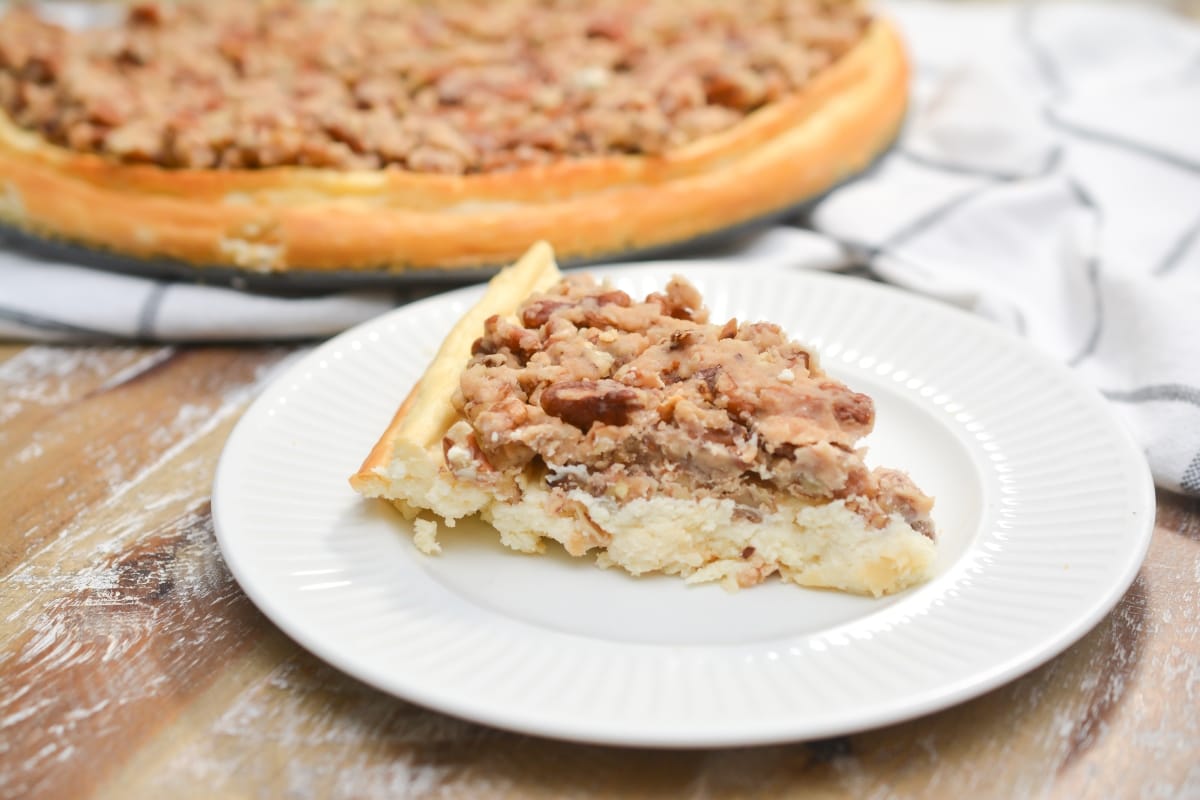
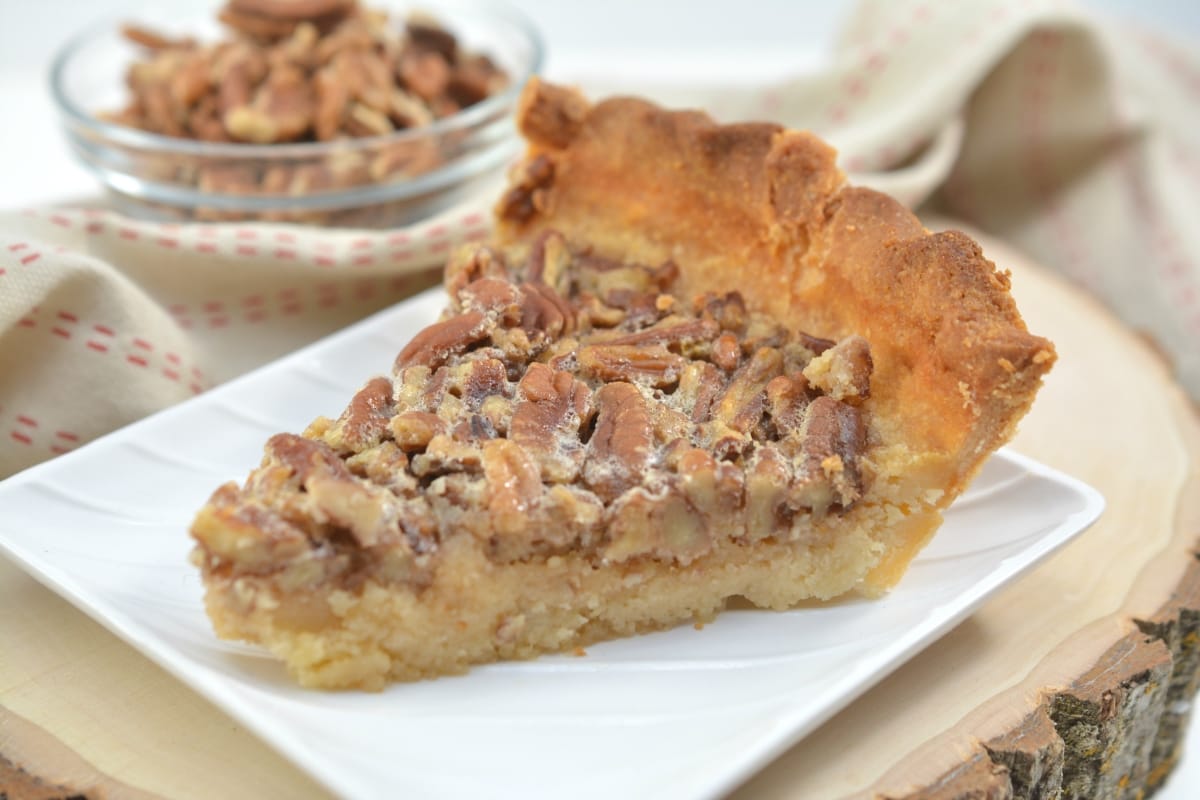
For a Thanksgiving table, it sits next to our pecan pie and pecan pie cheesecake on our keto Thanksgiving recipes page, which also sorts out what can be made the day before.
Away from pumpkin, our low carb apple crisp is the other thing we make in the autumn — with the caveat that it is low-carb rather than strictly keto, so it needs portioning with that in mind.
Have you tried this recipe or any other recipe on the blog? Please rate it below and let us know what you think in the comments! We love hearing from you!
You can also share it on Instagram and use the hashtag #buttertogetherkitchen so we can see what you make.
Enjoy!
Correction — September 28, 2026: Bake until the edges set and the center is still slightly jiggly; the old direction to bake until it no longer jiggles overbakes a custard. Prep time now includes the half hour the dough spends in the freezer.