
Reverse Sear Chuck Roast

Jump to...
Introduction
Chuck roast usually has one job: it goes into a pot with broth and vegetables and stays there until it falls apart. This recipe gives it a different one. The roast sits on a rack in a 225°F oven until it reaches the doneness you’d pick for a steak, gets a hard sear in a hot skillet, rests, and then gets sliced thin.
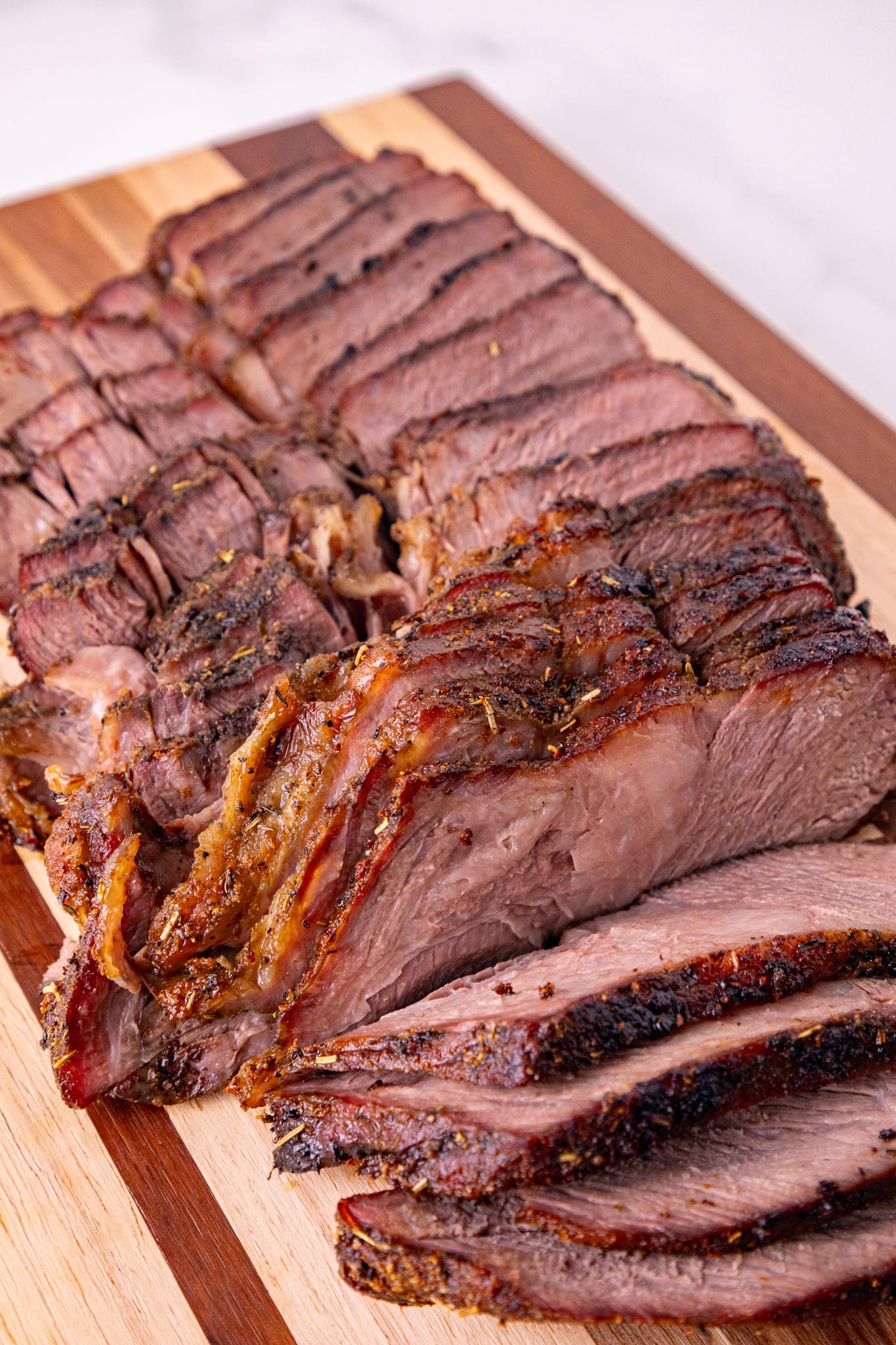
What comes out looks a lot more like a steak dinner than a pot roast: a dark, peppery crust on the outside, pink in the middle, and slices you can fan out across a plate. And it starts from one of the more affordable cuts at the meat counter.
If you’ve made our Perfect Reverse Seared Steak, the method will feel familiar. It’s the same idea with a bigger piece of meat and a longer wait.
Why Reverse Sear a Chuck Roast?
The reverse sear splits the cooking into two jobs. The low oven brings the whole roast up to temperature gently, so the outside doesn’t race ahead of the middle. The skillet comes in at the end and does one thing, which is the crust.
Searing doesn’t seal any juices in. What it does is brown the outside, and that browning is where a lot of the flavor comes from. Because the roast is already cooked by the time it hits the pan, the sear can be short and hot: about a minute a side, just long enough to color it.
The order matters even more with a roast than with a steak. Sear a piece this thick first and finish it in a hot oven, and by the time the middle is done there tends to be a wide overcooked band under the crust. Starting low keeps the doneness more even from edge to middle.
What Kind of Chuck Roast Should You Buy?
Look for a boneless chuck roast with fat running through the meat, not just a thick cap around the outside. Chuck is a well-marbled cut, and that fat is part of its flavor.
The recipe is written around a 3¼-pound roast, but weight only tells you so much. Two roasts that weigh the same can be very different shapes, and a thick, compact roast takes longer to come up to temperature in the middle than a wide, flat one. Some chuck roasts are also tied, or have seams of fat and connective tissue running between the muscles. That variation is the main reason this recipe goes by the thermometer and not the clock.
Reverse Sear Chuck Roast Temperature Guide
Pick the doneness you want, then take the roast out of the oven when a thermometer in the thickest part reads:
| Doneness | Pull it at |
|---|---|
| Rare | 120°F |
| Medium-rare | 130°F |
| Medium | 140°F |
| Medium-well | 150°F |
These are pull temperatures, meaning the reading as the roast leaves the oven. The temperature keeps climbing a little in the skillet and again while the roast rests, so it finishes a bit above the number you pulled it at. How much it rises varies from roast to roast, so don’t count on a specific finish temperature from these numbers.
One thing to know before you pick a row: the USDA’s safe minimum for whole cuts of beef is 145°F followed by a 3-minute rest. The rare, medium-rare and medium pull temperatures are all below that. If you want to follow the USDA guideline, pull the roast at 145°F or above.
How to Reverse Sear Chuck Roast
You’ll need a large rimmed baking sheet with a wire rack that fits inside it, and a meat thermometer. The thermometer is not optional here. It’s the whole method.
Take the chill off and dry it. Let the roast sit on the counter for 30 minutes while the oven heats, then pat it dry with paper towels. A dry surface browns faster in the skillet, and the sear only gets a minute per side.
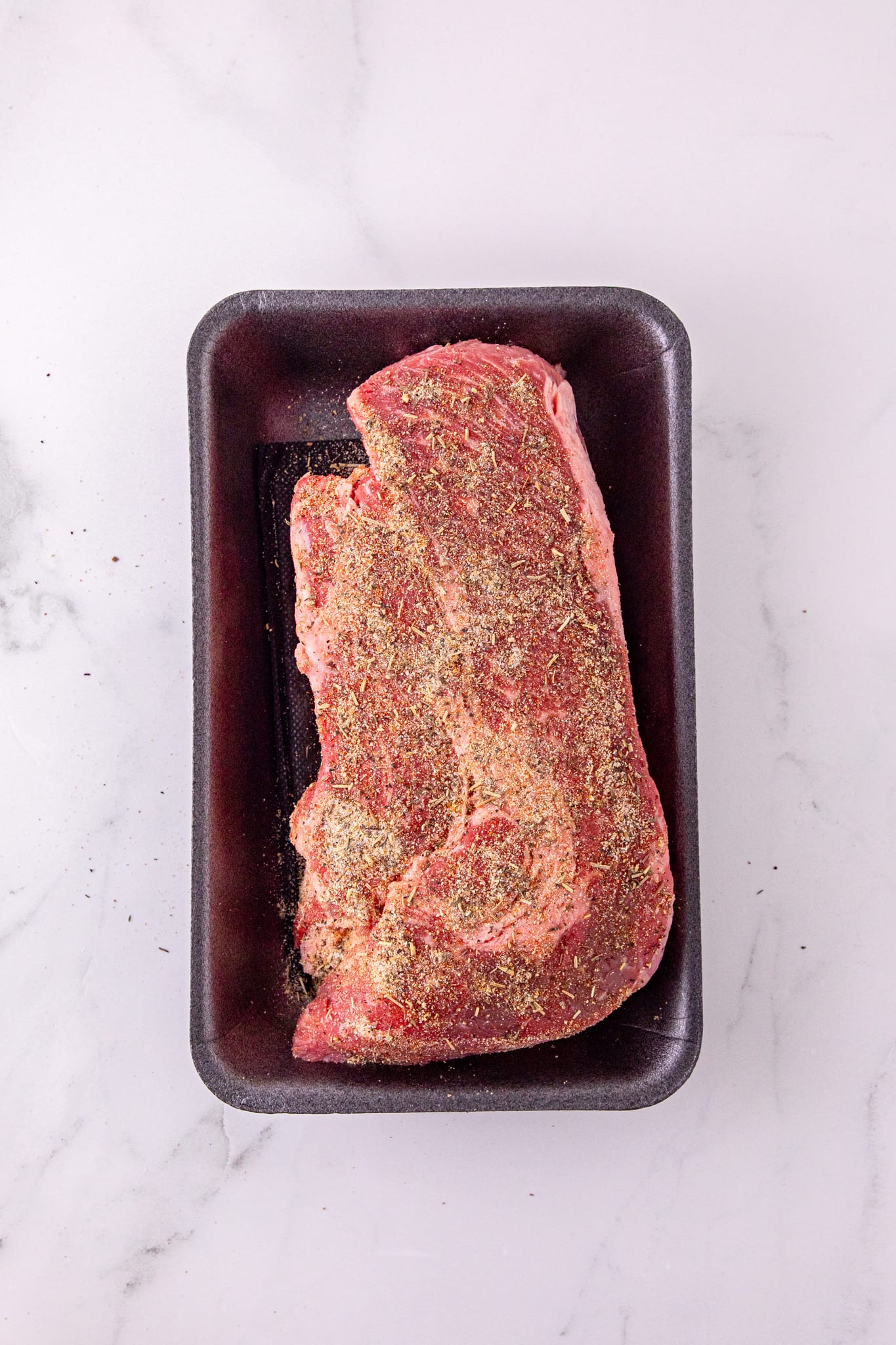
Season every surface. The rub is salt, garlic powder, black pepper, cayenne, and a little ground thyme, sage and rosemary. Get it on the edges and the ends as well as the two big faces.

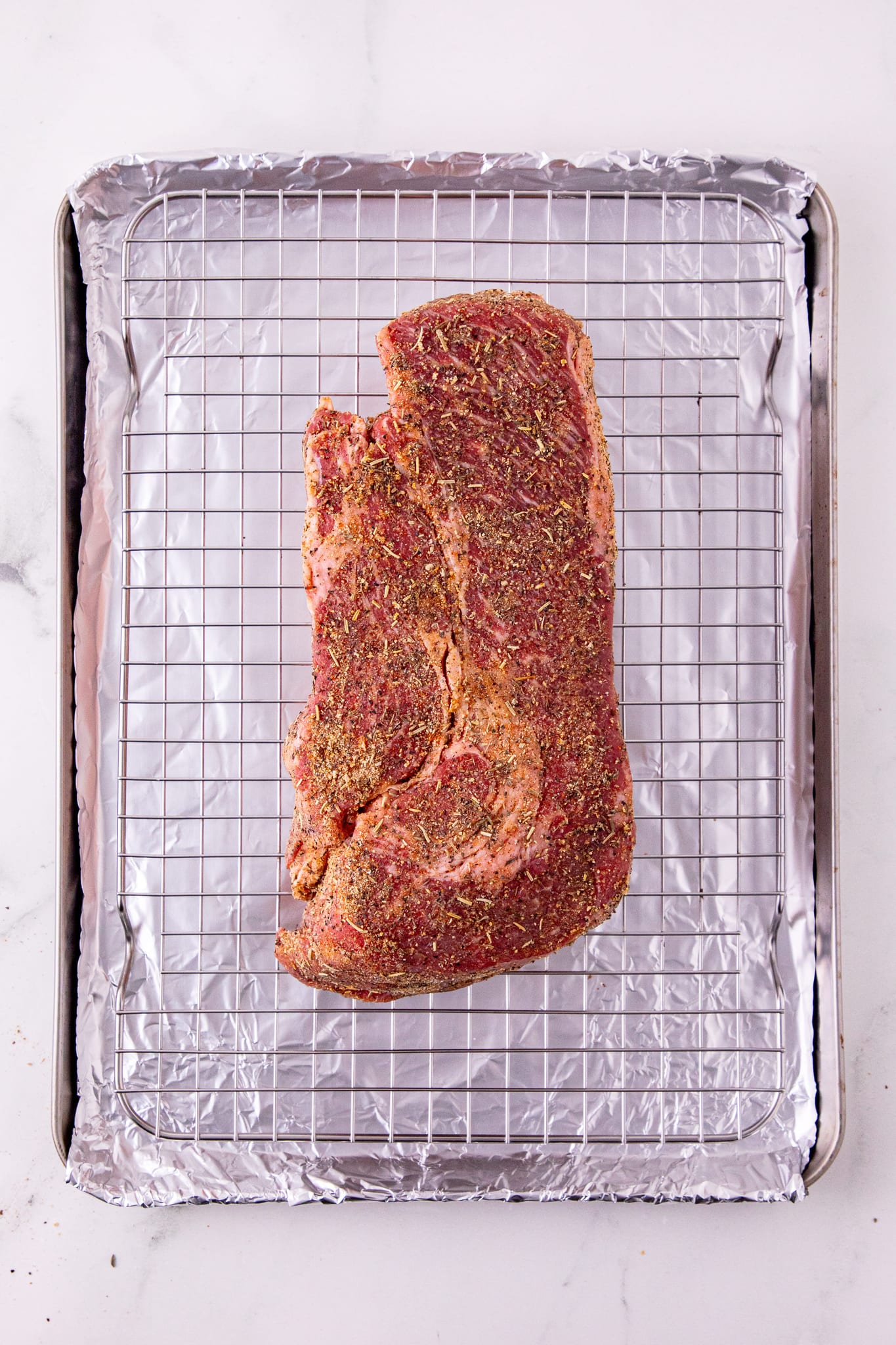
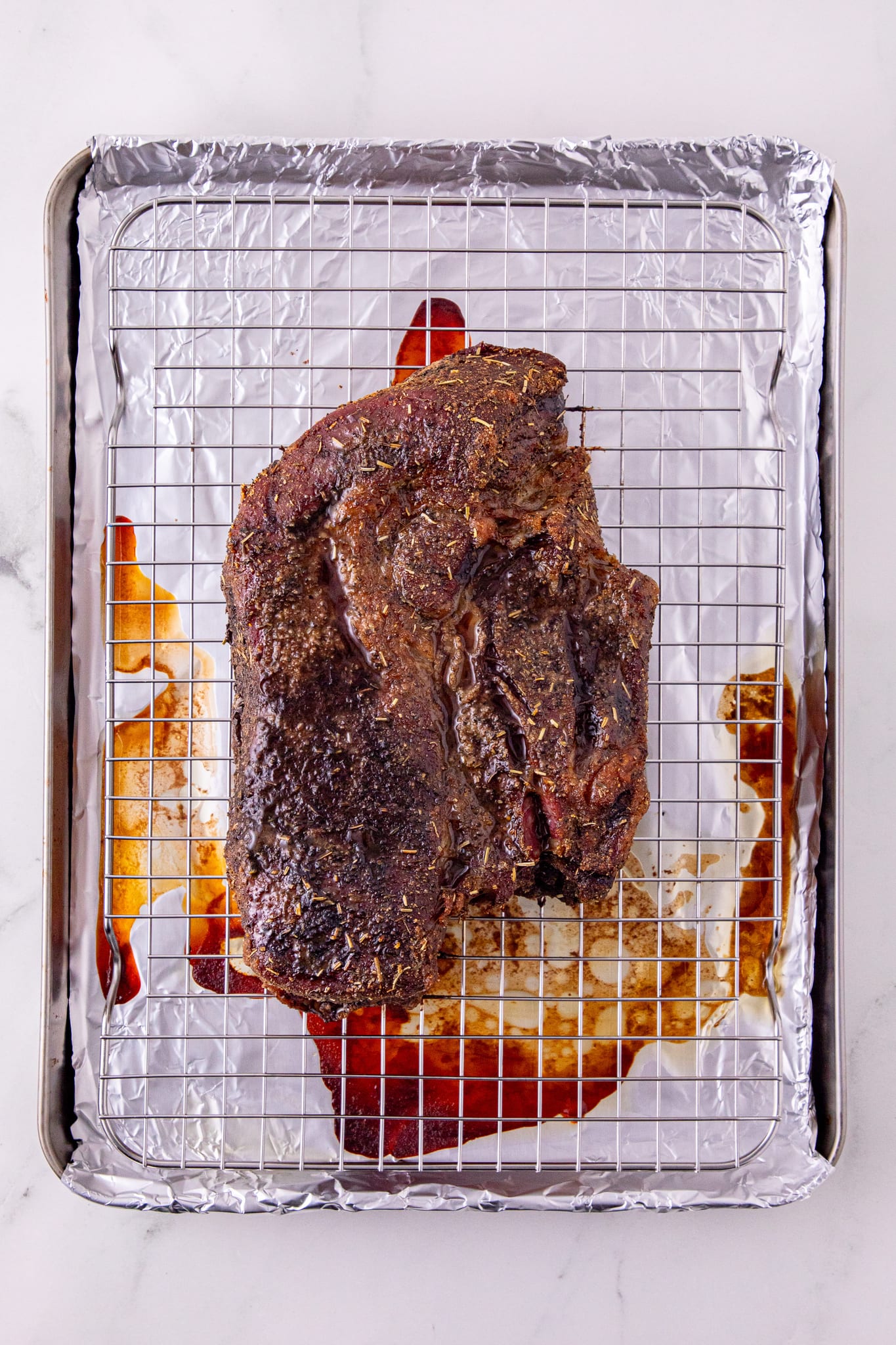
Roast it on the rack. The rack holds the roast up off the sheet, so the oven’s heat gets to the underside too. Push the thermometer into the thickest part of the roast, away from any big pocket of fat, and check it against the chart above.
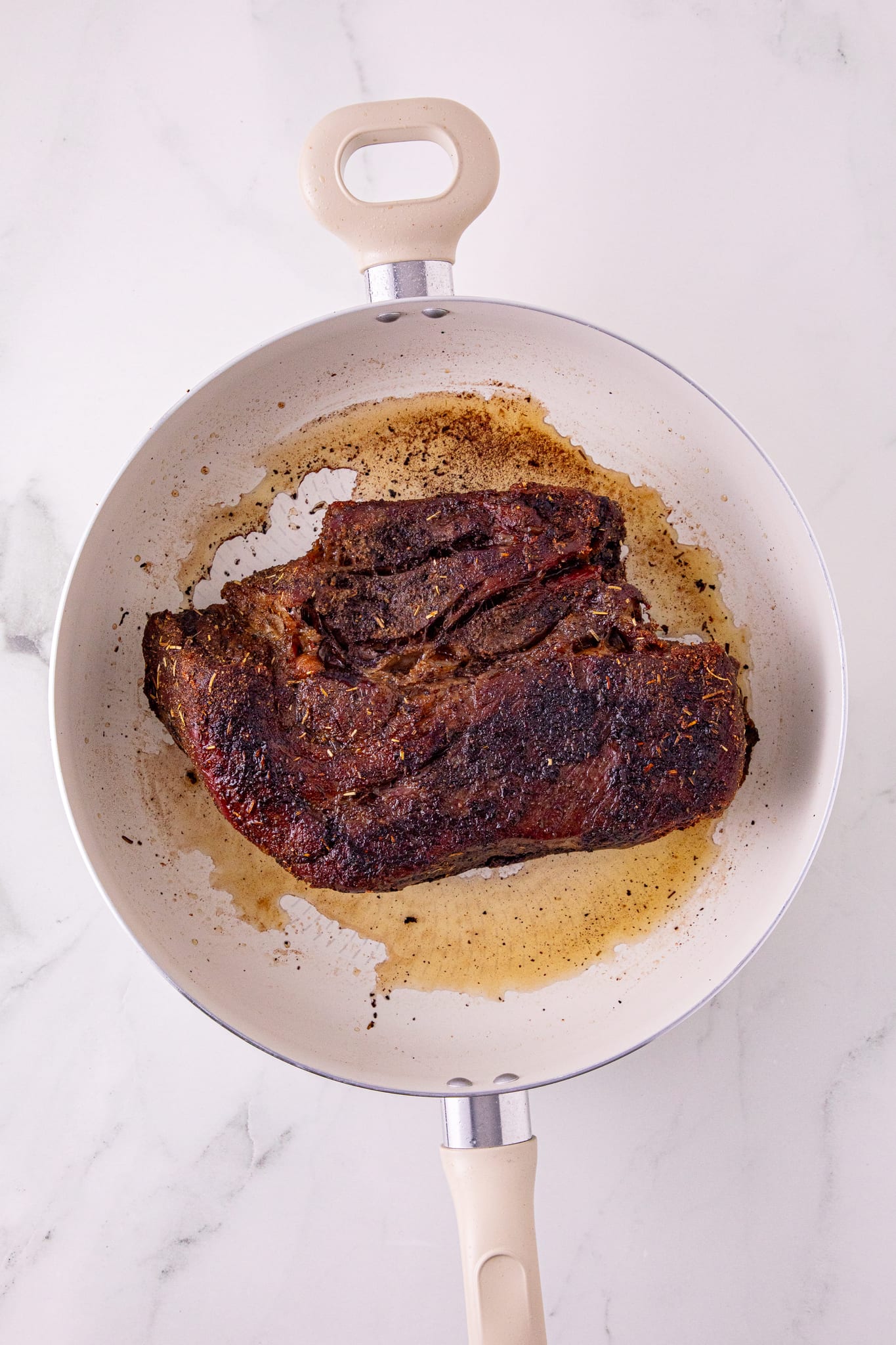
Sear it hot and fast. Start heating the oil in a large skillet over medium-high heat in the last 10 minutes of roasting. When the oil just starts to smoke, the pan is ready. Sear each side for about a minute, until it’s browned all over.
Rest, then slice. Move the roast to a cutting board, tent it loosely with foil, and give it 15 minutes before you cut into it.
How Long Does Chuck Roast Take at 225°F?
Plan on about 3½ hours for a 3¼-pound roast. My rough rule of thumb is about an hour per pound.
Use that number to decide when to start cooking, not when to take the roast out. The thickness of the roast, its shape, and how cold it was going in all move the time around, and a rarer target gets there sooner. If you want rare or medium-rare, start checking well before the 3½-hour mark. At 225°F the temperature rises slowly, which gives you a little breathing room between checks.
Add the 30 minutes on the counter at the start and the 15-minute rest at the end, and the whole thing runs about four and a half hours.
Is Reverse-Seared Chuck Roast Actually Tender?
Tender for chuck, yes. Tender like a filet, no.
Chuck comes from the shoulder, and it has a lot of connective tissue running through it. A pot roast gets hours in liquid to break that tissue down, which is why it falls apart. Cooked to a steak temperature, chuck doesn’t get that, so the slices keep some chew. Expect more of it than you’d get from a ribeye or a filet. That chew is the trade you make for a roast you can slice like a steak instead of shredding.
What helps most is the knife. Slice it thin, and slice it across the grain: find the direction the muscle fibers run, then cut crosswise to them, so each slice holds short fibers instead of long ones. Chuck is made up of several muscles, and the grain can change direction partway through the roast, so look again as you go and turn the roast when it does.

Chuck Roast vs. Traditional Pot Roast
Both start from the same cut, but they’re cooked to different ends.
- Reverse-seared chuck roast cooks dry, on a rack at 225°F, and then gets seared. It’s done when it reaches the pull temperature you chose, and it slices like a steak, with some chew.
- Traditional pot roast braises in liquid in a covered pot. It’s done when the meat falls apart, and it’s fork-tender enough to serve in chunks.
If the fall-apart version is what you’re after, that’s a braise, and this isn’t the recipe for it.
Can You Cut Chuck Roast Into Steaks First?
Yes. Instead of cooking the roast whole, you can cut it into smaller pieces of about a pound each before you season it. I often do it this way: each piece has more cut sides to season, so more of every bite gets the rub, and the smaller pieces cook faster.
They go through the same steps, the 225°F oven, the hot skillet and then a rest. I still figure on about an hour per pound for planning, but check each piece with the thermometer, because they won’t all finish at the same moment.
Reverse Sear Chuck Roast
Ingredients
Roast
- 3 ¼ lbs boneless chuck roast
Seasoning
- 2 tsp salt
- 2 tsp garlic powder
- 1 tsp pepper, black
- ½ tsp pepper, cayenne
- ¼ tsp ground thyme
- ¼ tsp ground sage
- ¼ tsp ground rosemary
For Searing
- 1 ½ tbsp vegetable oil
Nutrition Facts
6 servings per recipe| Per Serving 630 | Per Recipe 3810 | |||
| 3 ¼ lbs of boneless chuck roast | 599.5 | 3596.98 | ||
| 2 tsp of garlic powder | 3 | 18 | ||
| 1 tsp of pepper, black | 1 | 6 | ||
| ½ tsp of pepper, cayenne | 0.5 | 3 | ||
| ¼ tsp of ground thyme | 0.17 | 1 | ||
| ¼ tsp of ground sage | 0.08 | 0.5 | ||
| ¼ tsp of ground rosemary | 0.17 | 1 | ||
| 1 ½ tbsp of vegetable oil | 30 | 180 | ||
| 48g | 61% | 286g | 367% | |
| 3 ¼ lbs of boneless chuck roast | 44.23 g | 265.35 g | ||
| ½ tsp of pepper, cayenne | 0.03 g | 0.15 g | ||
| ¼ tsp of ground thyme | 0 g | 0.03 g | ||
| ¼ tsp of ground sage | 0 g | 0.03 g | ||
| ¼ tsp of ground rosemary | 0.01 g | 0.05 g | ||
| 1 ½ tbsp of vegetable oil | 3.4 g | 20.4 g | ||
| 19g | 94% | 112g | 562% | |
| 3 ¼ lbs of boneless chuck roast | 18.18 g | 109.09 g | ||
| ½ tsp of pepper, cayenne | 0.01 g | 0.05 g | ||
| ¼ tsp of ground rosemary | 0 g | 0.03 g | ||
| 1 ½ tbsp of vegetable oil | 0.53 g | 3.15 g | ||
| Trans Fat | 0g | 0% | 0g | 0% |
| 224mg | 75% | 1341mg | 447% | |
| 3 ¼ lbs of boneless chuck roast | 223.58 mg | 1341.5 mg | ||
| 940mg | 41% | 5640mg | 245% | |
| 3 ¼ lbs of boneless chuck roast | 152.33 mg | 913.99 mg | ||
| 2 tsp of salt | 786.67 mg | 4720 mg | ||
| 2 tsp of garlic powder | 0.33 mg | 2 mg | ||
| ½ tsp of pepper, cayenne | 0.08 mg | 0.5 mg | ||
| ¼ tsp of ground thyme | 0.04 mg | 0.25 mg | ||
| ¼ tsp of ground rosemary | 0.04 mg | 0.25 mg | ||
| 1g | 0% | 7g | 2% | |
| 2 tsp of garlic powder | 0.67 g | 4 g | ||
| 1 tsp of pepper, black | 0.25 g | 1.5 g | ||
| ½ tsp of pepper, cayenne | 0.08 g | 0.5 g | ||
| ¼ tsp of ground thyme | 0.04 g | 0.23 g | ||
| ¼ tsp of ground sage | 0.02 g | 0.1 g | ||
| ¼ tsp of ground rosemary | 0.03 g | 0.2 g | ||
| 0g | 1% | 2g | 6% | |
| 2 tsp of garlic powder | 0.1 g | 0.6 g | ||
| 1 tsp of pepper, black | 0.1 g | 0.6 g | ||
| ½ tsp of pepper, cayenne | 0.04 g | 0.25 g | ||
| ¼ tsp of ground thyme | 0.02 g | 0.13 g | ||
| ¼ tsp of ground sage | 0.01 g | 0.08 g | ||
| ¼ tsp of ground rosemary | 0.02 g | 0.13 g | ||
| 0g | 0g | |||
| 2 tsp of garlic powder | 0.03 g | 0.2 g | ||
| ½ tsp of pepper, cayenne | 0.02 g | 0.1 g | ||
| Sugar Alcohols | 0g | 0% | 0g | 0% |
| Allulose | 0g | 0% | 0g | 0% |
| 1g | 5g | |||
| 2 tsp of garlic powder | 0.57 g | 3.4 g | ||
| 1 tsp of pepper, black | 0.15 g | 0.9 g | ||
| ½ tsp of pepper, cayenne | 0.04 g | 0.25 g | ||
| ¼ tsp of ground thyme | 0.02 g | 0.1 g | ||
| ¼ tsp of ground sage | 0 g | 0.03 g | ||
| ¼ tsp of ground rosemary | 0.01 g | 0.08 g | ||
| 48g | 96% | 287g | 575% | |
| 3 ¼ lbs of boneless chuck roast | 47.66 g | 285.99 g | ||
| 2 tsp of garlic powder | 0.17 g | 1 g | ||
| 1 tsp of pepper, black | 0.03 g | 0.2 g | ||
| ½ tsp of pepper, cayenne | 0.02 g | 0.1 g | ||
| ¼ tsp of ground thyme | 0 g | 0.03 g | ||
| ¼ tsp of ground sage | 0 g | 0.03 g | ||
| ¼ tsp of ground rosemary | 0 g | 0.03 g | ||
About these numbers: We are home cooks, not certified nutritionists. Nutrition is shared as a courtesy. We pick a representative product for each ingredient, and our recipe system works out the totals from the amounts in this recipe, so please treat them as a helpful estimate rather than a guarantee. The brands you buy, any swaps you make, and how generously you portion the recipe will all move these numbers.
Directions
-
Let the chuck roast sit on the counter for 30 minutes to take the chill off.
-
Heat the oven to 225°F. Set a wire rack inside a large rimmed baking sheet. Line the sheet with foil first if you want an easier clean-up.
-
Pat the roast dry with paper towels. Stir the seasonings together and rub them over every side and edge of the roast.
-
-
Set the roast on the rack.
-
-
Roast at 225°F until a thermometer in the thickest part reads the pull temperature for the doneness you want (see Notes). Plan on about 3½ hours for a 3¼-pound roast, and start checking well before then if you want rare or medium-rare.
The clock is only for planning. Roasts differ in thickness and shape, so take it out when the thermometer says so.
-
-
In the last 10 minutes of roasting, heat the oil in a large skillet over medium-high heat.
-
Take the roast out of the oven. When the oil just starts to smoke, add the roast and sear for about 1 minute per side, until every side is browned.
-
-
Move the roast to a cutting board, tent it loosely with foil, and let it rest for 15 minutes.
-
Slice thinly across the grain and serve.
-
Notes
- Serves 4 to 6. The nutrition panel is worked out for 6 servings.
- Pull temperatures. Take the roast out of the oven at about 120°F for rare, 130°F for medium-rare, 140°F for medium, or 150°F for medium-well. It climbs a little more during the sear and the rest.
- Food safety. The USDA’s safe minimum for whole cuts of beef is 145°F followed by a 3-minute rest. The rare, medium-rare and medium pull temperatures above are lower than that.
- Cutting it into steaks first. Instead of cooking the roast whole, you can cut it into smaller pieces of about 1 pound each and season every cut side. Cook them the same way, at 225°F and then in the skillet. Smaller pieces reach temperature sooner, so start checking them early.
- Seasoning. Use whatever seasoning you like. A store-bought steak seasoning works in place of the blend above.
Frequently Asked Questions
Should chuck roast rest before slicing?
Yes. After the sear, move the roast to a cutting board, tent it loosely with foil, and leave it for 15 minutes before you slice it. The temperature keeps rising a little during that time, so count the rest as part of the cooking.
Can I use a store-bought steak seasoning?
Yes. The blend in the recipe is salt, garlic powder, black pepper, cayenne, and a little ground thyme, sage and rosemary, but any seasoning you like works. A premixed steak seasoning from the store is an easy swap. Just check whether yours already contains salt before you add more.
Do I need a wire rack?
It’s what the recipe is written for. The rack holds the roast up off the baking sheet, so the oven’s heat reaches the underside as well as the top and sides, and the bottom doesn’t sit in its own drippings for three-plus hours. Line the sheet underneath with foil if you want an easier clean-up.
More Keto Recipes You'll Love
-

Keto Steak Fajita Foil Packets (20 Minutes in the Oven, Nothing to Wash)
Lunch & Dinner July 20, 2023 -

Keto Buffalo Chicken Bacon Ranch Casserole
Lunch & Dinner October 19, 2019 -

Keto Low Carb Lasagna Bowls (Single-Serve Bowls)
Lunch & Dinner September 5, 2019 -

Keto Chicken Broccoli Casserole (Creamy & Easy)
Lunch & Dinner May 10, 2019