
Perfect Reverse Seared Steak (Oven Temperature and Time)

Jump to...
Introduction
Why is it that I can never cook my steak like they do at a steakhouse? Why do my steaks always end up dry and chewy? What in the world am I missing?!
I used to ask myself these questions EVERY time I made steak. Don’t get me wrong, the steak I made at home was always edible and sometimes even pretty decent, but it never had that x factor. It was never like what I would order when I went to a steakhouse. That all changed when I discovered the best way to cook steak: the reverse sear.
What is the reverse sear method?
Typically, if you were going to make a steak you would sear it on a hot cast iron skillet and then pop it in the oven for 30+ minutes and let it slowly cook. This method works, but in my opinion it is not the best way to prepare a steak. Instead, as the title of this post suggests, we are going to do the reverse. This method is called the reverse sear.
Doing it in that order splits the job in two. The low oven brings the steak up to temperature gently, and the skillet is there at the end for one thing only — the crust. Searing does not seal anything in; what it does is brown the outside, which is where that flavor comes from.
Cooking your steak in the oven
The first step to reverse searing a steak is to bake it in the oven: 45 minutes at 280 degrees, written around an 8 oz steak. Treat that as a starting point rather than a schedule — how long yours takes depends on how thick it is and how much of it there is. For a steak you want more done, give it closer to an hour.
Take it out of the oven at an internal temperature of at least 145°F.
That reading is where the steak leaves the oven, though — the skillet then adds 90 seconds a side of its own heat on top of it. So 145°F is the floor here, not the finish: the sear only takes the steak further along, and there is no walking it back afterwards. Then give it at least three minutes before you cut it: that rest is part of cooking it safely, not a serving flourish.
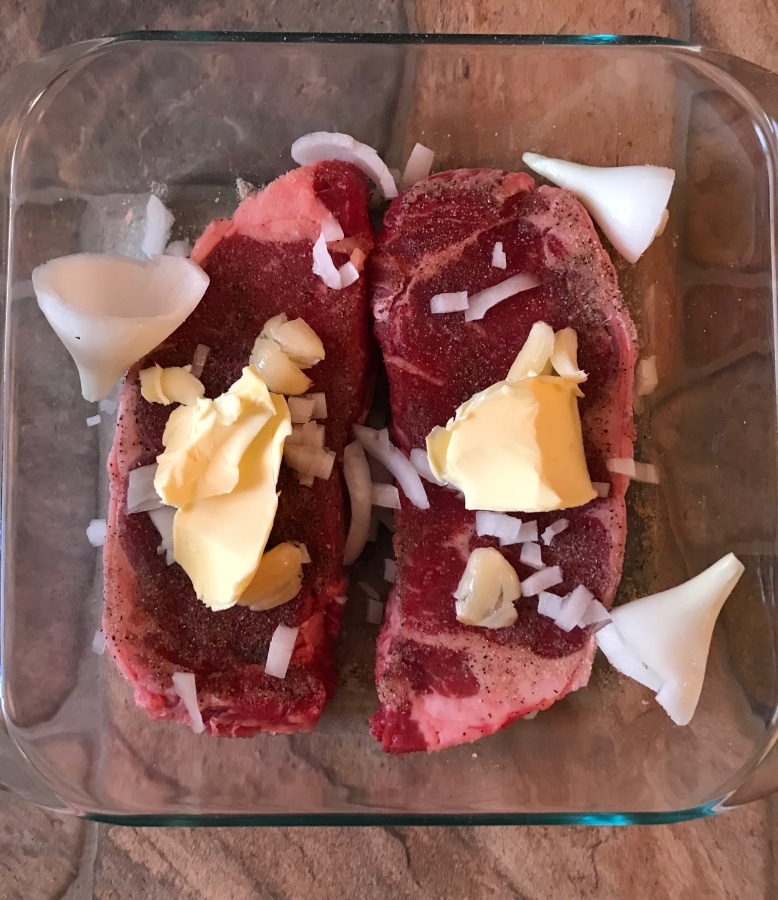
Some people are super picky about how they prepare their steaks. Some insist that the only seasonings you should ever use are salt and pepper. Others are at the opposite end of the spectrum and insist that you should use almost every seasoning in your cabinet! I would like to think that I am somewhere in the middle. I like to use salt, pepper, garlic powder, onion powder, and butter.
Sometimes I’ll even add some chopped garlic and onion to the dish before I throw it in the oven. Of course, you can season yours however you would like — that part is open. The only thing I strongly suggest you use is butter. If you’ve never cooked your steak in butter, you’ve never had steak. It makes SUCH a difference!
When it comes to baking your steak in the oven, you have two options. Some like to place their steak on a baking rack while others prefer to place theirs directly into a baking dish. Since we are going to sear our steak later anyway, I prefer to place it in a baking dish. Placing it in a dish means it will cook in its own fat, the melted butter, and whatever seasoning you top it with.
Searing your steak
This might be the most important step of all. The good news is that it also might be the easiest step! Once your steak has been cooked in the oven, place it into a hot cast iron skillet. (Note: If you don’t have a cast iron skillet, don’t fret. A regular skillet will still do the trick.) Let it sear for about 90 seconds on each side or until you notice a crust starting to form. Then, if you would like, top your steak with a little bit of butter and enjoy!
Want the same method with a cheaper cut? Try our Reverse Sear Chuck Roast. It’s cooked low and slow, finished in a hot skillet, and sliced thin for a steak-style dinner.
For a side, try our jicama fries. They’re boiled first, then roasted until the edges brown, though they stay firmer than potato fries.

Perfect Reverse Seared Steak
Ingredients
All Ingredients
- 8 oz steak, cut of your choice
- 1 tbsp butter, unsalted
- 1 tsp garlic powder
- 1 tsp onion powder
- A pinch of salt, to taste
- A pinch of pepper, black, to taste
Nutrition Facts
1 serving per recipe| Per Serving 780 | Per Recipe 780 | |||
| 8 oz of steak | 667.05 | 667.05 | ||
| 1 tbsp of butter, unsalted | 100 | 100 | ||
| 1 tsp of garlic powder | 9 | 9 | ||
| 1 tsp of onion powder | 8 | 8 | ||
| 59g | 76% | 59g | 76% | |
| 8 oz of steak | 48.03 g | 48.03 g | ||
| 1 tbsp of butter, unsalted | 11 g | 11 g | ||
| 28g | 142% | 28g | 142% | |
| 8 oz of steak | 21.35 g | 21.35 g | ||
| 1 tbsp of butter, unsalted | 7 g | 7 g | ||
| Trans Fat | 0g | 0% | 0g | 0% |
| 219mg | 73% | 219mg | 73% | |
| 8 oz of steak | 189.44 mg | 189.44 mg | ||
| 1 tbsp of butter, unsalted | 30 mg | 30 mg | ||
| 150mg | 6% | 150mg | 6% | |
| 8 oz of steak | 144.08 mg | 144.08 mg | ||
| 1 tsp of garlic powder | 1 mg | 1 mg | ||
| 1 tsp of onion powder | 1 mg | 1 mg | ||
| 4g | 1% | 4g | 1% | |
| 1 tsp of garlic powder | 2 g | 2 g | ||
| 1 tsp of onion powder | 1.9 g | 1.9 g | ||
| 0g | 1% | 0g | 1% | |
| 1 tsp of garlic powder | 0.3 g | 0.3 g | ||
| 1 tsp of onion powder | 0.1 g | 0.1 g | ||
| 0g | 0g | |||
| 1 tsp of garlic powder | 0.1 g | 0.1 g | ||
| 1 tsp of onion powder | 0.2 g | 0.2 g | ||
| Sugar Alcohols | 0g | 0% | 0g | 0% |
| Allulose | 0g | 0% | 0g | 0% |
| 4g | 4g | |||
| 1 tsp of garlic powder | 1.7 g | 1.7 g | ||
| 1 tsp of onion powder | 1.8 g | 1.8 g | ||
| 59g | 119% | 59g | 119% | |
| 8 oz of steak | 58.7 g | 58.7 g | ||
| 1 tsp of garlic powder | 0.5 g | 0.5 g | ||
| 1 tsp of onion powder | 0.2 g | 0.2 g | ||
About these numbers: We are home cooks, not certified nutritionists. Nutrition is shared as a courtesy. We pick a representative product for each ingredient, and our recipe system works out the totals from the amounts in this recipe, so please treat them as a helpful estimate rather than a guarantee. The brands you buy, any swaps you make, and how generously you portion the recipe will all move these numbers.
Directions
-
Preheat oven to 280 degrees.
-
Season steak with garlic powder, onion powder, salt, and pepper and place in baking dish. Top steak with butter and any other seasonings you prefer.
-
-
Place steak in oven and let cook for about 45 minutes* or until it has an internal temperature of at least 145 degrees.
-
Once you have cooked your steak in the oven, place it into a hot cast iron skillet and sear on each side for about 90 seconds.
-
Rest the steak for at least 3 minutes before cutting into it.
The rest finishes the job the 145°F reading started, so do not skip it. Leave it on a warm plate or a board while you get everything else together.
-
If you would like, top your steak with a little bit of butter and enjoy!
Notes
- *If you prefer your steak more done, you may want to leave it in the oven for closer to 60 minutes.
- The 145 degrees in step 3 is where the steak leaves the oven. The sear in step 4 comes after that reading and only adds heat, so 145 is the floor rather than the finished temperature - the sear takes the steak further done, and there is no walking it back.
- Though cast iron works best, if you do not have a cast iron skillet you can always use a regular skillet.
Updated — September 23, 2026: Why the reverse sear works is explained correctly now: searing browns the outside, it does not seal juices in. And 145F is identified as the oven-exit reading, with the sear adding more heat after it.
More Keto Recipes You'll Love
-

Keto Steak Fajita Foil Packets (20 Minutes in the Oven, Nothing to Wash)
Lunch & Dinner July 20, 2023 -

Shredded Brussels Sprouts Salad (Raw, No Cooking)
Appetizers & Sides July 29, 2023 -

Keto Buffalo Chicken Bacon Ranch Casserole
Lunch & Dinner October 19, 2019 -

Keto Low Carb Lasagna Bowls (Single-Serve Bowls)
Lunch & Dinner September 5, 2019