
Pumpkin Omelet with Chives & Sesame

Jump to...
Introduction
Most of what we do here at Butter Together with a can of pumpkin ends up sweet: pie, muffins, a latte, a parfait. This one goes the other way. Look at us changing things up!
This cup of pumpkin puree gets cooked down in a skillet until it’s thick and paste-like. Whisk three eggs with soy sauce, black pepper, and a handful of chives, pour it over, and let it set into one round, orange omelet. Sound interesting? I hope it does, because this is super quick to make and pretty delicious, too!
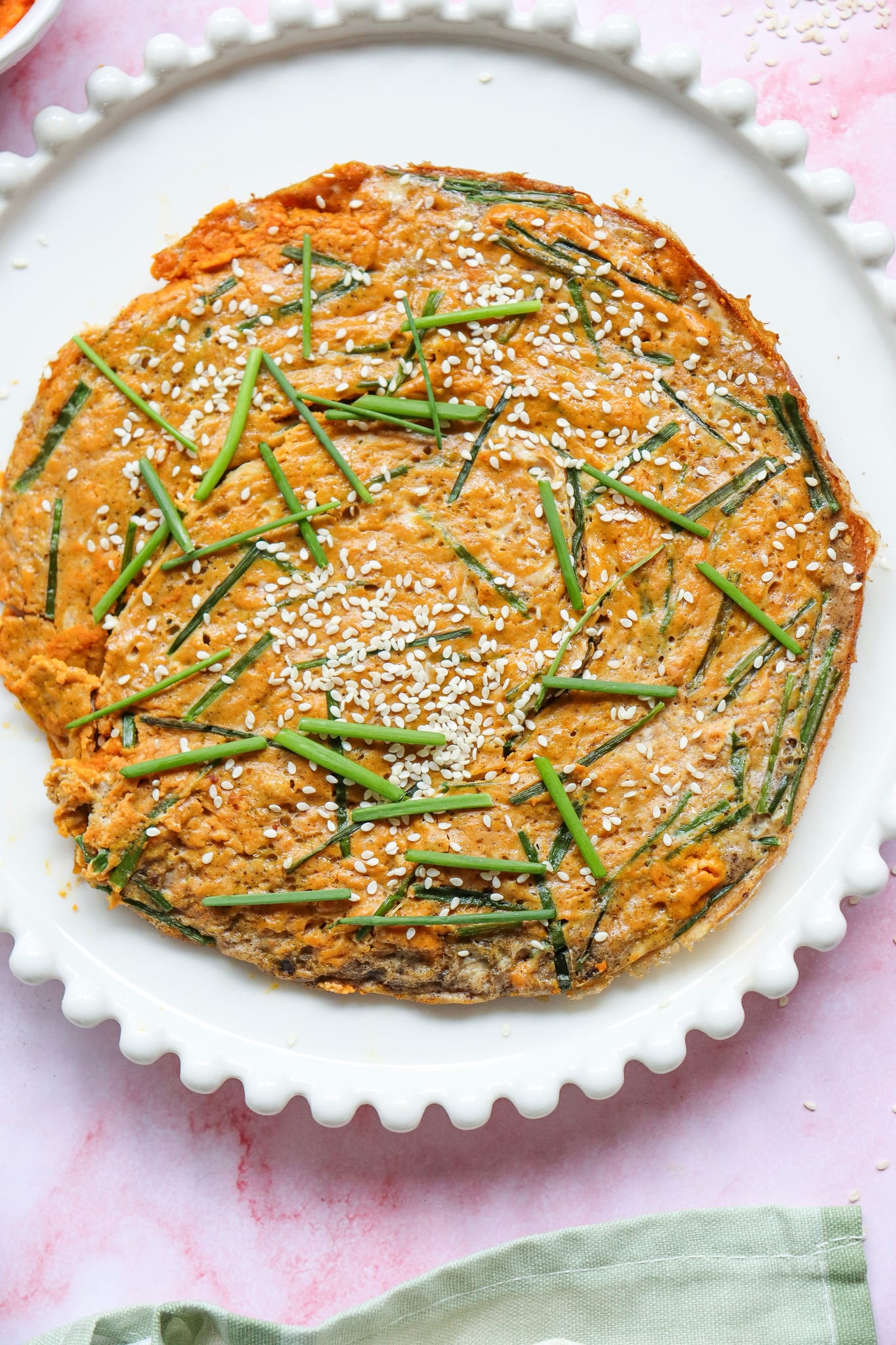
It doesn’t look much like a folded diner omelet. It’s flat and round, and it cuts into wedges like a savory pancake. One batch makes two servings, so it’s breakfast for two or a slow weekend brunch for one very committed person.
Why Pumpkin Works in an Omelet
The pumpkin here isn’t a filling. It gets whisked through the eggs, so there’s pumpkin in every bite rather than a stripe of it down the middle, and that’s where the color comes from too.
It also changes how much omelet you get. A full cup of puree against three eggs is a lot of pumpkin, and it gives the omelet more body than the eggs would have on their own. The soy sauce, salt and pepper keep it firmly on the savory side, and the chives are cut long, about two inches, so they still show up as green strips against the orange.
The catch is the water. Canned pumpkin is mostly water — USDA puts it at about 90 percent — and if all of that goes into the pan with the eggs, you end up with a damp, soggy omelet. Which brings us to the one step you really shouldn’t rush.
Cook the Pumpkin Down First
Before the eggs go anywhere near it, the puree goes into the skillet on its own with a tablespoon of oil, and you keep stirring it over medium heat until it’s visibly thicker and less wet. You’re aiming for something close to a paste.
Go by how it looks rather than the clock. Some cans start out much looser than others, so a watery one needs longer and a very thick one may only need a couple of minutes.
Once it’s there, spread the pumpkin out over the pan and add the second tablespoon of oil before the eggs go in.
What Goes In

- Pumpkin puree: plain pumpkin, not pumpkin pie filling. The pie filling is sweetened and spiced, which is the last thing you want next to soy sauce and chives. Our guide to pumpkin on keto has more on telling the two cans apart.
- Eggs: three large eggs for two servings.
- Soy sauce, salt and black pepper: whisked into the eggs, so the seasoning is spread through the whole omelet rather than sprinkled on top.
- Chives: cut into two-inch pieces and stirred into the eggs.
- Vegetable oil: two tablespoons, split between cooking down the pumpkin and getting the eggs into the pan.
- Sesame seeds: toasted, and only for the top.
You’ll also want a nonstick skillet. This omelet gets flipped or folded, and you want it to let go of the pan when you do.
Puree, Not Pieces of Pumpkin
Plenty of pumpkin-and-egg recipes start with slices or shreds of fresh pumpkin, cooked until tender before the eggs go in. This isn’t one of those.
Because this one starts with puree, there’s nothing to soften. The pumpkin is already cooked, and the job of the skillet is only to dry it out. It also doesn’t sit in the omelet as separate pieces. Whisk the egg mixture into the pumpkin right in the pan and it blends in so the whole thing sets as one even, orange round.
Stick with canned puree here. Cooked, mashed fresh pumpkin holds more water than canned (see the FAQ below), and there’s no verified fresh-pumpkin conversion for this omelet.
Savory Pumpkin Omelet
Ingredients
All Ingredients
- 3x large egg
- 1 cup pumpkin puree, about 230 to 250 g
- ¾ cup chives, cut into 2-inch pieces (no more than this; use as little as ½ cup for less chive flavor)
- 1 tbsp soy sauce
- ½ tsp salt
- ½ tsp pepper, black
- 2 tbsp vegetable oil, divided
- 1 tbsp sesame seeds, toasted, for the top
Nutrition Facts
2 servings per recipe| Per Serving 300 | Per Recipe 600 | |||
| 3x large egg | 90 | 180 | ||
| 1 cup of pumpkin puree | 50 | 100 | ||
| ¾ cup of chives | 6 | 12 | ||
| 1 tbsp of soy sauce | 5 | 10 | ||
| ½ tsp of pepper, black | 1.5 | 3 | ||
| 2 tbsp of vegetable oil | 120 | 240 | ||
| 1 tbsp of sesame seeds | 26 | 52 | ||
| 22g | 28% | 44g | 56% | |
| 3x large egg | 6 g | 12 g | ||
| 2 tbsp of vegetable oil | 13.6 g | 27.2 g | ||
| 1 tbsp of sesame seeds | 2.25 g | 4.5 g | ||
| 4.5g | 23% | 9g | 47% | |
| 3x large egg | 2.25 g | 4.5 g | ||
| 2 tbsp of vegetable oil | 2.1 g | 4.2 g | ||
| 1 tbsp of sesame seeds | 0.3 g | 0.6 g | ||
| Trans Fat | 0g | 0% | 0g | 0% |
| 315mg | 105% | 630mg | 210% | |
| 3x large egg | 315 mg | 630 mg | ||
| 1180mg | 51% | 2350mg | 102% | |
| 3x large egg | 105 mg | 210 mg | ||
| 1 tbsp of soy sauce | 480 mg | 960 mg | ||
| ½ tsp of salt | 590 mg | 1180 mg | ||
| 1 tbsp of sesame seeds | 0.5 mg | 1 mg | ||
| 16g | 6% | 32g | 12% | |
| 3x large egg | 1.49 g | 2.97 g | ||
| 1 cup of pumpkin puree | 12 g | 24 g | ||
| ¾ cup of chives | 0.6 g | 1.2 g | ||
| 1 tbsp of soy sauce | 0.5 g | 1 g | ||
| ½ tsp of pepper, black | 0.38 g | 0.75 g | ||
| 1 tbsp of sesame seeds | 1.05 g | 2.1 g | ||
| 5g | 19% | 11g | 38% | |
| 1 cup of pumpkin puree | 4 g | 8 g | ||
| ¾ cup of chives | 0.6 g | 1.2 g | ||
| ½ tsp of pepper, black | 0.15 g | 0.3 g | ||
| 1 tbsp of sesame seeds | 0.55 g | 1.1 g | ||
| Total Sugars | — | — | ||
| Sugar Alcohols | 0g | 0% | 0g | 0% |
| Allulose | 0g | 0% | 0g | 0% |
| 11g | 21g | |||
| 3x large egg | 1.49 g | 2.97 g | ||
| 1 cup of pumpkin puree | 8 g | 16 g | ||
| 1 tbsp of soy sauce | 0.5 g | 1 g | ||
| ½ tsp of pepper, black | 0.23 g | 0.45 g | ||
| 1 tbsp of sesame seeds | 0.5 g | 1 g | ||
| 12g | 25% | 25g | 50% | |
| 3x large egg | 9 g | 18 g | ||
| 1 cup of pumpkin puree | 1 g | 2 g | ||
| ¾ cup of chives | 0.6 g | 1.2 g | ||
| 1 tbsp of soy sauce | 1 g | 2 g | ||
| ½ tsp of pepper, black | 0.05 g | 0.1 g | ||
| 1 tbsp of sesame seeds | 0.8 g | 1.6 g | ||
Where you see an em dash: one of the ingredients in this recipe does not publish a figure for that row, so we cannot add one up honestly. We would rather show you nothing there than a zero we cannot stand behind.
About these numbers: We are home cooks, not certified nutritionists. Nutrition is shared as a courtesy. We pick a representative product for each ingredient, and our recipe system works out the totals from the amounts in this recipe, so please treat them as a helpful estimate rather than a guarantee. The brands you buy, any swaps you make, and how generously you portion the recipe will all move these numbers.
Directions
-
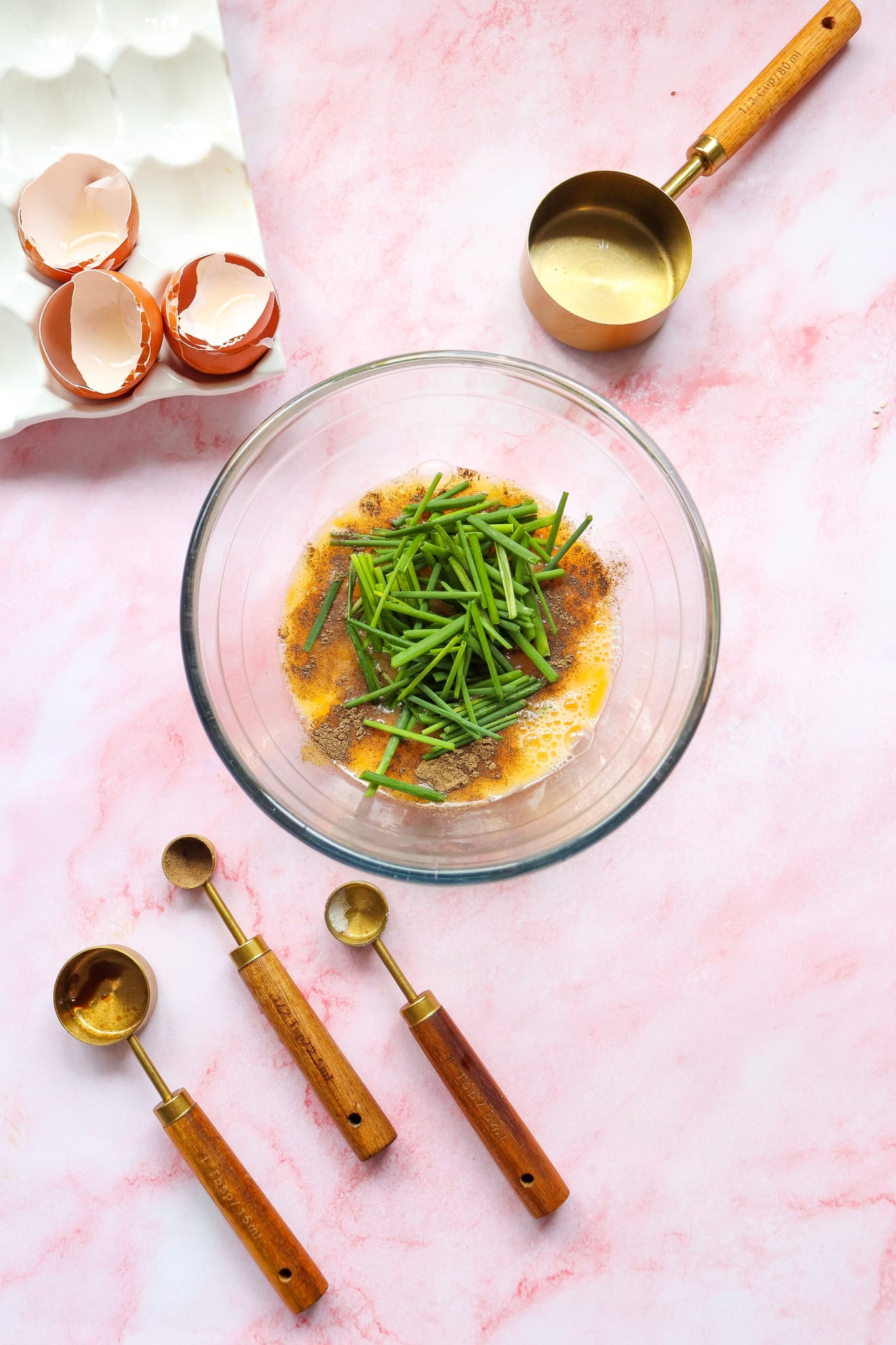
Mix the eggs.
Whisk the eggs with the salt, black pepper and soy sauce until smooth, then stir in the chives.
-
-
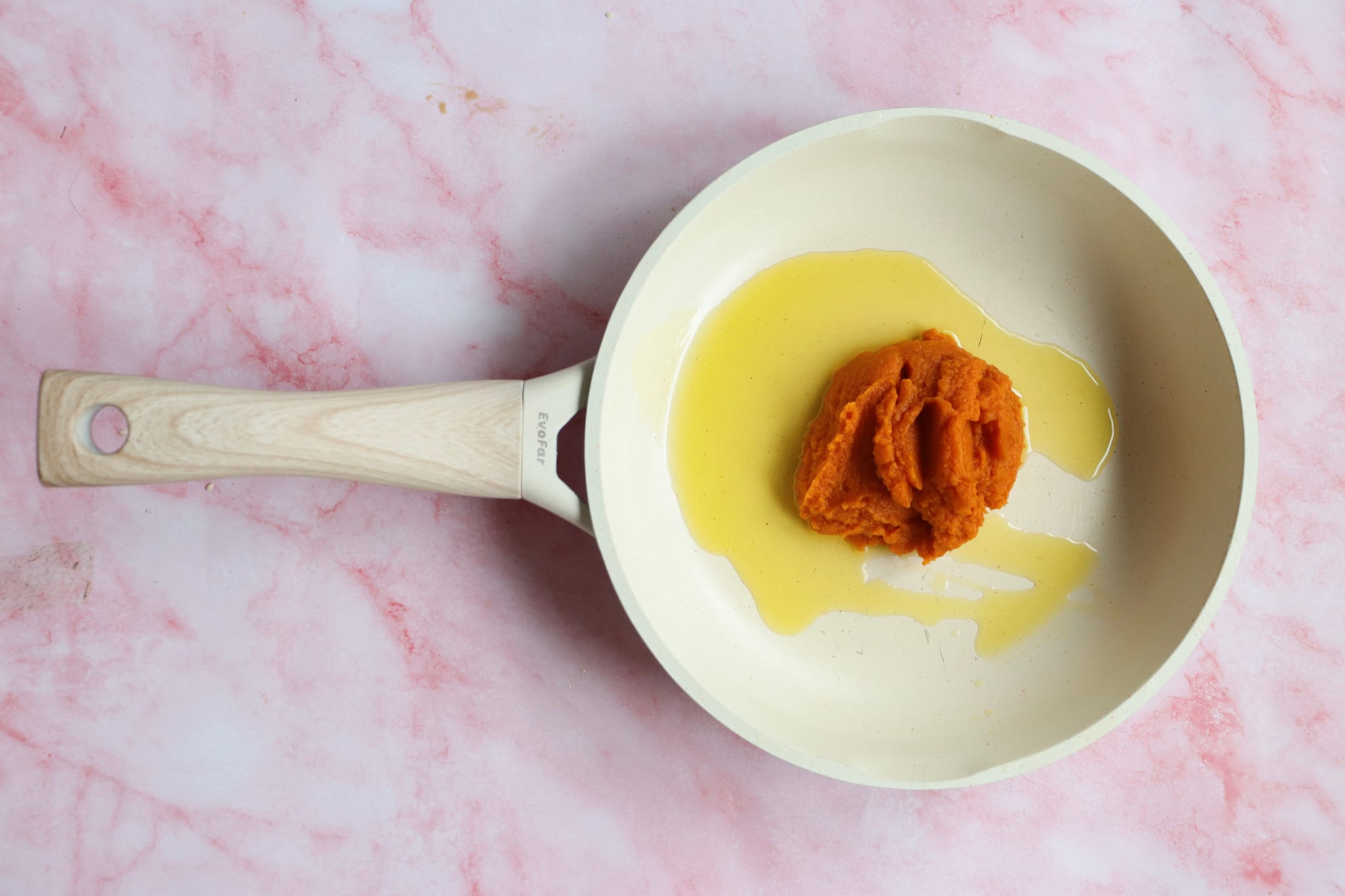
Cook down the pumpkin puree.
Heat 1 tablespoon of the oil in a nonstick skillet over medium heat. Add the pumpkin puree and stir it for 6 to 8 minutes, until it is thicker and less wet, close to a paste. If your puree is very thick already, 2 to 3 minutes may be enough. Don't skip this — wet puree makes a soggy omelet.
-
-
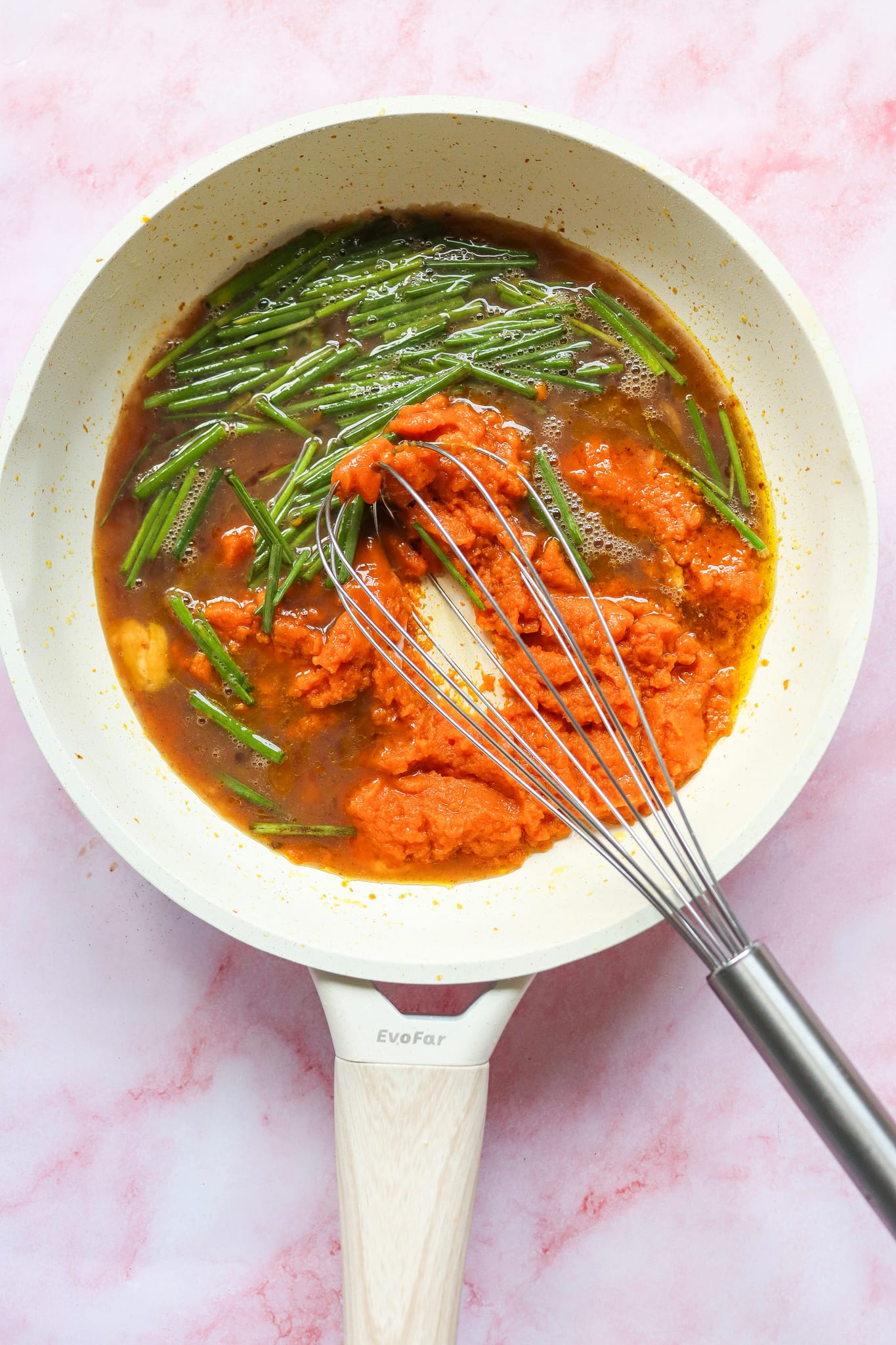
Make the omelet.
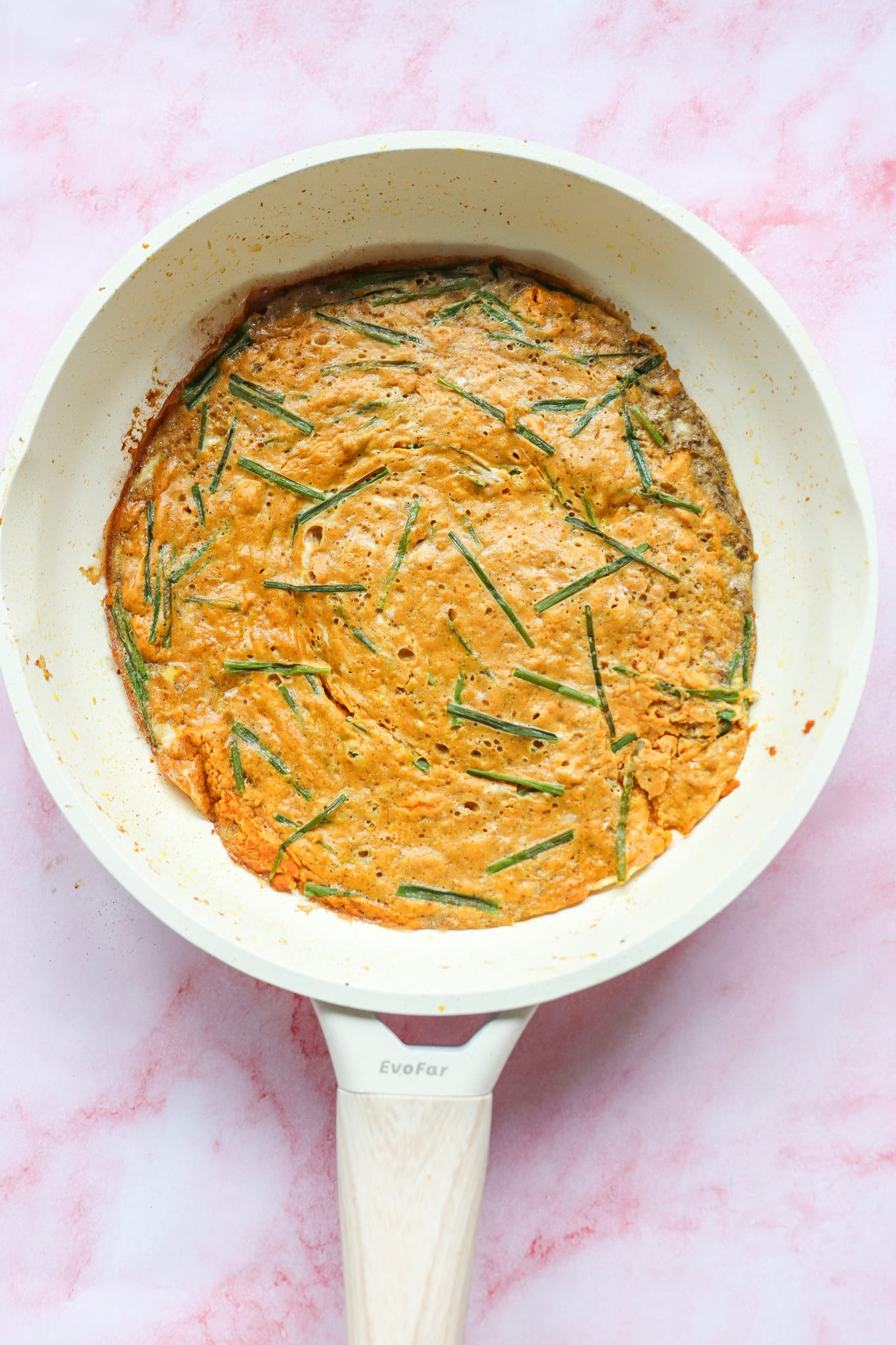
Spread the pumpkin evenly over the pan and add the remaining tablespoon of oil. Pour in the egg mixture and whisk it through the pumpkin right in the pan, then level it out. Let it set over medium-low heat, then gently fold or flip it (slide it onto a plate and turn it back into the pan if flipping is hard). Cook until the eggs are fully set but still tender, 6 to 8 minutes in all.
-
-
Finish and serve.
Sprinkle the toasted sesame seeds over the top, then slice and serve.
-
Notes
If Your Puree Is Watery or Very Thick
Pumpkin puree varies from can to can. If yours is loose and watery, give it longer in step 2, until it is noticeably drier and thicker. If it is already very thick, cut that time down and use a slightly lower heat once the eggs go in, so they don’t overcook while the pumpkin catches up.
The Chives on Top
All of the chives in the ingredient list go into the eggs. A few extra pieces scattered over the top with the sesame seeds are optional, and they aren’t counted in the nutrition.
How to Tell It’s Done
Let the omelet set over medium-low heat before you try to flip or fold it. Moving it too early is how a round omelet turns into scrambled eggs.
It’s ready when the eggs are fully set all the way through, with no wet or runny egg left in the middle, but the omelet is still tender rather than dry. If you’d like to check with a thermometer, the USDA’s safe minimum internal temperature for egg dishes is 160°F, measured in the center.

Serving It
The sesame seeds go on last, then cut it into wedges, the way it’s shown here. The soy sauce is already whisked through the eggs, so taste a wedge before you reach for more salt.
Is This Pumpkin Omelet Keto?
Most of the carbohydrate in this omelet comes from the pumpkin. The eggs, soy sauce, sesame seeds and seasonings add a little between them, and the oil adds none. That means it carries more carbs than a plain egg omelet would, because a full cup of puree is split between just two servings.
Check the Nutrition Facts panel above for the total carbs, fiber and calories in one serving. Whether that fits your day depends on what else you’re eating, so go by those numbers rather than the word “pumpkin.”
Frequently Asked Questions
Can I use canned pumpkin puree?
Yes. Plain canned pumpkin is pumpkin puree, so it’s exactly what you want here. Just check the label and skip pumpkin pie filling, which is sweetened and spiced. One cup is a little over half of a standard 15-ounce can.
Can I use fresh pumpkin instead of puree?
We’d stick with canned for this one. Cooked fresh pumpkin is wetter than canned — USDA puts it at about 94 percent water, against about 90 percent for canned — so it may not behave the same way in the skillet, and there’s no verified fresh-pumpkin conversion for this omelet.
If you want to experiment anyway, mash it completely smooth, and don’t add the eggs until it’s as thick and paste-like as the canned puree should be at the end of step 2.
Raw slices or shreds of pumpkin are a different method altogether. They need to cook until tender, so they aren’t a swap here.
Why is my pumpkin omelet soggy?
Most likely the puree went in too wet. Pumpkin puree holds a lot of water, and whatever doesn’t cook off in the skillet ends up in the eggs. Next time, keep stirring the puree in step 2 until it’s noticeably thicker and closer to a paste before you add the eggs.
For more ways to use the rest of that can, our keto pumpkin recipes page puts this omelet alongside the sweet side: pie, bread, cookies, muffins and drinks.
More Keto Recipes You'll Love
-

Best Sweet and Savory Keto Chaffles
Appetizers & Sides, Lunch & Dinner, Sweets November 5, 2019 -

Tasty Keto Sesame Chicken
Appetizers & Sides, Lunch & Dinner March 5, 2019 -

Keto Breakfast Roll Ups With Crispy Cheese Wraps
Breakfast September 15, 2026 -

Halloween Pumpkin Deviled Eggs (The Scored-Egg Method)
Appetizers & Sides September 10, 2026