
Are Pork Rinds Keto? Carbs, Flavored Bags, and How to Use Them
Jump to...
Introduction
Pork rinds are one of the few things in the snack aisle that show up with no carbohydrate at all. In the USDA’s reference entry for plain pork skins, the carbohydrate line is a flat zero.
So yes — plain pork rinds fit a keto diet about as easily as a food can.
The catch is that “pork rind” describes a cooked pork skin, not a fixed recipe. The bag in your hand may have been seasoned, sweetened, dusted with starch, or glazed on its way to the shelf, and the front of the package is usually busy telling you it is zero sugar rather than telling you what is actually on the rinds. That is the part worth a few minutes.
Here is what the plain ones contain, what pushes a flavored bag away from that baseline, and why pork rinds may earn their place in a keto kitchen crushed up rather than eaten by the handful.
How Many Carbs Are in Plain Pork Rinds?
USDA FoodData Central’s entry for snacks, pork skins, plain lists no carbohydrate and no fiber, which makes the net carb calculation a short one.
| Plain pork rinds | Total carbs | Fiber | Net carbs | Protein | Fat | Sodium |
|---|---|---|---|---|---|---|
| 1 oz (28g) | 0g | 0g | 0g | 17.4g | 8.9g | 521mg |
| 100g | 0g | 0g | 0g | 61.3g | 31.3g | 1,838mg |
Note which column moves. One ounce carries 521mg of sodium, and a bag holds several ounces, so the sodium accumulates across a sitting while the carbohydrate stays at zero however many you eat.
That zero is genuinely useful. It is also the beginning of the answer rather than the whole of it, because the USDA entry describes plain pork skin — and a lot of what is on the shelf has had something added to it.
Why Flavored Pork Rinds Can Have Carbs
Once a rind is seasoned, someone has added ingredients to it, and some of those ingredients are carbohydrate.
The usual culprits:
- Sugar in the coating. Barbecue and honey flavors are the obvious ones, and a sweet coating is sugar sitting on the outside of the rind.
- Starch in the seasoning blend. Maltodextrin and similar carriers are what make a powdered seasoning cling and flow. They are there for texture and manufacturing, not flavor, and they still count.
- Sauces and glazes, which may bring their own sweeteners and carbohydrate with them.
- A different serving size. Two bags can look equally innocent and declare their numbers against different gram weights.
- Formulation differences between brands and flavors, including between two flavors from the same company.
None of that makes flavored pork rinds off-limits. It makes them a thing you check rather than a thing you assume.
How to Read a Pork Rind Bag
A short routine that takes about fifteen seconds in the aisle:
- Find the serving size first. Every other number on the panel is scaled to it, and pork rind servings are small.
- Read total carbohydrate, not the front-of-bag claim.
- Read the ingredient list for sugar, honey, glucose, dextrose, fructose, maltodextrin, dextrin, or starch. A seasoned rind with no added sugar or starch in its seasoning is a different product from one with a sweetened coating.
- Do not assume the bag matches the USDA figure above. That entry describes plain pork skins. Your barbecue bag is a different food.
- If the rinds are going into a recipe, use the recipe’s own Nutrition Facts. The snack bag tells you about the snack, not about the meatballs.
That last one matters more than it sounds. Most of the pork rinds we use on this site never get eaten as pork rinds.

That is what the routine looks like on a plain bag: a half-ounce serving, zero total carbohydrate, and an ingredient list with two things in it. Nothing to decode. The bags worth slowing down for are the ones where that third line runs on.
Label shown checked September 2026. Formulations change, so read the bag you actually buy.
Pork Rinds, Chicharrones, Cracklins, and Pork Skins
These names overlap, and the overlap is not exact.
Pork rinds and pork skins generally mean pork skin cooked until it puffs and crisps. Chicharrones is the broader Spanish term and, depending on where you are and who is cooking, may mean the same puffed skin or may mean fried pork belly with fat and sometimes meat still attached. Cracklins usually means the version that kept some fat on, which is why they are denser and chewier than the airy ones.
The practical consequence is small but real: a denser product with fat or meat attached does not necessarily match the plain-skin nutrition entry. The package is still the thing to read. Butter Together recipes that call for pork rinds mean the plain puffed kind — the light ones that crush easily.
Pork Rinds Are More Useful Crushed Than Whole
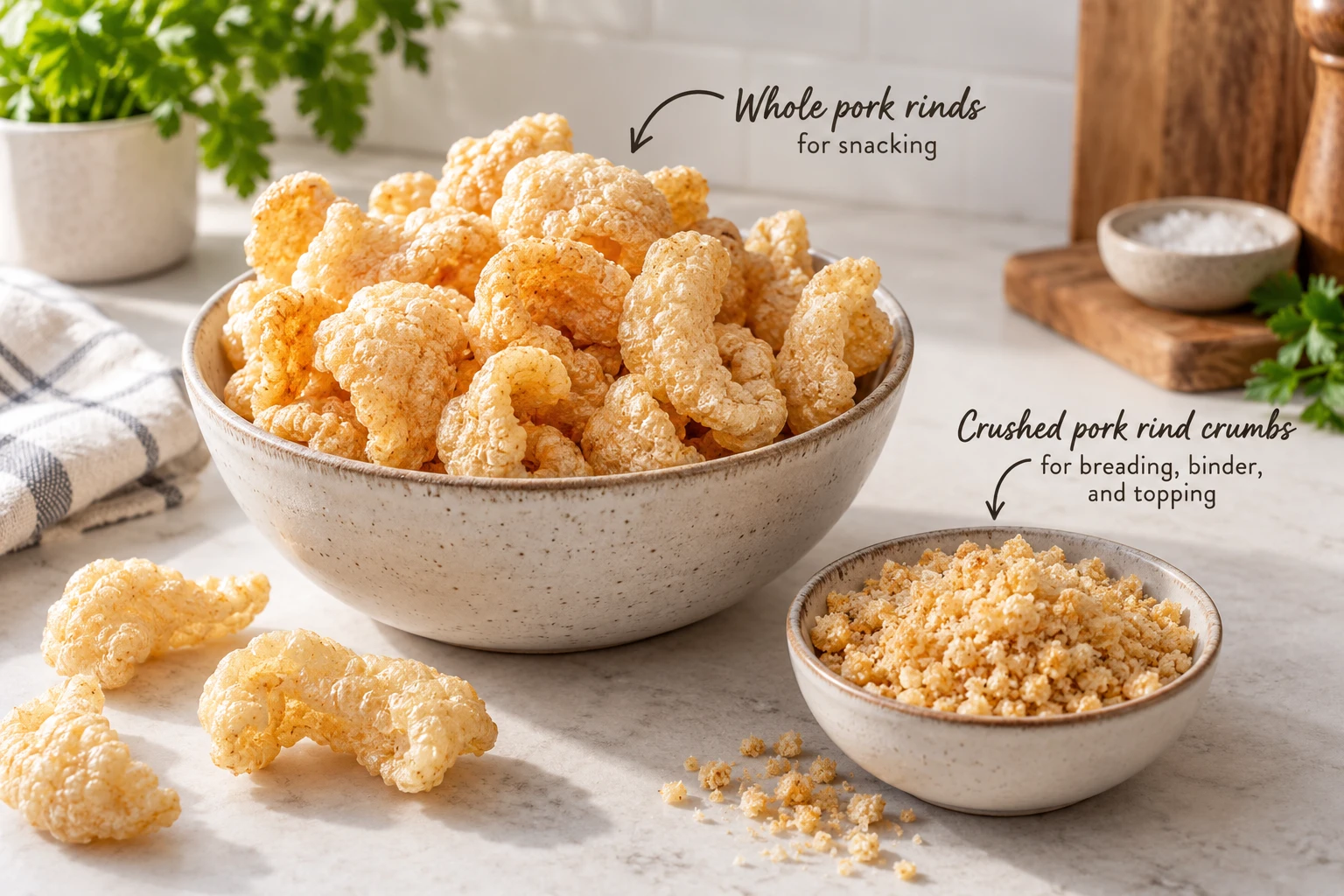
This is the part the nutrition pages tend to skip. On a low-carb diet, the job breadcrumbs used to do still needs doing, and crushed pork rinds do a surprising amount of it. They are not a pretend breadcrumb; they brown, they hold onto egg wash, and they actually crisp.
Four different jobs, in recipes we publish:
- Breading. Our Air Fryer Keto Chicken Nuggets use 2 ounces of pork rinds with grated parmesan as the coating for a pound of chicken breast. The parmesan browns, the rinds supply the crunch.
- Breading that has to survive melting cheese. Air Fryer Keto Mozzarella Sticks crush 2½ ounces into crumbs and combine them with almond flour — the crumbs give the shell something to hold together with while the inside goes molten.
- Binder. Keto Butter Chicken Meatballs use a cup of finely crushed rinds through two pounds of ground chicken, doing the job breadcrumbs do in a conventional meatball: absorbing moisture so the mixture holds its shape.
- Crunchy topping. Keto Chicken Broccoli Casserole scatters half a cup over the top with parmesan, so the casserole gets a finished, browned surface instead of a soft one.
And then there is the sweet direction, which sounds wrong until you try it. Our Keto Cinnamon Sugar Pork Rinds toss 4 ounces of plain rinds with butter, cinnamon, vanilla, and monk fruit sweetener, then bake them until the sweet cinnamon coating sets and crisps.
One note on crushing: how fine you go changes the result. Fine crumbs behave like breadcrumbs and disappear into a meatball. Coarser pieces stay recognizably crunchy on top of a casserole. The recipes say which they want.
Sodium, Fat, and Portion Size
Low in carbohydrate is not the same as nutritionally superior, and it is worth saying plainly rather than implying otherwise.
Per the USDA entry above, an ounce of plain pork rinds carries 521mg of sodium — a substantial share of the 2,300mg Daily Value used on U.S. Nutrition Facts labels — along with about 3.2g of saturated fat. Salted snack foods are salty; that is not a scandal, but it is a reason to treat a bag as several servings rather than one.
The bag in the panel above is a good illustration of why the label beats the reference entry. Pork King Good’s Original lists 170mg of sodium per half-ounce serving, which works out to roughly 340mg an ounce — about a third below the USDA figure for the same weight. Neither number is wrong. They are simply two different products, and only one of them is the bag in your hand.
Whether that matters to you depends on your own situation and the rest of your day, and it is worth raising with your doctor if you have been told to watch sodium or saturated fat. The useful move is comparing equal serving sizes between the products you are actually choosing between, rather than deciding a food is good or bad in the abstract.
Frequently Asked Questions
Do pork rinds have carbs?
Plain ones do not. USDA FoodData Central lists no carbohydrate and no fiber for plain pork skins, which puts net carbs at zero. Flavored varieties are a separate question — sugar in a coating, or starch used to carry a seasoning, both add carbohydrate. Read the panel on the bag you are actually holding rather than applying the plain figure to every product.
Are flavored pork rinds keto-friendly?
Often, but not automatically. The rind itself still has no carbohydrate; what changes is whatever was added to it. Barbecue and honey flavors may include sugar, and powdered seasonings frequently use maltodextrin or another starch to help them cling. Check the total carbohydrate against the serving size and scan the ingredient list for sweeteners and starches before assuming a flavored bag matches a plain one.
Are chicharrones keto-friendly?
Usually, though the word covers more than one thing. In some kitchens chicharrones means the same puffed pork skin sold as pork rinds; in others it means fried pork belly with fat and sometimes meat still attached. The puffed version matches the plain pork skin figures closely. A denser, meatier one is a different food with different nutrition, so use that product’s own label rather than the plain-skin entry.
Are pork rinds a healthy snack?
That depends on the product, the portion, and the rest of your eating pattern. Plain pork rinds contain no carbohydrate in the USDA reference entry and provide protein, but they are also salted snack food — an ounce carries 521mg of sodium — and both sodium and saturated fat vary between brands. “Low in carbs” answers one question rather than all of them, so compare labels for the factors that matter to you.
Are keto pork rinds healthier than potato chips?
Not automatically. Plain pork rinds are generally lower in carbohydrates than potato chips, but “healthier” cannot be decided from carbohydrates alone. Calories, saturated fat, sodium, ingredients, and portion size all matter, so compare equal serving sizes on the two packages for the factors that matter to you.
Can I eat pork rinds while losing weight?
Pork rinds can be included in a weight-loss eating plan, but they do not cause weight loss on their own. Whether they fit comes down to the portion and the rest of what you eat. A 1-ounce serving is about 154 calories in the USDA entry, and a bag holds several ounces, so it helps to treat one as several servings rather than a single sitting.
Can I eat too many pork rinds on keto?
Yes. Keto-friendly does not mean unlimited. The carb count stays at zero for plain rinds, but calories and sodium do not — an ounce carries 521mg of sodium in the USDA entry, and sodium varies considerably between brands. Check the serving size on your own bag instead of assuming the whole thing is one portion.
The Bottom Line
Plain pork rinds contain no carbohydrate in the USDA reference entry, so they fit a keto diet without much arithmetic. Flavored bags are a different question every time, and the answer is on the back of the package rather than in any article — including this one.
The more interesting answer is that pork rinds are worth buying even if you do not particularly want to eat them plain. Crushed, they do the work breadcrumbs used to — breading, binder and topping across several of our recipes — and that is a more useful thing to have in the cupboard than another snack.
More From Butter Together Kitchen
-

Are Oranges Keto? Carbs, Portions, and Orange Alternatives
Guides, Health, Ingredients August 31, 2026 -

Is Monk Fruit Keto-Friendly? How to Choose the Right Blend for Baking and Drinks
Guides, Health, Ingredients September 22, 2026 -
Is Cream Cheese Keto? Carbs, Types & What to Buy
Guides, Health, Ingredients August 31, 2026 -
How To Start The Keto Diet
Guides, Health December 13, 2018