
4-Ingredient Keto Coconut Macaroons (No Condensed Milk)

Jump to...
Introduction
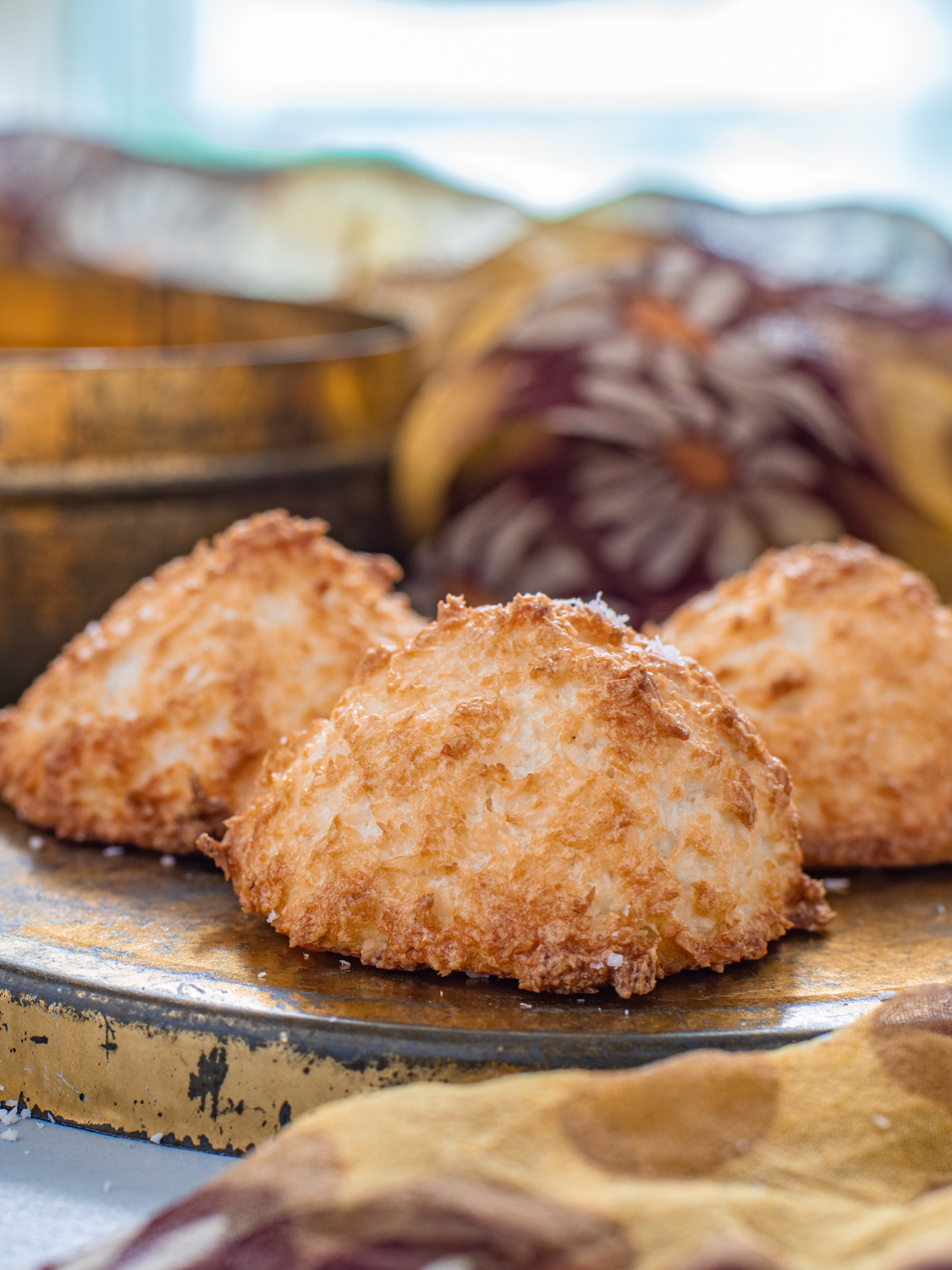
Craggy coconut mounds, baked until they are golden around the edges. Macaroons, to be clear — not macarons, which are the piped and sandwiched almond-flour ones.
Four ingredients get you there: egg whites, sweetener, unsweetened shredded coconut, and vanilla. Plenty of macaroon recipes lean on sweetened condensed milk to bind and sweeten the coconut, and there is none in here. The whites are whipped instead, the way you would whip them for a meringue.
That method is the part worth paying attention to, because it is where these go wrong. Soft peaks first. Then the sweetener, a teaspoon at a time, whipping until the peaks are firm. Then the coconut and the vanilla folded in gently — folded, not stirred, to the endpoint the card gives.
Eight to ten minutes in the oven, until the edges are golden and the middles are still soft.
If you would rather have a coconut cookie made from a dough, our keto coconut cookies use almond and coconut flour and are finished with cream cheese frosting.
What You Need – Key Ingredients & More
These keto macaroons are not complicated in the slightest and can be made with just these four ingredients:
- Egg whites, at room temperature. The egg whites give the macaroons their structure and stability. The recipe calls for them at room temperature rather than straight from the fridge.
- Monk fruit sweetener. The sweetener carries the sweet flavor, and it goes in a teaspoon at a time once the whites are at soft peaks rather than all at once at the start.
- Shredded unsweetened coconut. The bulk of the recipe — it brings the texture, the flavor, and that wonderful aroma. Use unsweetened; the sweetened varieties contain sugar, which puts them off the keto menu.
- Pure vanilla extract. This rounds out the flavor.
In addition, you would need these key baking tools:
- Hand-held mixer. This whips the egg whites to soft peaks, which is the foundation of the whole mixture.
- Mixing bowl. Any bowl large enough to beat the egg whites in will work.
- Rimmed baking sheet. This holds the macaroons while they bake.
- Silpat baking mat or parchment paper. This lines the sheet so the macaroons lift off cleanly.
- Small cookie scoop. This portions the mixture evenly.
- Cooling rack. For cooling the macaroons after they bake.
Frequently Asked Questions
How do I know if I over whipped the egg whites mixture for keto coconut macaroons?
The card’s endpoint is firm peaks. Past that, whites commonly go dry and grainy and begin to separate into clumps — that is what to look for. There is no measured point at which it happens, so go by the look of the whites rather than by the clock. You first want the whites to fall slightly when you lift the whisk — those are the soft peaks, and that is when the sweetener starts going in, a teaspoon at a time. Keep whipping as you add it, to firm peaks, and stop there.
Why is the texture off? Is it supposed to taste dry or gooey?
These keto coconut macaroons should taste fluffy and not dry or gooey. If yours are not, the bake is the first thing to check against the card: 8 to 10 minutes, or until they are golden-brown around the edges. Whether a texture problem is always the bake is not something we can tell you — but it is where to look first. The edges of the macaroons should be golden-brown, but the center should still be slightly soft and chewy.
How do I get the keto coconut macaroons to retain their shape?
The card is explicit about this one: let them cool completely before moving them, because they are fragile while warm and break when lifted too early.
Two other places the card pins something down are worth knowing. It whips the whites to firm peaks before the coconut goes in, not soft ones. And it portions them with a cookie scoop, which its own note says is so they come out a similar size and shape. Whether a particular irregular batch traces back to the peaks, the scoop or the lifting is not something we can tell you from here — those are simply the three points the recipe is specific about.
Why does the recipe say to fold in the shredded coconut? Why does that matter?
The card gives you the endpoint to fold to: the mixture should still hold soft ridges where the spatula passed through it, with the coconut evenly distributed and no streaks of plain egg white left. Fold to that and stop — the card’s own note is the warning here, and what it warns about is overmixing making them dense and heavy.

Keto Coconut Macaroons
Ingredients
All Ingredients
- 2x large egg, at room temperature
- 3 tbsp besti monkfruit sweetener
- 1 cup unsweetened shredded coconut
- ½ tsp vanilla extract
Nutrition Facts
10 servings per recipe| Per Serving 90 | Per Recipe 930 | |||
| 2x large egg | 12 | 120 | ||
| 1 cup of unsweetened shredded coconut | 80 | 800 | ||
| ½ tsp of vanilla extract | 0.6 | 6 | ||
| 9g | 11% | 88g | 113% | |
| 2x large egg | 0.8 g | 8 g | ||
| 1 cup of unsweetened shredded coconut | 8 g | 80 g | ||
| 7g | 37% | 75g | 375% | |
| 2x large egg | 0.3 g | 3 g | ||
| 1 cup of unsweetened shredded coconut | 7.2 g | 72 g | ||
| Trans Fat | 0g | 0% | 0g | 0% |
| 42mg | 14% | 420mg | 140% | |
| 2x large egg | 42 mg | 420 mg | ||
| 20mg | 1% | 180mg | 8% | |
| 2x large egg | 14 mg | 140 mg | ||
| 1 cup of unsweetened shredded coconut | 4 mg | 40 mg | ||
| ½ tsp of vanilla extract | 0.02 mg | 0.2 mg | ||
| 7g | 3% | 70g | 26% | |
| 2x large egg | 0.2 g | 1.98 g | ||
| 3 tbsp of besti monkfruit sweetener | 3.6 g | 36 g | ||
| 1 cup of unsweetened shredded coconut | 3.2 g | 32 g | ||
| ½ tsp of vanilla extract | 0.03 g | 0.25 g | ||
| 2g | 6% | 16g | 57% | |
| 1 cup of unsweetened shredded coconut | 1.6 g | 16 g | ||
| 1g | 8g | |||
| 1 cup of unsweetened shredded coconut | 0.8 g | 8 g | ||
| ½ tsp of vanilla extract | 0.03 g | 0.25 g | ||
| Sugar Alcohols | 0g | 0% | 0g | 0% |
| 4g | 36g | |||
| 3 tbsp of besti monkfruit sweetener | 3.6 g | 36 g | ||
| 2g | 18g | |||
| 2x large egg | 0.2 g | 1.98 g | ||
| 1 cup of unsweetened shredded coconut | 1.6 g | 16 g | ||
| ½ tsp of vanilla extract | 0.03 g | 0.25 g | ||
| 2g | 4% | 20g | 40% | |
| 2x large egg | 1.2 g | 12 g | ||
| 1 cup of unsweetened shredded coconut | 0.8 g | 8 g | ||
About these numbers: We are home cooks, not certified nutritionists. Nutrition is shared as a courtesy. We pick a representative product for each ingredient, and our recipe system works out the totals from the amounts in this recipe, so please treat them as a helpful estimate rather than a guarantee. The brands you buy, any swaps you make, and how generously you portion the recipe will all move these numbers.
Directions
-
Preheat oven to 350 degrees Fahrenheit
Line a rimmed baking sheet with a Silpat baking mat or piece of parchment paper.
-
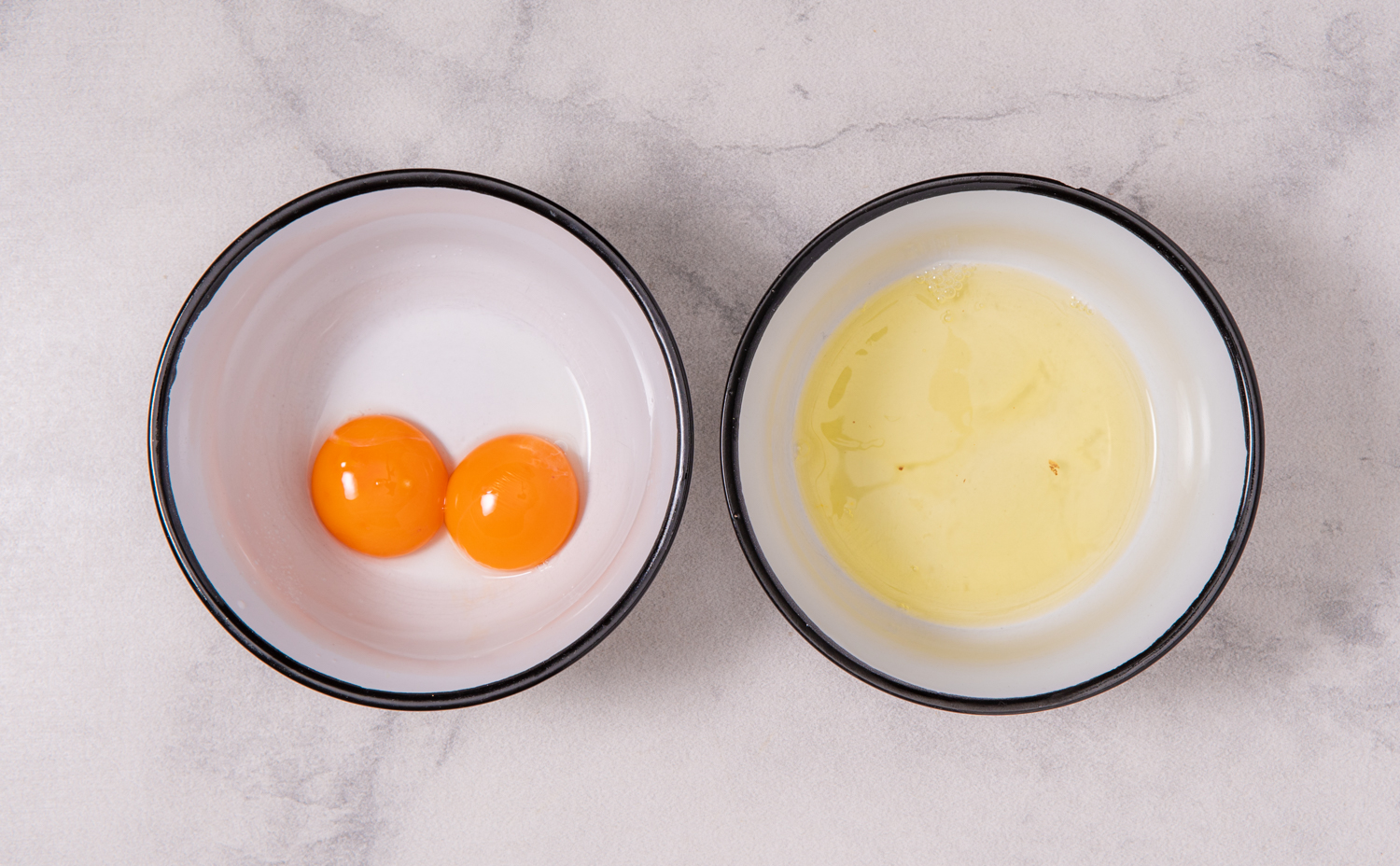
Separate the egg yolks from the egg whites
-
-
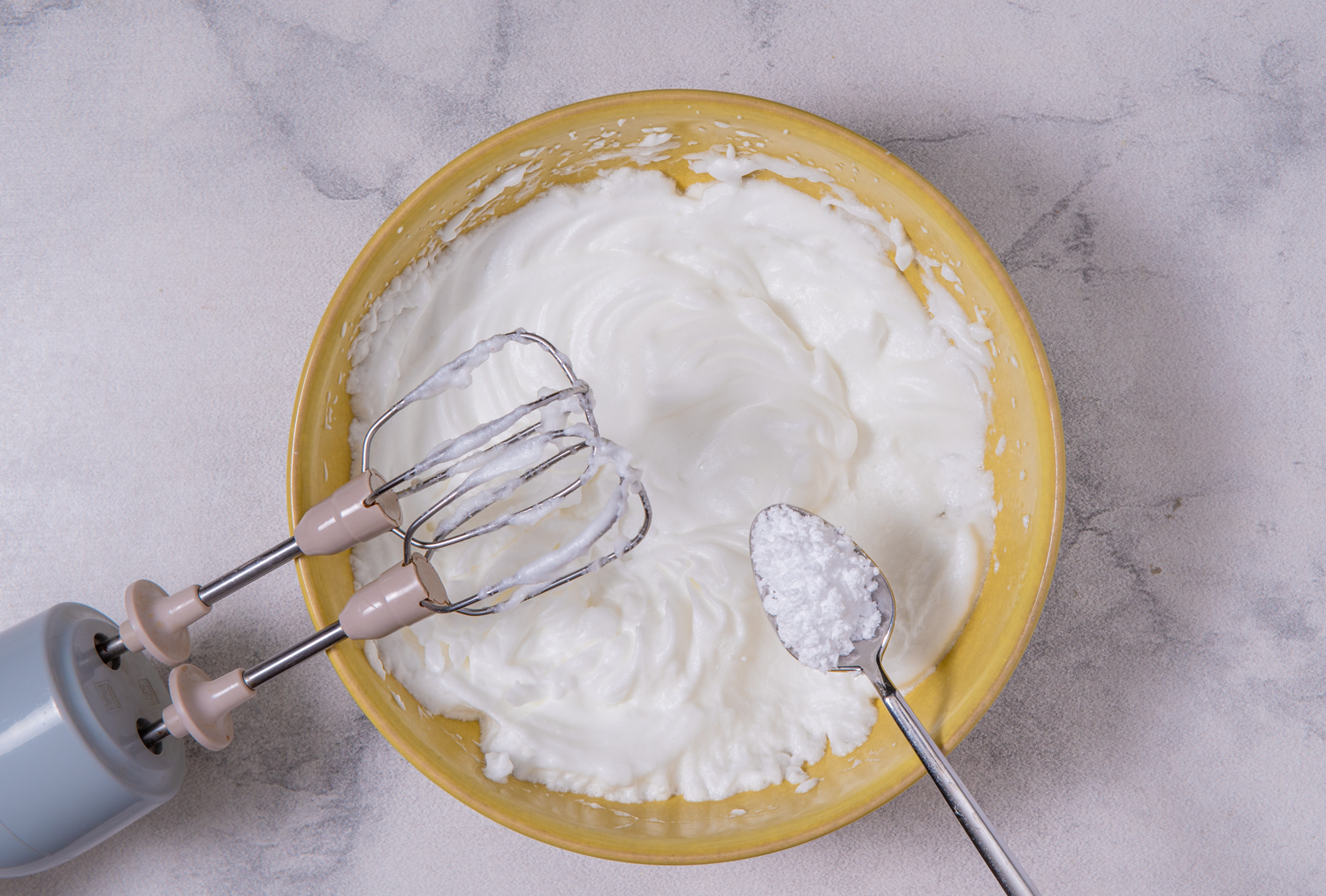
In a large mixing bowl, beat egg whites with a hand-held mixer until soft peaks form.
Slowly add in the monk fruit sweetener, a teaspoon at a time, and continue whipping until firm peaks form.
-
-
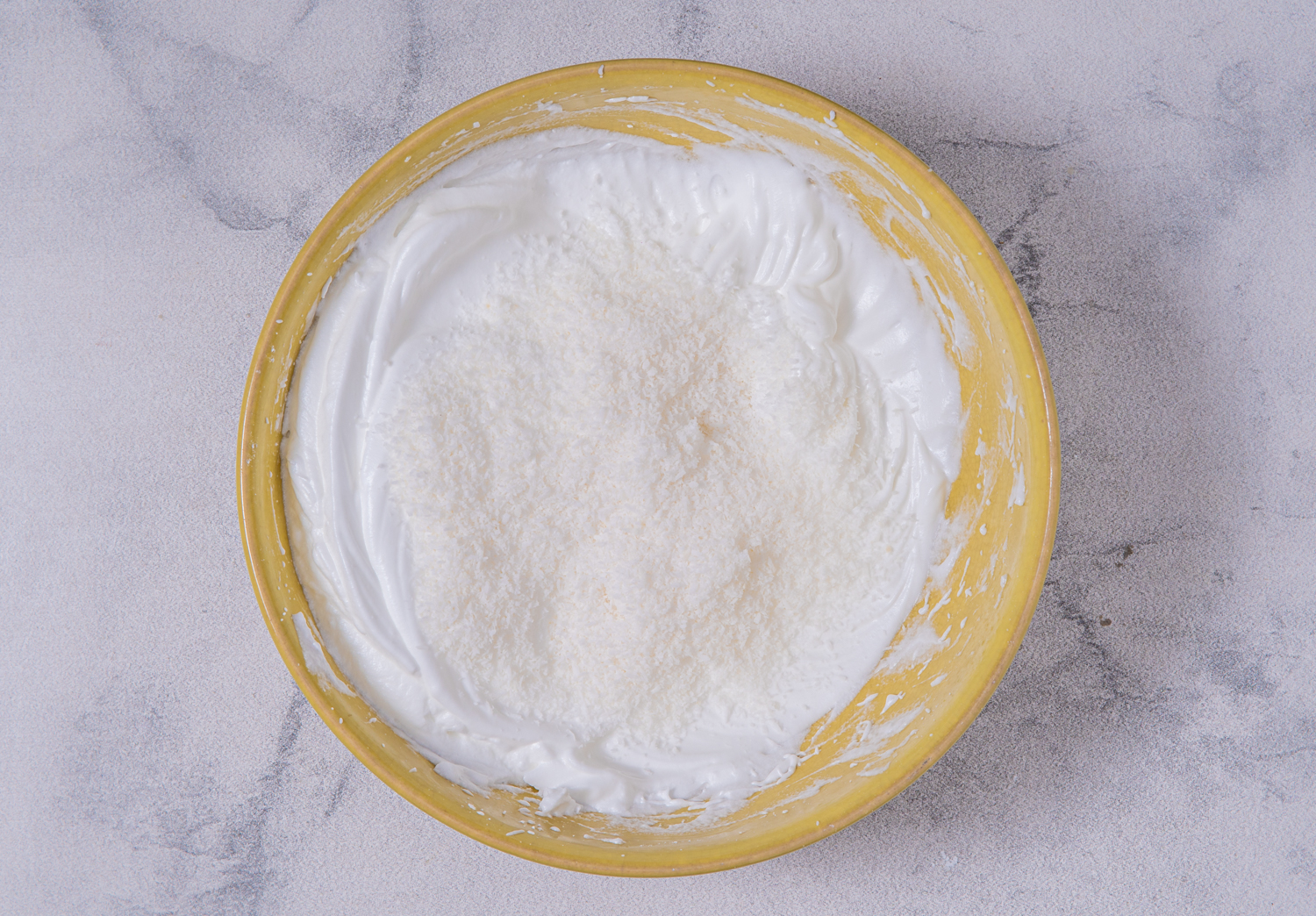
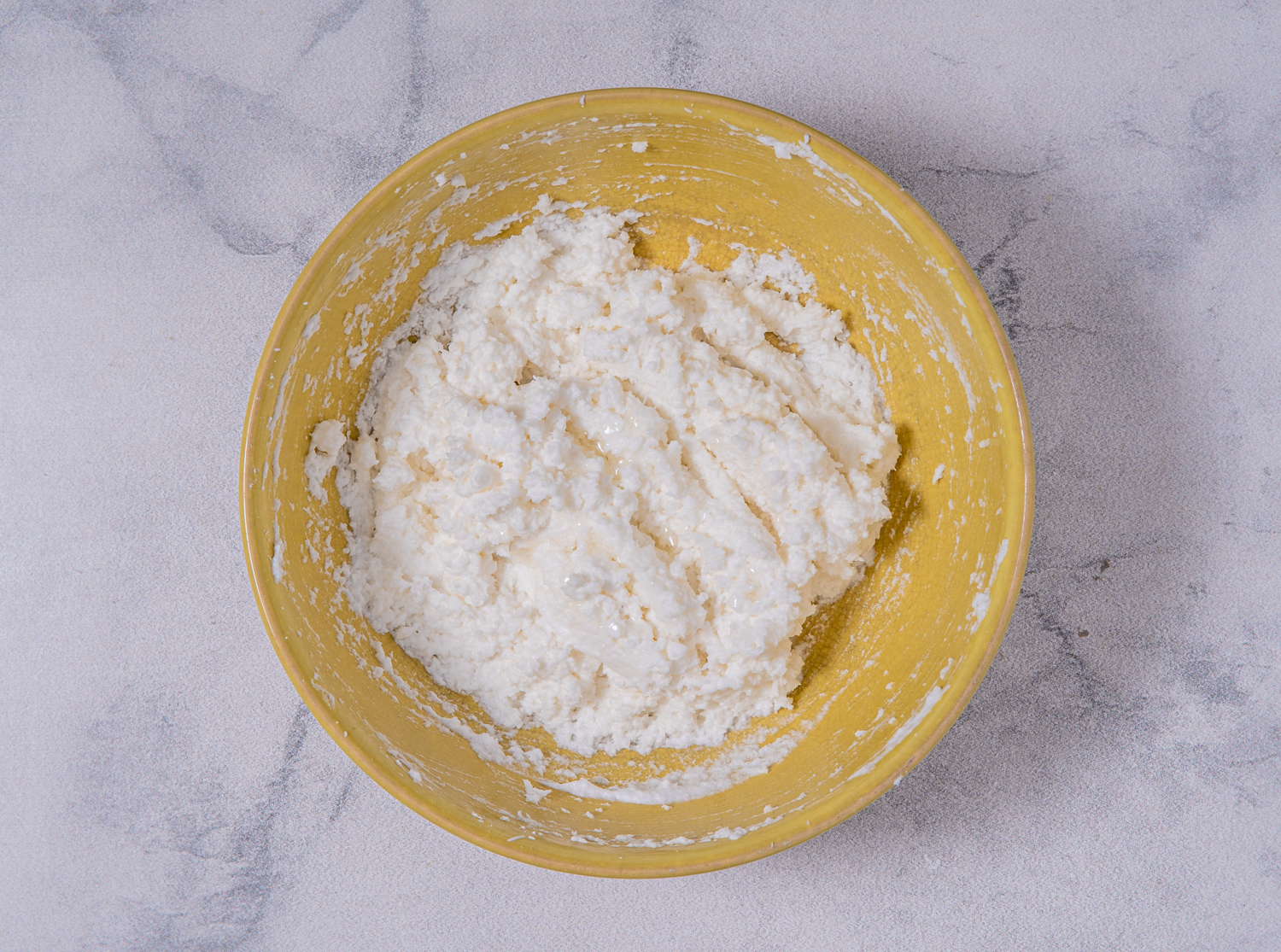
Gently fold in shredded coconut and vanilla extract.
The mixture should still hold soft ridges where the spatula passed through it, with the coconut evenly distributed and no streaks of plain egg white left.
-
-
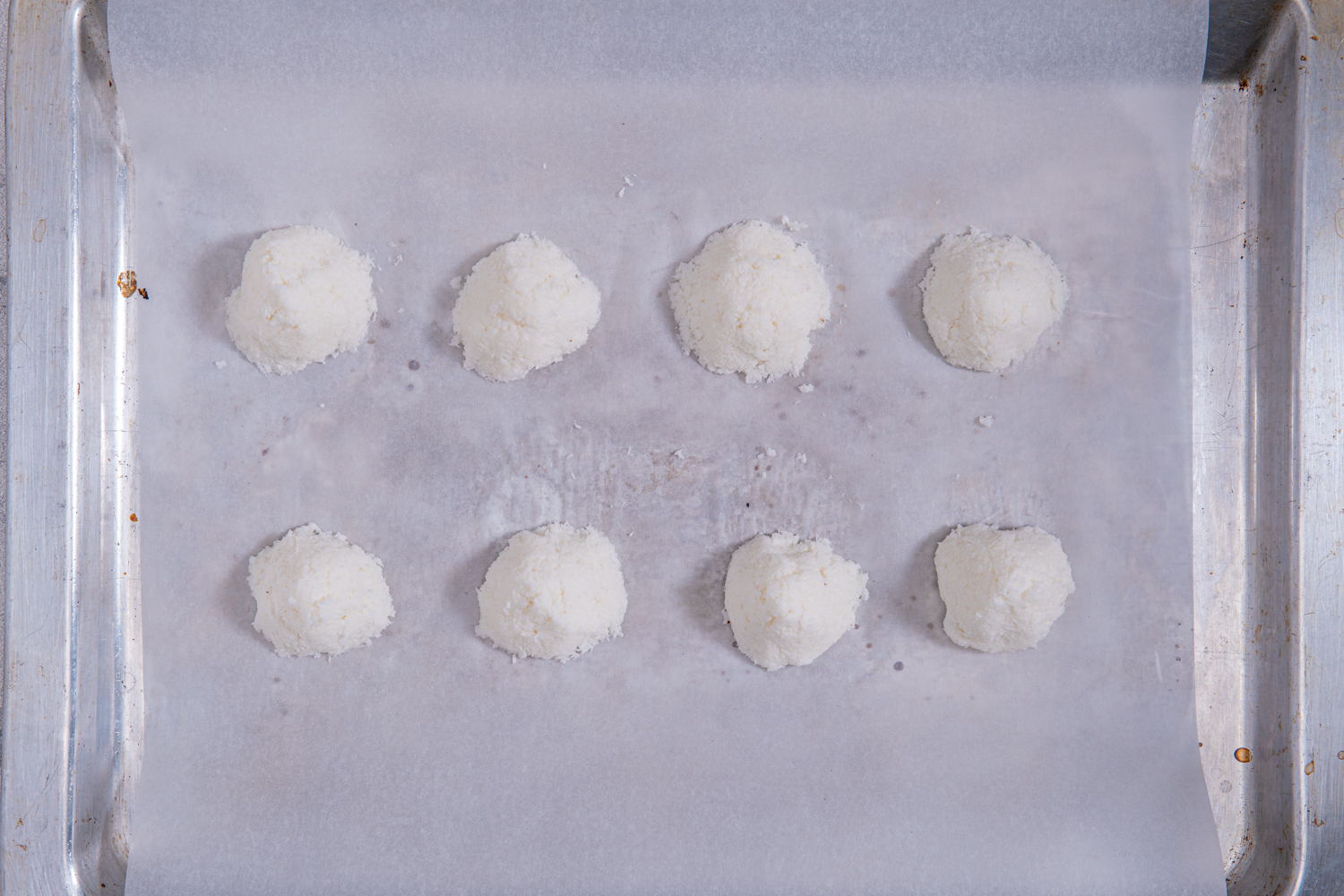
Using a small cookie scoop, drop portions of the coconut mixture straight onto the prepared baking sheet.
You should get 8-10 medium-sized coconut macaroons.
-
-
Bake 8-10 minutes or until the macaroons are golden-brown around the edges.
Remove from oven and place the baking sheet on a cooling rack. Let the macaroons cool completely before moving them — they are fragile while warm and break when lifted too early.
-
Notes
- The recipe is written for Besti, a granulated sweetener blend formulated to measure 1:1 with sugar. Stevia is not a blend of that kind — it is far sweeter by volume, so a cup-for-cup swap would not work. The record carries no result for one here, so treat it as your own experiment. If you swap, use another granulated blend formulated to measure 1:1 and keep the quantity as written.
- If you don’t have shredded unsweetened coconut, you can use shredded coconut that has been sweetened with a low-carb sweetener. Just be sure to adjust the amount of sweetener used in the recipe accordingly.
- When whipping the egg whites, it’s important to whip them until soft peaks form before slowly adding in the sweetener. This will help ensure that the keto coconut macaroons have the correct texture and structure. Be careful not to overmix, as this can cause the coconut macaroons to be dense and heavy.
- Use a cookie scoop to portion these macaroons onto the baking sheet. This will help ensure that the macaroons are all a similar size and shape.
- You can use a lightly greased baking sheet if you don’t have a Silpat baking mat or parchment paper.
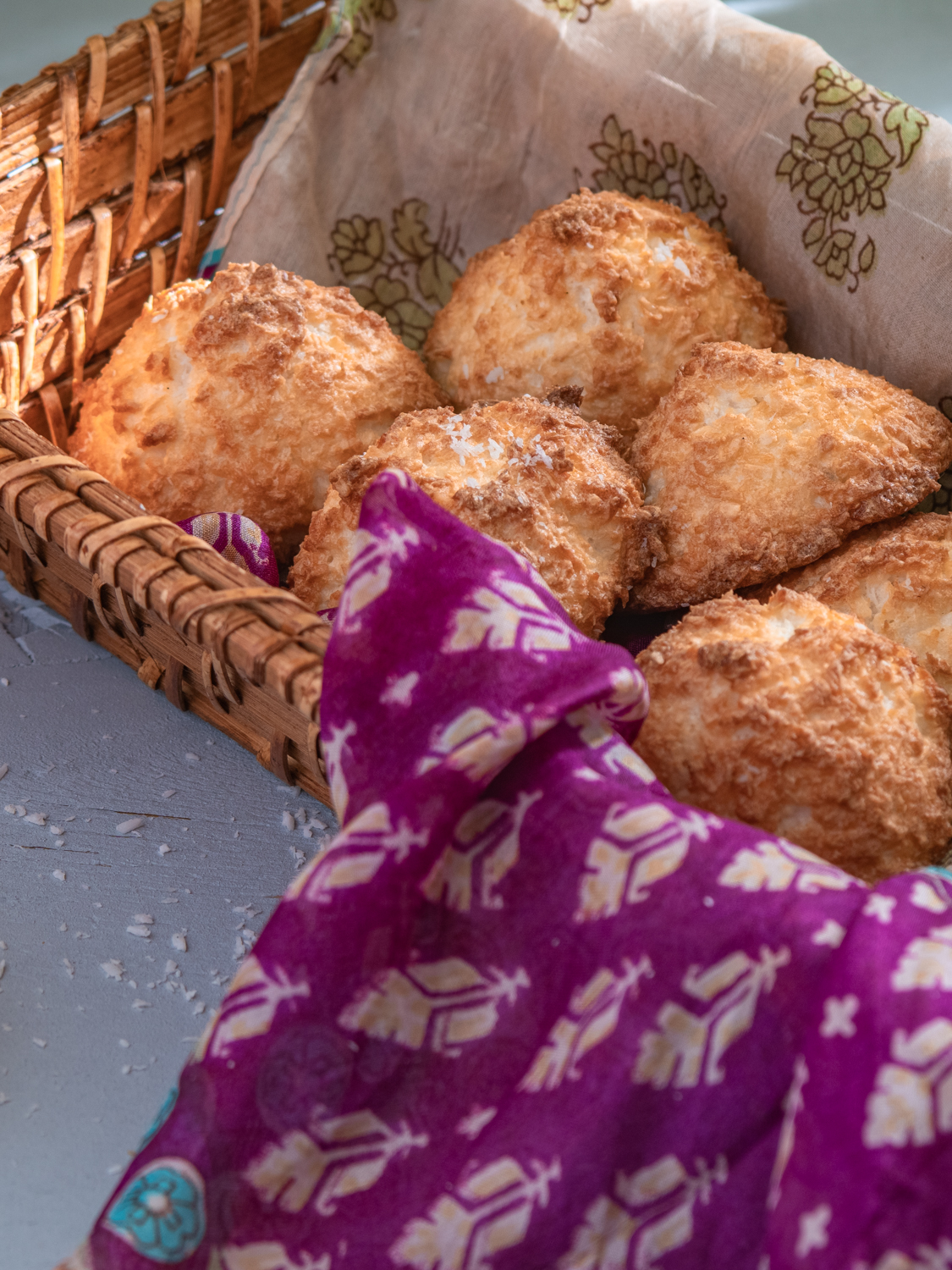
- These keto macaroons are perfect as a snack or a sweet treat and can be enjoyed on their own or paired with complementary dishes or drinks. They can be served with a cup of coffee or tea or paired with low-carb fruit like berries. For a special presentation, you can stack the macaroons on a platter and serve them as a sweet snack for guests.
Wrap up
Four ingredients, and the technique is in three places — whipping the whites to firm peaks, folding the coconut in without knocking the air back out, and letting them cool all the way before you move them. The Nutrition Facts panel with the recipe is calculated from the ingredient list if you want the per-macaroon numbers.
Have you tried this recipe or any other recipe on the blog? Please rate it below and let us know your thoughts in the comments! We love hearing from you!
You can also share it on Instagram and use the hashtag #buttertogetherkitchen, and we may feature your creation on our social media.
Updated — October 2, 2026: The opening now says what a macaroon is before listing what it is not, and the folding step describes the mixture instead of pointing at a photo.
Correction — October 2, 2026: The card said to cool these a few minutes while the article says they break unless cooled completely — the card now says completely. We also corrected a note offering stevia as a straight swap for a granulated sweetener.
More Keto Recipes You'll Love
-

Low Carb Crustless Coconut Custard Pie
Sweets October 15, 2018 -

Mini Keto Banana Nut Muffins (Made With Real Banana)
Breakfast, Sweets September 15, 2026 -

Keto Fruit Pizza with a Sweet Fathead Crust and Three Berries
Sweets August 30, 2026 -

Keto Pumpkin Bread Recipe (Low Carb, Almond Flour Loaf)
Breakfast, Sweets August 30, 2026