Keto Carrot Cake With Sugar-Free Cream Cheese Frosting
Jump to...
Introduction
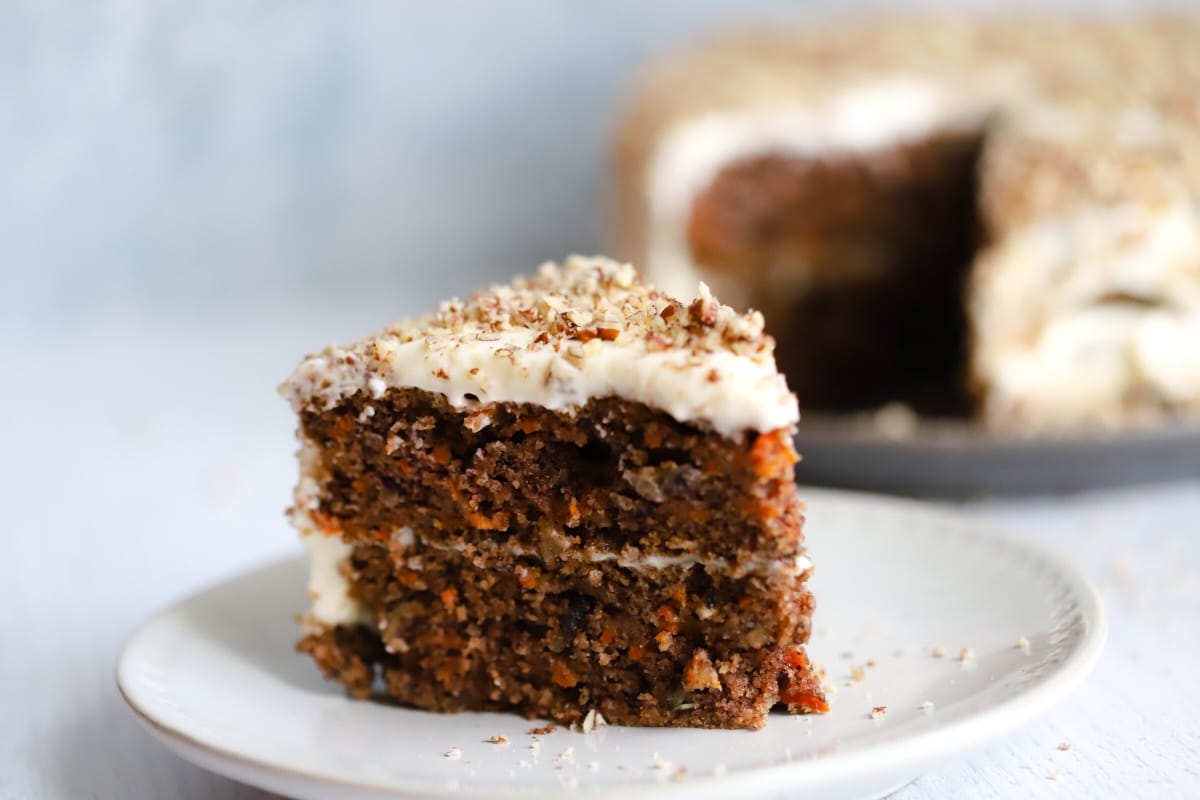
Carrot cake is spice cake with something grated into it, and the carrots were never the problem. The sugar and the wheat flour were. So this version leaves those two behind — almond and coconut flour for the structure, a monk fruit blend for the sweetness — and keeps everything that makes the original worth eating: cinnamon and nutmeg, chopped pecans, and a thick cream cheese frosting between the layers and over the top.
The carrots stay, two cups of them, shredded.
Key Ingredients In Recipe
Pecans
Chopped pecans go through the batter and over the top, so they are filling and garnish at once. Walnuts are the other nut people reach for in a carrot cake, though this one is written with pecans.
Olive Oil
A dry, chalky-tasting carrot cake is such a sad thing. We don’t want that. We want our keto carrot cake to be extra moist and scrumptious. And for that to happen, we’ll use a secret ingredient: oil.
Worth being precise about why it is olive oil, because the usual explanation is wrong: cooking oils are fat, and effectively none of them carry carbohydrate, so no oil is disqualified on carbs. This is a choice about the oil itself rather than about the macros. A third of a cup of olive oil keeps the crumb soft, and its flavor sits comfortably under a tablespoon of cinnamon and a teaspoon of nutmeg in a way a strongly flavored oil would not.
Lakanto Monk Fruit Sweetener
Cake isn’t cake if it isn’t sweet, and that holds true for carrot cake. But we can’t use sugar since we’re making a sugar-free carrot cake. Instead, we’ll be using the keto-friendly Lakanto Monk Fruit Sweetener. It is a blend built to measure 1:1 with sugar, so a traditional carrot cake recipe’s amounts carry straight over, and we don’t get an aftertaste from it.
Almond Flour and Coconut Flour
Use blanched almond flour rather than almond meal. Almond meal is a coarser grind with the skins still in, and is not a like-for-like swap.
Cream Cheese
Eight ounces of it, beaten smooth with powdered sweetener, butter, vanilla and heavy cream. Take it out of the fridge a while before you start so it is properly softened - cold cream cheese fights the beater. The amount is given by weight, and our cream cheese guide explains why that matters if all you have is a whipped tub.
Lakanto Powdered Monk Fruit Sweetener
Powdered, not granulated. This is a frosting that never sees heat, so granulated sweetener would stay gritty.
Heavy Cream
Heavy cream, not the sweetened whipped kind in a tub - it is what loosens the frosting to a spreadable consistency without thinning it.


Low Carb Carrot Cake with Cream Cheese Frosting
6 net carbsIngredients
Keto Carrot Cake Batter
- 4x large egg
- ⅓ cup olive oil
- 2 tsp vanilla extract
- 1 cup lakanto classic monkfruit sweetener
- 2 cups almond flour
- 2 tbsp coconut flour
- 2 tsp baking soda
- ½ tsp baking powder
- 1 tsp nutmeg, ground
- 1 tbsp cinnamon, ground
- A pinch of salt
- 4 oz butter, unsalted
- ½ cup pecans, chopped
- 2 cups carrots, shredded
Keto Cream Cheese Frosting
- 8 oz cream cheese, softened
- ½ cup lakanto powdered monkfruit sweetener
- 2 oz butter, unsalted
- 1 tsp vanilla extract
- ⅓ cup heavy whipping cream
Nutrition Facts
12 servings per recipe| Per Serving 440 | Per Recipe 5220 | |||
| 4x large egg | 20 | 240 | ||
| ⅓ cup of olive oil | 53.28 | 639.36 | ||
| 2 tsp of vanilla extract | 2 | 24 | ||
| 2 cups of almond flour | 120 | 1440 | ||
| 2 tbsp of coconut flour | 5 | 60 | ||
| 1 tsp of nutmeg, ground | 1 | 12 | ||
| 1 tbsp of cinnamon, ground | 1.5 | 18 | ||
| 4 oz of butter, unsalted | 67.5 | 809.99 | ||
| ½ cup of pecans, chopped | 31.67 | 380 | ||
| 2 cups of carrots | 8.67 | 104 | ||
| 8 oz of cream cheese | 67.5 | 809.99 | ||
| 2 oz of butter, unsalted | 33.75 | 404.99 | ||
| 1 tsp of vanilla extract | 1 | 12 | ||
| ⅓ cup of heavy whipping cream | 22.2 | 266.4 | ||
| 42g | 54% | 503g | 645% | |
| 4x large egg | 1.33 g | 16 g | ||
| ⅓ cup of olive oil | 6.22 g | 74.59 g | ||
| 2 cups of almond flour | 10.67 g | 128 g | ||
| 2 tbsp of coconut flour | 0.17 g | 2 g | ||
| 1 tsp of nutmeg, ground | 0.07 g | 0.8 g | ||
| 1 tbsp of cinnamon, ground | 0.01 g | 0.09 g | ||
| 4 oz of butter, unsalted | 7.42 g | 89.1 g | ||
| ½ cup of pecans, chopped | 3.33 g | 40 g | ||
| 2 cups of carrots | 0.05 g | 0.6 g | ||
| 8 oz of cream cheese | 6.75 g | 81 g | ||
| 2 oz of butter, unsalted | 3.71 g | 44.55 g | ||
| ⅓ cup of heavy whipping cream | 2.22 g | 26.64 g | ||
| 15g | 76% | 183g | 913% | |
| 4x large egg | 0.5 g | 6 g | ||
| ⅓ cup of olive oil | 0.89 g | 10.66 g | ||
| 2 cups of almond flour | 0.67 g | 8 g | ||
| 2 tbsp of coconut flour | 0.17 g | 2 g | ||
| 1 tsp of nutmeg, ground | 0.05 g | 0.6 g | ||
| 1 tbsp of cinnamon, ground | 0 g | 0.03 g | ||
| 4 oz of butter, unsalted | 4.72 g | 56.7 g | ||
| ½ cup of pecans, chopped | 0.25 g | 3 g | ||
| 8 oz of cream cheese | 4.05 g | 48.6 g | ||
| 2 oz of butter, unsalted | 2.36 g | 28.35 g | ||
| ⅓ cup of heavy whipping cream | 1.55 g | 18.65 g | ||
| Trans Fat | 0g | 0% | 0g | 0% |
| 130mg | 43% | 1554mg | 518% | |
| 4x large egg | 70 mg | 840 mg | ||
| 4 oz of butter, unsalted | 20.25 mg | 243 mg | ||
| 8 oz of cream cheese | 20.25 mg | 243 mg | ||
| 2 oz of butter, unsalted | 10.12 mg | 121.5 mg | ||
| ⅓ cup of heavy whipping cream | 8.88 mg | 106.56 mg | ||
| 340mg | 15% | 4120mg | 179% | |
| 4x large egg | 23.33 mg | 280 mg | ||
| 2 tsp of vanilla extract | 0.07 mg | 0.8 mg | ||
| 2 tbsp of coconut flour | 2.33 mg | 28 mg | ||
| 2 tsp of baking soda | 200 mg | 2400 mg | ||
| ½ tsp of baking powder | 26.67 mg | 320 mg | ||
| 2 cups of carrots | 14.67 mg | 176 mg | ||
| 8 oz of cream cheese | 74.25 mg | 890.98 mg | ||
| 1 tsp of vanilla extract | 0.03 mg | 0.4 mg | ||
| ⅓ cup of heavy whipping cream | 2.22 mg | 26.64 mg | ||
| 30g | 11% | 364g | 132% | |
| 4x large egg | 0.33 g | 3.96 g | ||
| 2 tsp of vanilla extract | 0.08 g | 1 g | ||
| 1 cup of lakanto classic monkfruit sweetener | 16 g | 192 g | ||
| 2 cups of almond flour | 4 g | 48 g | ||
| 2 tbsp of coconut flour | 0.67 g | 8 g | ||
| 1 tsp of nutmeg, ground | 0.09 g | 1.1 g | ||
| 1 tbsp of cinnamon, ground | 0.53 g | 6.3 g | ||
| ½ cup of pecans, chopped | 0.67 g | 8 g | ||
| 2 cups of carrots | 2.05 g | 24.6 g | ||
| 8 oz of cream cheese | 0.67 g | 8.1 g | ||
| ½ cup of lakanto powdered monkfruit sweetener | 5 g | 60 g | ||
| 1 tsp of vanilla extract | 0.04 g | 0.5 g | ||
| ⅓ cup of heavy whipping cream | 0.18 g | 2.13 g | ||
| 3g | 12% | 40g | 142% | |
| 2 cups of almond flour | 1.33 g | 16 g | ||
| 2 tbsp of coconut flour | 0.5 g | 6 g | ||
| 1 tsp of nutmeg, ground | 0.04 g | 0.5 g | ||
| 1 tbsp of cinnamon, ground | 0.35 g | 4.2 g | ||
| ½ cup of pecans, chopped | 0.5 g | 6 g | ||
| 2 cups of carrots | 0.6 g | 7.2 g | ||
| 21g | 252g | |||
| 1 cup of lakanto classic monkfruit sweetener | 16 g | 192 g | ||
| ½ cup of lakanto powdered monkfruit sweetener | 5 g | 60 g | ||
| Allulose | 0g | 0% | 0g | 0% |
| 6g | 72g | |||
| 4x large egg | 0.33 g | 3.96 g | ||
| 2 tsp of vanilla extract | 0.08 g | 1 g | ||
| 2 cups of almond flour | 2.67 g | 32 g | ||
| 2 tbsp of coconut flour | 0.17 g | 2 g | ||
| 1 tsp of nutmeg, ground | 0.05 g | 0.6 g | ||
| 1 tbsp of cinnamon, ground | 0.18 g | 2.1 g | ||
| ½ cup of pecans, chopped | 0.17 g | 2 g | ||
| 2 cups of carrots | 1.45 g | 17.4 g | ||
| 8 oz of cream cheese | 0.67 g | 8.1 g | ||
| 1 tsp of vanilla extract | 0.04 g | 0.5 g | ||
| ⅓ cup of heavy whipping cream | 0.18 g | 2.13 g | ||
| 8g | 17% | 101g | 202% | |
| 4x large egg | 2 g | 24 g | ||
| 2 cups of almond flour | 4 g | 48 g | ||
| 2 tbsp of coconut flour | 0.17 g | 2 g | ||
| 1 tsp of nutmeg, ground | 0.01 g | 0.1 g | ||
| 1 tbsp of cinnamon, ground | 0.03 g | 0.3 g | ||
| ½ cup of pecans, chopped | 0.5 g | 6 g | ||
| 2 cups of carrots | 0.2 g | 2.4 g | ||
| 8 oz of cream cheese | 1.35 g | 16.2 g | ||
| ⅓ cup of heavy whipping cream | 0.18 g | 2.13 g | ||
About these numbers: We are home cooks, not certified nutritionists. Nutrition is shared as a courtesy. We pick a representative product for each ingredient, and our recipe system works out the totals from the amounts in this recipe, so please treat them as a helpful estimate rather than a guarantee. The brands you buy, any swaps you make, and how generously you portion the recipe will all move these numbers.
Directions
-
Pour the eggs, olive oil, and vanilla extract into a mixing bowl.
Whisk the ingredients together until they become homogenous.
-
-
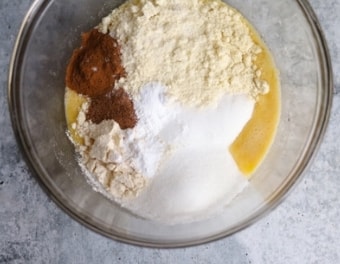
Pour all the dry ingredients for the cake batter into the mixing bowl and blend them together.
Add in the Lakanto Monk Fruit Sweetener, almond flour, coconut flour, baking soda, baking powder, ground nutmeg, ground cinnamon, and salt.
-
-
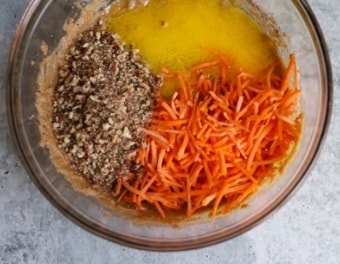
Add the shredded carrots, chopped pecans, and melted butter into the mixing bowl and blend them together.
-
-
Pan and bake the cake.
Preheat oven to 350 degrees Fahrenheit. Line two 6-inch cake pans or one 9-inch cake pan with parchment paper. Transfer the cake batter evenly into the prepared pan or pans. Bake for 30-35 minutes, until the top springs back and a toothpick in the middle comes out clean.
-
While the cake is baking, make the keto cream cheese frosting.
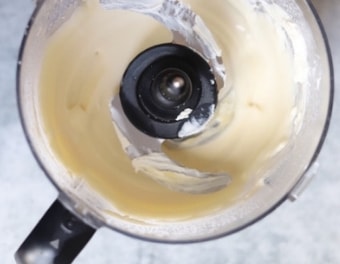
In a mixing bowl, blend together cream cheese, powdered sweetener, butter, heavy cream, and vanilla extract. For best results, do it in a blender or food processor.
-
-
Assemble the keto carrot cake.
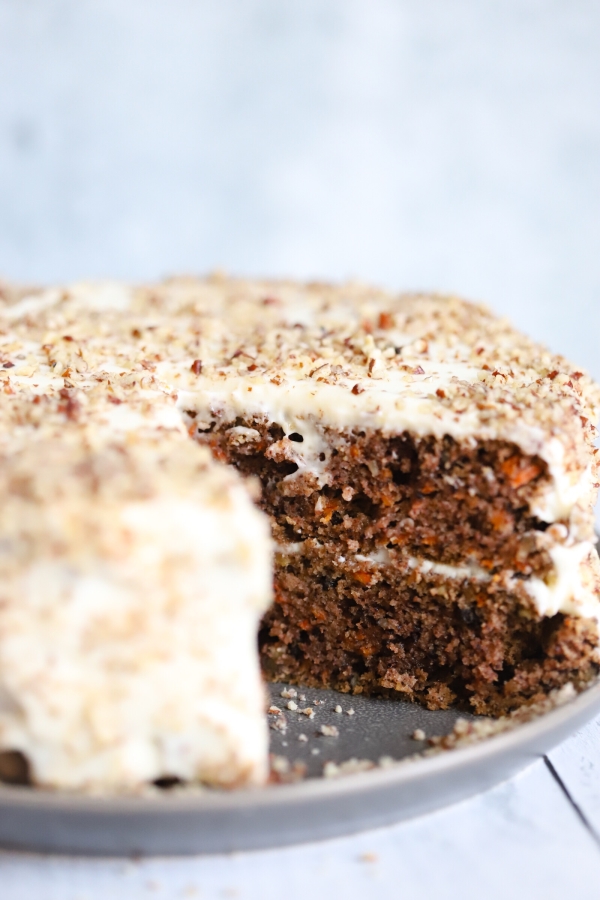
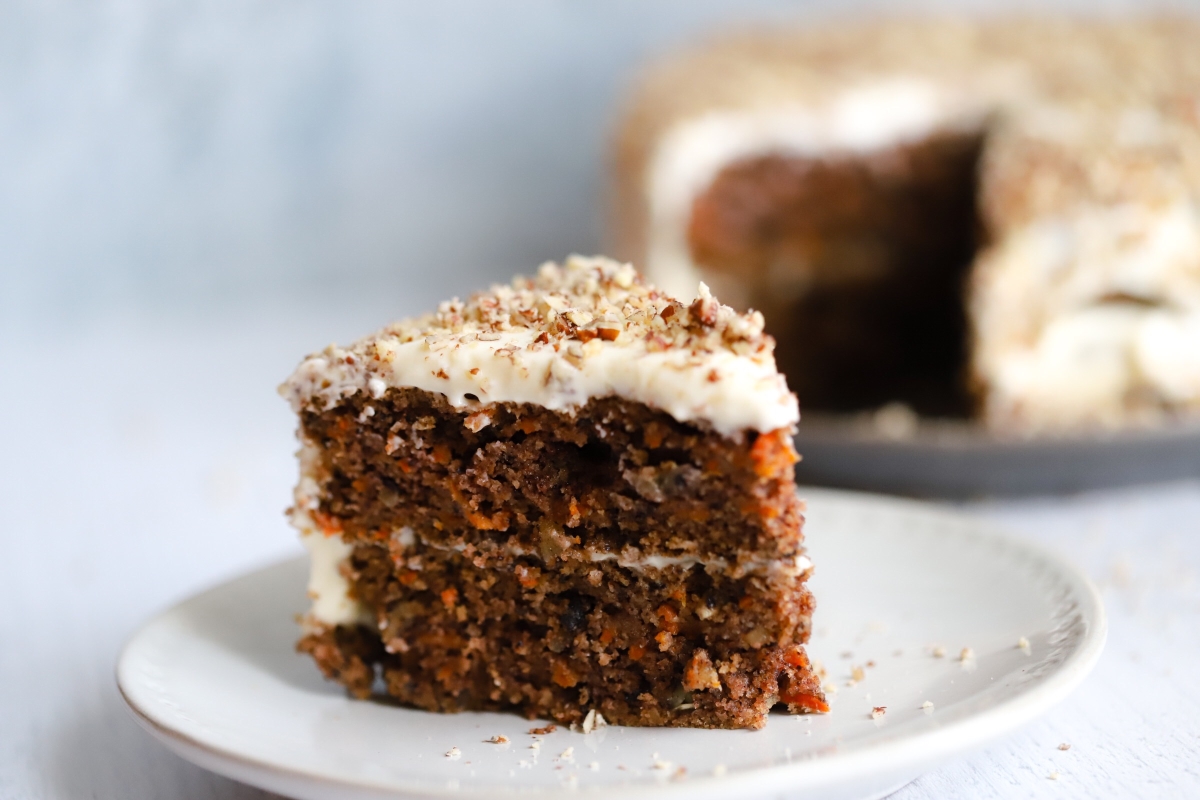
Let the cake cool completely in the pan before anything else happens - frosting a warm cake melts it straight off. If you baked two 6-inch layers, turn the first out onto a serving plate, spread frosting over the top, set the second layer on it, and cover the top and the sides. If you baked one 9-inch cake, turn it out and frost the top and sides as a single layer. Finish with chopped pecans.
Give it a few hours in the fridge before cutting if you can. The frosting firms up and the slices hold their shape.
-

Notes
Tools
- Cake pans. Two 6-inch pans for a double layer, or one 9-inch pan for a single.
Other Notes
- Spice. The cake is spiced with cinnamon and nutmeg. Ginger is what people reach for when they want more warmth than those two give on their own, but it is not part of this recipe, so any amount would be your own call.
- Sweetener. Written with Lakanto’s classic blend in the cake and the powdered version in the frosting. Other keto sweeteners are blended differently, so check the conversion on the bag rather than assuming cup for cup - and the frosting needs a powdered one either way, or it stays gritty.
- Frosting. Sweeten it to taste with more powdered sweetener.
- Dairy-free. Coconut oil and whipped coconut cream are the usual stand-ins for the butter and the cream cheese frosting. Both rebuild the crumb and the frosting rather than substituting within them, and we do not have a dairy-free version of this cake worked out.
- Scaling. The 30-35 minutes above is for the pans in the method. We do not have a reliable time for any other size.
Frequently Asked Questions
Is carrot cake keto-friendly?
A traditional carrot cake is built on wheat flour and sugar. This one uses almond flour, a little coconut flour and a monk fruit blend instead.
It still has carrots in it, which is rather the point of a carrot cake. What they come to per slice is in the Nutrition Facts panel with the recipe, and whether that fits your day is a question only you can answer.
I don't want to use olive oil. Can I use avocado oil instead?
Avocado oil is another neutral, keto-friendly oil. It is usually more expensive than olive oil.
Coconut oil is the other one people reach for. It is solid at room temperature where the other two are not, and it carries its own flavor. This cake is written for olive oil.
Can I omit the coconut flour?
Not cleanly. The two tablespoons of coconut flour are small next to two cups of almond flour, but they are not decorative — coconut flour absorbs several times its own weight in liquid, which is part of what stops this batter from staying wet under two cups of shredded carrot.
Ratios for trading one for the other get quoted a lot, but we do not have one for this cake — leaving it out is a change to the structure rather than an omission.
I don't like having nuts on my cake. Can I skip the pecans?
Yes. The pecans are stirred through at the end rather than doing anything structural, so leaving them out does not change what the batter needs from the rest of the ingredients.
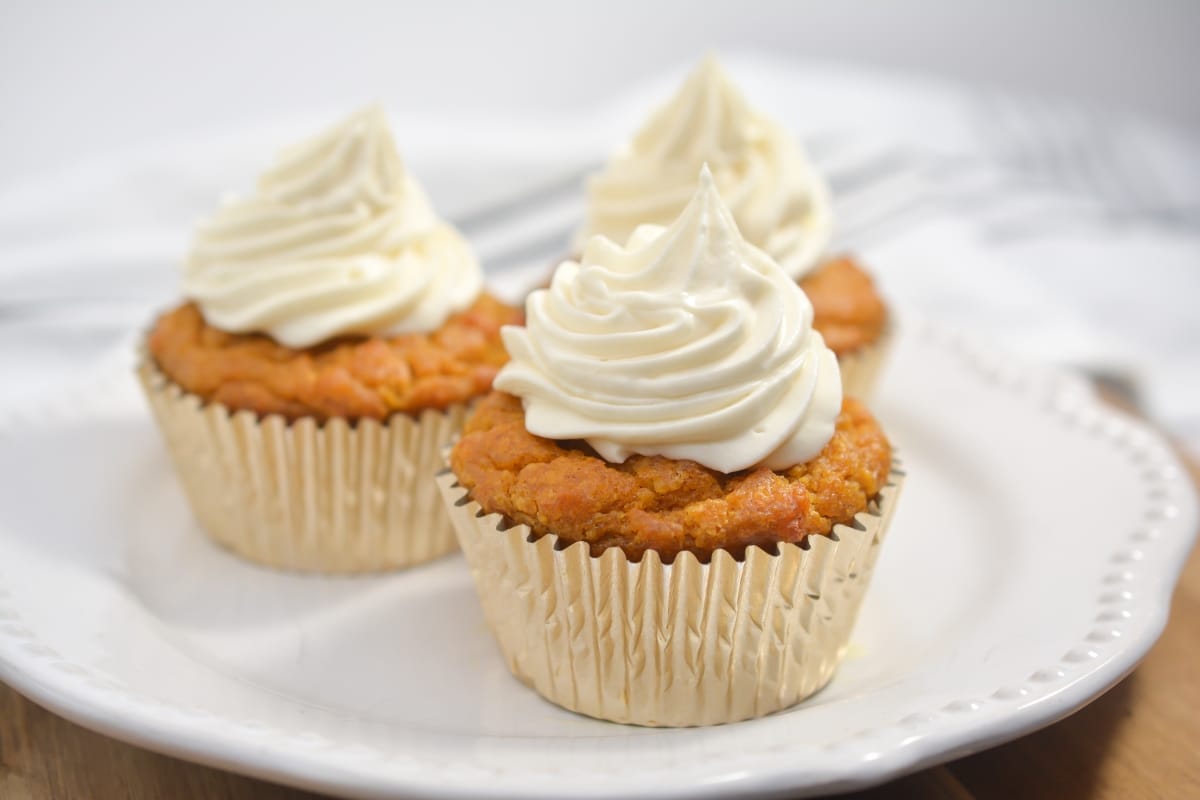
Can I make muffins or cupcakes out of this recipe?
It is a poured batter rather than a stiff one, so nothing about the batter itself rules out a muffin tin.
Time is what we cannot give you. A muffin cup holds a fraction of what a 6-inch layer does, and the 30-35 minutes in the recipe is for the cake pans it is written for. We do not have a cupcake timing.
Can I store it in the fridge?
The fridge is where this one belongs, yes. The frosting is cream cheese, butter and heavy cream, and that is the part that decides — not the cake under it. Keep it covered.
It freezes too, wrapped tightly. In a freezer held at 0°F it stays safe indefinitely; what you lose over time is quality. We cannot give you a number of days for either the fridge or the freezer.
Is it okay to use pre-shredded carrots instead of fresh ones?
The recipe calls for two cups of shredded carrot and does not say which kind. We cannot tell you whether the bagged, pre-shredded sort bakes the same way in this batter as carrots you grate yourself, so if you use it, measure the same two cups.
I'm not confident that carrots are keto enough. Is there an alternative?
Grated zucchini is the swap people suggest, and it is lower in carbohydrate than carrot. The thing that answer usually leaves out is water: zucchini carries a great deal more of it, and two cups of it stirred into this batter is a different batter. Spices and sweetness are the easy part; the moisture is the part that decides whether it bakes.
We do not have a salted-and-drained zucchini amount to give you in place of the two cups of carrot.
Worth knowing before you go looking, though: the recipe uses two cups of shredded carrot across twelve slices, and the per-slice figures in the Nutrition Facts panel already account for it.
Wrap Up
Two 6-inch layers with frosting between them make a cake that looks like an occasion; the same batter in one 9-inch pan makes a plainer, everyday one. Either way it wants a few hours in the fridge before it is cut, and it keeps there afterwards.
Correction — September 21, 2026: A cake with cream cheese frosting belongs in the fridge, not on the counter. We also fixed the explanation of the olive oil, which has nothing to do with carbs.